China’s naval expansion ends US military supremacy in Asia

The 2026 Asia Power Index shows China's navy is now 35% larger than the US fleet, shifting the security risk for Indo-Pacific trade.
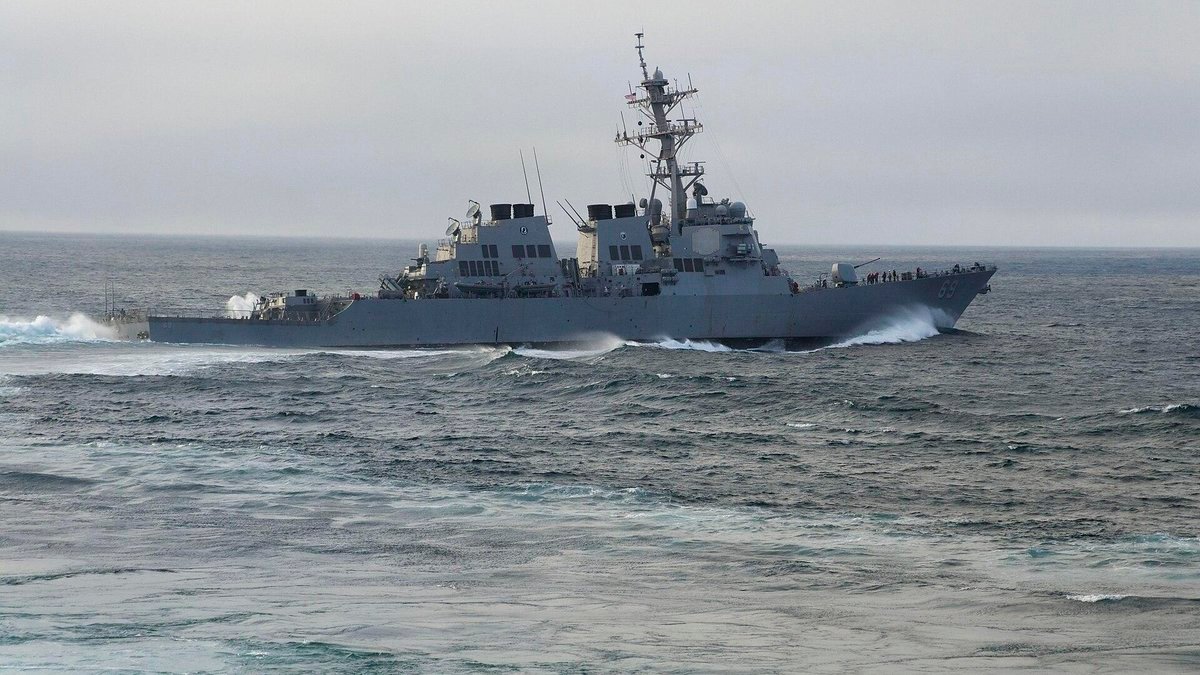
The 2026 Asia Power Index confirms the United States is no longer the uncontested military hegemon in Asia, ending decades of American supremacy in the Indo-Pacific. This shift forces a reassessment of regional security for shipowners and insurers as the People’s Liberation Army Navy (PLAN) leverages a fleet that is now 35% larger than its American counterpart.
China’s military modernization has closed the gap in both scale and speed. While the U.S. military budget remains nearly three times larger than China’s, Beijing achieves higher output for its spending. A Chinese Type 55 cruiser costs between $850 million and $920 million, while a U.S. Arleigh Burke-class destroyer costs $2.7 billion. This cost efficiency, paired with a 1,000% budget increase since 2000, has allowed the PLAN to expand its fleet and infrastructure rapidly.
The U.S. Navy maintains a lead in technical sophistication and combat experience, having been active globally throughout the 21st century. However, China is rapidly expanding its reach through enabling capabilities like air-to-air refueling and new access to an airfield in Laos. Domestically, the PLA has expanded berthing and maintenance facilities at its North, East, and South Sea Fleet Headquarters.
Why it matters
Commercial shipping in the Indo-Pacific has long relied on the U.S. Navy as the primary guarantor of freedom of navigation. That security model is now under pressure. The PLAN’s ship count advantage and its concentrated focus on the Indo-Pacific mean the U.S. may no longer be able to protect regional trade lanes without compromising its security interests in other parts of the world.
The speed of Chinese shipbuilding suggests a permanent change in the regional risk profile. While the U.S. takes years to commission Gerald R. Ford-class carriers, the Pentagon assesses that China intends to launch a new carrier every 20 months through 2035. For owners and charterers, this creates a more contested environment near major Chinese naval hubs and Southeast Asian transit points.
The expansion of Chinese naval bases and the acquisition of facilities in Laos point to a military capable of projecting power across the region’s most critical chokepoints. Without uncontested U.S. supremacy, the stability of these routes depends on a balance of power that is increasingly tilted toward Beijing’s regional capacity.
What to watch
The launch of China’s first nuclear-powered aircraft carrier, the Type 004, which the Center for Strategic and International Studies estimates could occur as early as next year.