

WinGD Expands Korea Engine Production Capacity
WinGD has secured its first-ever licensing agreement with HD Hyundai Marine Engine, a move that significantly broadens the Swiss designer’s manufacturing footprint for dual-fuel and diesel two-stroke engines in Korea. The partnership, confirmed on October 31, centers on the mid-bore engine portfolio, targeting the specific power requirements of bulk carrier and tanker newbuilds. Strategic manufacturing […]
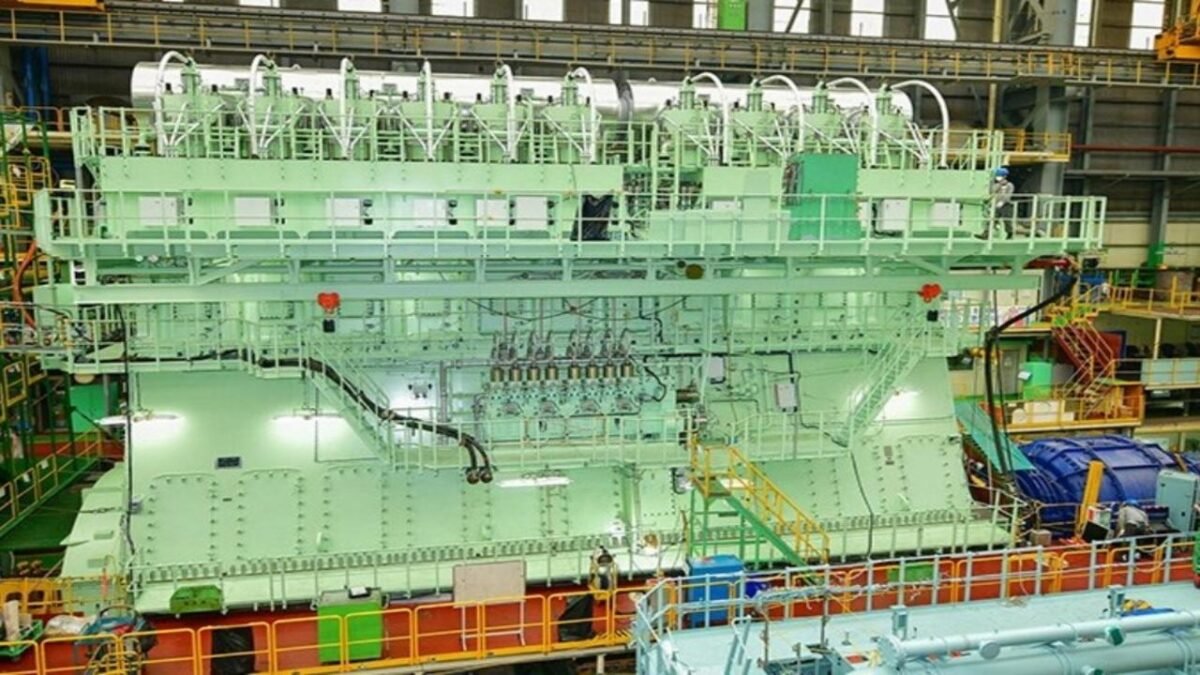
WinGD has secured its first-ever licensing agreement with HD Hyundai Marine Engine, a move that significantly broadens the Swiss designer’s manufacturing footprint for dual-fuel and diesel two-stroke engines in Korea. The partnership, confirmed on October 31, centers on the mid-bore engine portfolio, targeting the specific power requirements of bulk carrier and tanker newbuilds.
Strategic manufacturing integration
The agreement effectively creates a two-tiered production strategy for WinGD within the HD Hyundai Group. While HD Hyundai Heavy Industries remains the primary hub for the group’s ultra-large container and LNG carrier engine requirements, the addition of HD Hyundai Marine Engine—formerly STX Heavy Industries—allows for a more focused allocation of capacity. By utilizing a facility specialized in small and mid-sized engines, WinGD can now optimize its supply chain for the high-volume vessel segments that are currently experiencing significant renewal activity.
Market implications for engine lead times
For shipowners and yards, the inclusion of HD Hyundai Marine Engine into the WinGD ecosystem suggests a vital shift in regional engine availability. As the demand for dual-fuel propulsion accelerates, the primary bottleneck for many yards has been engine production capacity at major power houses. By diversifying its license base to include a builder specifically equipped for mid-bore production, WinGD is positioned to potentially reduce lead times and improve engine design integration for standard commercial vessel classes.
The focus on reducing costs and enhancing in-service performance through this partnership indicates a drive toward competitive, standardized propulsion packages. This shift allows the builder to offer a broader, more flexible engine portfolio to a wider range of owners, directly challenging the dominance of incumbent engine designs in the tanker and bulk carrier sectors.