Ricardo Completes Ammonia Marine Engine Feasibility | Mariner News
In a significant leap forward for sustainable maritime transport, leading engineering firm Ricardo has successfully concluded a comprehensive ammonia marine engine feasibility study. This pivotal research project, undertaken as part of the innovative FASTMOVE initiative, delivered critical insights into the viability of ammonia as a future marine fuel, pushing the boundaries of decarbonization within the global shipping industry. The study not only provided a groundbreaking concept for a combustion system design but also validated essential injection data, laying a robust foundation for the subsequent phases of ammonia engine development. This achievement marks a crucial milestone in the journey towards zero-emission shipping, offering a tangible pathway for the adoption of clean marine technologies and significantly reducing shipping emissions. The findings underscore Ricardo’s commitment to pioneering low-carbon propulsion systems and addressing the urgent need for greener operational models in the maritime sector.
Paving the Way for Sustainable Marine Propulsion
The global maritime industry faces immense pressure to transition away from fossil fuels and embrace sustainable shipping practices. With stringent environmental regulations like the International Maritime Organization’s (IMO) 2030 and 2050 targets looming, the search for viable alternative marine fuels has intensified. Ammonia, with its zero-carbon combustion potential when produced from renewable sources (green ammonia), has emerged as a frontrunner. However, its unique combustion characteristics and handling requirements present complex engineering challenges. Ricardo, renowned for its expertise in powertrain development and future mobility solutions, stepped up to tackle these challenges head-on. By undertaking this in-depth feasibility study, the company has provided invaluable data and conceptual designs that demystify the complexities of using ammonia in marine applications. This work is not merely theoretical; it provides practical, validated data essential for moving from concept to tangible engine development, ultimately accelerating the shift towards `sustainable shipping` and meeting critical decarbonization goals.
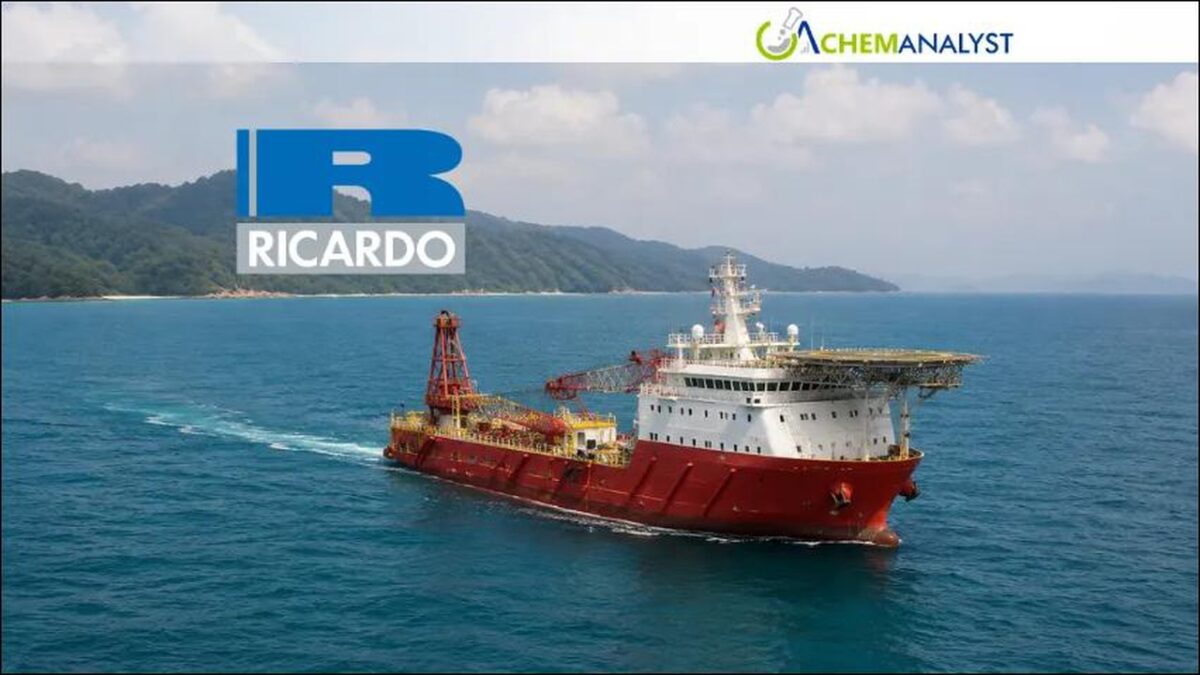
Ricardo’s latest announcement signifies a substantial step towards achieving these ambitious environmental objectives. The study particularly focused on `four-stroke marine engines` for `offshore vessels`, a segment of the maritime industry that can significantly benefit from `low-carbon propulsion systems`. The outcomes of this research serve as a beacon of hope for vessel operators and shipbuilders alike, demonstrating that the technical hurdles associated with `ammonia marine engine` technology are surmountable through dedicated research and development. It reinforces the belief that `zero-carbon fuel` solutions are not just aspirational but are steadily becoming a practical reality, paving the way for a cleaner, more environmentally responsible `maritime industry`.
The FASTMOVE Project: A Collaborative Endeavor
The `ammonia marine engine` feasibility study was carried out under the umbrella of the FASTMOVE project, an initiative designed to explore and advance the use of `ammonia as a future marine fuel`. This collaborative project brought together leading institutions and industry players, pooling diverse expertise to address the multifaceted aspects of `ammonia engine` integration. Ricardo partnered with Brunel University of London, known for its strong research capabilities, and the Port of Cromarty Firth, a strategic hub with significant maritime infrastructure. This multi-stakeholder approach ensured that the study considered not only the technical aspects of engine design but also the broader implications for port operations, `ammonia bunkering`, and overall operational safety. The synergies created through the FASTMOVE project were crucial in delivering a holistic understanding of the challenges and opportunities associated with `ammonia-fueled vessels`.
The `FASTMOVE project` exemplified the power of collaborative `innovation` in driving the green transition. Brunel University of London contributed its academic rigor and research prowess, while the Port of Cromarty Firth provided vital insights into practical implementation, infrastructure requirements, and regulatory considerations for `sustainable shipping` operations. Ricardo, as the engineering lead, synthesized these inputs to develop robust technical solutions. This partnership structure is a model for how the `maritime industry` can accelerate `decarbonization` by sharing knowledge and resources across the value chain. The project’s success highlights that transitioning to alternative marine fuels like ammonia requires a concerted effort from engine manufacturers, academic researchers, port authorities, and policymakers to create a supportive ecosystem for `clean marine technologies`.
Ricardo’s Methodical Approach to Ammonia Engine Development
Ricardo’s meticulous approach to the `ammonia marine engine` study involved several critical stages, beginning with the development of sophisticated `combustion system designs`. The team explored three distinct `high-pressure dual-fuel combustion concepts`, carefully analyzing each for its efficiency, reliability, and potential for `shipping emissions` reduction. From these, the most promising design was selected for in-depth analysis and optimization. This iterative process of design, simulation, and refinement is fundamental to developing effective `low-carbon propulsion systems` that can withstand the rigorous demands of marine environments.
A key component of Ricardo’s research involved extensive `high-pressure ammonia injection testing`. This practical experimentation was vital for validating the theoretical models and understanding the real-world behavior of ammonia under engine operating conditions. Coupled with advanced `combustion modelling`, these tests provided crucial data on ignition properties, flame propagation, and emissions profiles. The validation of `injection data` is particularly important for ensuring precise fuel delivery and optimal combustion performance, which are critical for both engine efficiency and meeting strict environmental standards. This detailed engineering work underpins the feasibility of integrating ammonia into `four-stroke marine engines` and underscores Ricardo’s leadership in the field of `alternative fuels`.
Addressing Key Challenges: Storage, Bunkering, and Safety
Beyond the engine itself, the successful adoption of `ammonia as a marine fuel` hinges on addressing the broader logistical and safety challenges. Ricardo’s study thoughtfully incorporated assessments of `ammonia storage` solutions, considering factors such as vessel space limitations, weight, and the physical properties of ammonia (which requires either cryogenic temperatures or high pressure for liquefaction). Effective `bunkering` procedures were also analyzed, including the design of safe and efficient transfer systems from shore-based facilities or bunker vessels to `ammonia-fueled vessels`. These considerations are paramount for ensuring smooth and reliable operations in the `maritime industry`.
Perhaps the most critical aspect addressed in the study was `onboard safety`. Ammonia is a toxic gas, and its handling demands stringent safety protocols. Ricardo’s assessment encompassed comprehensive risk analyses, focusing on potential leak detection, ventilation systems, emergency shutdown procedures, and crew training requirements. Developing robust `safety` measures is non-negotiable for `sustainable shipping` and public acceptance of new `marine fuel` technologies. By proactively tackling these issues within the `feasibility study`, Ricardo has provided valuable insights into creating a secure operating environment for `ammonia marine engines`, paving the way for regulatory approvals and widespread adoption. These safety evaluations are integral to the overall `decarbonization` strategy, ensuring that the shift to `zero-carbon fuel` does not compromise human or environmental well-being.
The Path Forward: From Feasibility to Commercialization
According to Ricardo, the encouraging results from the `ammonia marine engine` `feasibility study` will be instrumental in the next phase of development: assessing the viability of creating a single-cylinder engine (SCE). This dedicated test engine will allow for more detailed, real-world verification of the developed `combustion process` under controlled conditions. Proving the technology at this smaller scale is a crucial step before scaling up to multi-cylinder prototypes and full-scale `ammonia-fueled vessels`. The SCE development will provide further opportunities to optimize parameters, refine fuel injection strategies, and fine-tune emissions controls, solidifying the technical readiness of `low-carbon propulsion systems`.
Looking beyond technical verification, Ricardo has also stated its intention to consider the `commercial potential` of this cutting-edge technology, subject to further studies. This involves evaluating the economic viability of `ammonia marine engines`, including manufacturing costs, operational expenses, and the projected return on investment for shipowners. The scalability of the technology for various vessel types, from `offshore vessels` to larger cargo ships, will also be a key factor in determining its market penetration. The successful `commercialization` of `ammonia as a marine fuel` will require not only robust engineering but also supportive regulatory frameworks, a reliable supply chain for `green ammonia`, and robust infrastructure for `ammonia bunkering`. Ricardo’s commitment to exploring these aspects positions them at the forefront of driving `sustainable shipping` solutions and facilitating the `maritime industry`’s transition towards a truly `zero-carbon fuel` future. This integrated approach from research to potential market application is essential for accelerating global `decarbonization` efforts and fostering a new era of `clean marine technologies`.
In conclusion, Ricardo’s completion of the `ammonia marine engine` feasibility study marks a profound moment for the `maritime industry`. This detailed and collaborative effort has yielded critical data and designs that significantly advance the potential of `ammonia as a future marine fuel`. By addressing the complexities of engine design, operational logistics, and safety, Ricardo has provided a clear roadmap for developing `sustainable shipping` solutions. The ongoing work towards a single-cylinder engine and the subsequent evaluation of `commercial potential` demonstrate a clear pathway towards the widespread adoption of `low-carbon propulsion systems`. As the world pushes for greater `decarbonization`, `ammonia-fueled vessels` stand ready to play a vital role in creating a cleaner, greener future for global shipping, propelled by groundbreaking `innovation` and dedicated research.