Evos & HyFive Partner for Rotterdam E-Methanol Storage | Mariner News
In a significant move poised to accelerate the maritime industry’s journey towards decarbonization, European storage infrastructure firm Evos and innovative developer HyFive have formally announced their intentions to explore a Rotterdam e-methanol storage partnership. This collaboration, initiated through a non-binding letter of intent, focuses on evaluating the technical and commercial feasibility of storing and handling e-methanol at the strategically vital Port of Rotterdam. The potential alliance represents a pivotal step in bolstering the supply chain for cleaner marine fuels, addressing the burgeoning demand within the Amsterdam-Rotterdam-Antwerp (ARA) region and beyond. As the global shipping sector increasingly shifts towards more sustainable energy sources, such infrastructure development is paramount to achieving ambitious environmental targets and ensuring a resilient supply of renewable alternatives.
The discussions between Evos and HyFive underscore a shared commitment to fostering the energy transition within the maritime logistics landscape. This forward-thinking partnership aims to create a robust framework for delivering e-methanol, a crucial green fuel, to methanol-fuelled vessels operating in one of the world’s busiest shipping corridors. The exploration of this e-methanol storage and handling solution at the Port of Rotterdam signifies a proactive approach to meet future energy demands, positioning both companies at the forefront of the sustainable shipping revolution. This early assessment of downstream infrastructure options is critical for establishing the necessary operational capabilities that will facilitate the widespread adoption of low-carbon marine fuels.
Catalyzing the Green Energy Transition in Shipping
The global maritime industry is under immense pressure to reduce its carbon footprint and adhere to stringent environmental regulations. E-methanol, or green methanol, produced from renewable electricity and captured carbon dioxide, has emerged as one of the most promising and viable pathways for decarbonization. Its advantages include being a liquid fuel at ambient temperature and pressure, making it easier to store and handle than other alternative fuels like ammonia or hydrogen, and its ability to significantly reduce greenhouse gas emissions when produced sustainably.
However, the widespread adoption of e-methanol as a marine fuel hinges on the development of robust production, distribution, and bunkering infrastructure. This is where strategic collaborations like the one between Evos and HyFive become indispensable. By focusing on e-methanol storage and handling capabilities in a key bunkering hub like Rotterdam, the partnership directly addresses a critical bottleneck in the green fuel supply chain. Their combined efforts are designed to ensure that as more methanol-fuelled ships enter service, the necessary infrastructure will be in place to support their operations efficiently and sustainably.
Furthermore, this initiative contributes to the broader European energy transition goals, demonstrating tangible progress in shifting away from fossil fuels. The establishment of reliable e-methanol infrastructure not only supports the shipping industry but also paves the way for greater energy independence and the growth of green industries across the continent. It represents a proactive investment in a future where maritime logistics are powered by clean, renewable energy sources, aligning with global climate objectives.
Evos’ Strategic Infrastructure in the Port of Rotterdam
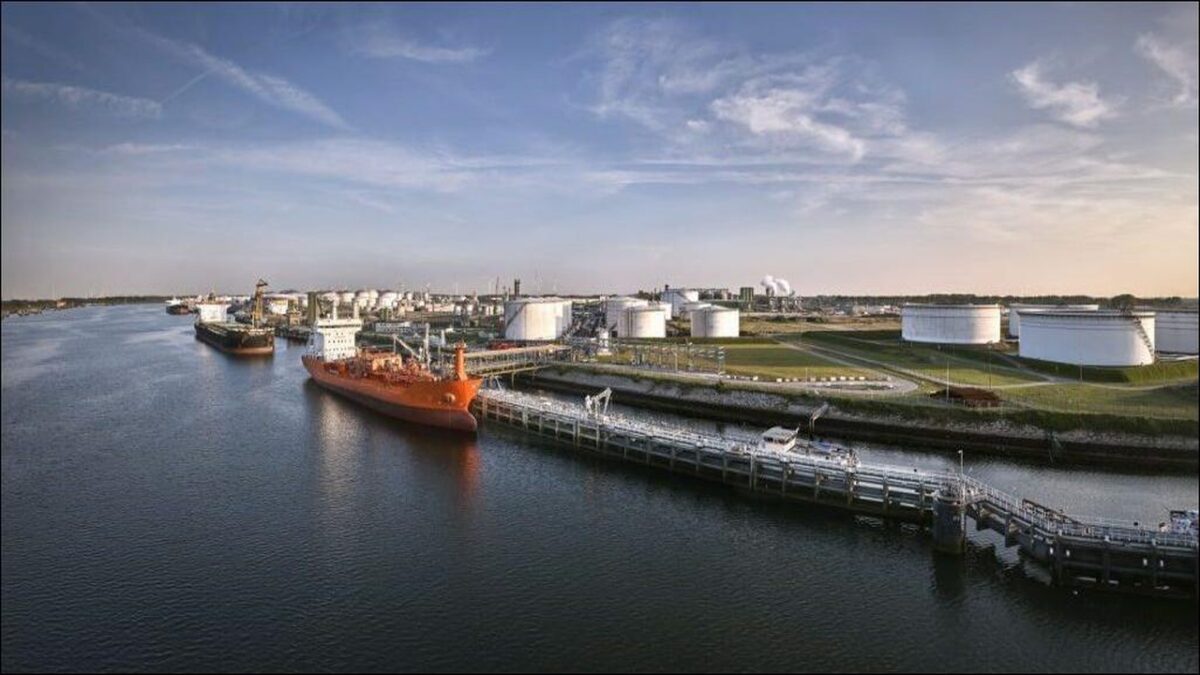
Evos, a leading European player in liquid bulk storage, brings considerable expertise and strategic assets to this exploratory partnership. The company’s Rotterdam terminal is a cornerstone of its operations, boasting significant capacity and connectivity. Recognizing the evolving demands of the energy sector, Evos has recently undertaken a substantial expansion of its Rotterdam facilities. This expansion project involved the addition of five new storage tanks, collectively offering an impressive combined capacity of 67,500 m3.
Alongside the increased storage capacity, the expansion also included the installation of a state-of-the-art new pump station and a modern jetty. These enhancements are designed to improve operational efficiency, increase throughput, and crucially, enable the terminal to handle a wider array of sustainable fuels, including e-methanol. The project, anticipated to be fully operational by early 2028, positions Evos Rotterdam as a key hub for future green fuel flows into the ARA region, ready to support the burgeoning demand for sustainable marine bunkering options.
Christiaan Kop, Managing Director of Evos Rotterdam, expressed the company’s enthusiasm for the initiative, stating, “We welcome the opportunity to explore, through this potential partnership with HyFive, how our Rotterdam terminal could support future e‑methanol flows into the ARA region.” This statement underscores Evos’ proactive approach to adapting its infrastructure to meet the needs of a rapidly changing maritime energy landscape and its commitment to facilitating the decarbonization of shipping through strategic investments in green fuel logistics.
HyFive’s Vision: The HyMet Musel E-Methanol Project
Complementing Evos’ infrastructure capabilities, HyFive emerges as a vital partner, focusing on the production side of the e-methanol supply chain. HyFive is a developer dedicated to advancing clean energy solutions, and their flagship initiative relevant to this partnership is the planned 100,000 metric tons per year (mt/year) HyMet Musel project located in Spain. This ambitious project is set to commence production in 2029, promising a significant volume of green e-methanol to the European market.
The HyMet Musel project is crucial because it addresses the upstream challenge of producing sufficient quantities of renewable methanol to meet the anticipated demand from the maritime sector. By creating a dedicated source of e-methanol, HyFive is laying the groundwork for a scalable and sustainable supply network. The partnership with Evos in Rotterdam would then provide the essential midstream and downstream logistics, ensuring that the e-methanol produced in Spain can be efficiently stored, handled, and delivered to end-users in the ARA region and beyond.
Alberto Sanchez de Rojas, General Manager of HyFive, highlighted the strategic importance of this exploration: “While this is an initial step, it is an important milestone in assessing downstream infrastructure options that could help meet growing demand for cleaner marine fuels in the ARA region.” His statement reinforces the idea that securing reliable storage and handling facilities is just as critical as the production itself in establishing a viable green methanol economy for shipping. This integrated approach from production to bunkering is key to unlocking the full potential of e-methanol as a marine fuel.
Strengthening E-Methanol Supply for the ARA Region
The ARA region, encompassing the ports of Amsterdam, Rotterdam, and Antwerp, is a pivotal global maritime hub. Its strategic location and extensive port facilities make it a prime area for the bunkering of marine fuels. As the number of methanol-fuelled vessels continues to grow, ensuring a steady and accessible supply of e-methanol in this region becomes paramount for the industry’s transition to greener operations. This Evos and HyFive partnership directly aims to fortify this supply.
The proposed Rotterdam e-methanol storage solution will significantly enhance the region’s capacity to accommodate increasing volumes of green methanol. This means that shipping companies choosing to invest in methanol-powered ships can do so with greater confidence, knowing that the necessary bunkering infrastructure will be available. The robust supply chain established through this collaboration will reduce logistical complexities, potentially lower costs, and ultimately accelerate the adoption of e-methanol as a primary marine fuel in the area.
Moreover, the availability of a reliable e-methanol supply in Rotterdam will attract more vessels to the port for bunkering, further cementing its status as a leading hub for sustainable shipping. This not only benefits the local economy but also sets a precedent for other major ports globally to develop similar green fuel infrastructure, contributing to a domino effect of decarbonization across international shipping routes. The collective efforts of industry players in building such ecosystems are vital for achieving meaningful environmental impact.
Collaborative Pathways Towards Decarbonized Maritime Operations
The exploration of this partnership exemplifies the collaborative spirit required to tackle the immense challenge of decarbonizing global shipping. No single entity can solve this complex issue alone; it necessitates synergistic efforts across the entire value chain, from fuel production and infrastructure development to vessel design and operational practices. Evos and HyFive’s joint endeavor serves as a model for how specialized firms can combine their strengths to drive significant progress.
The non-binding letter of intent marks the initial phase of a comprehensive evaluation, wherein both companies will delve into the technical specifications, commercial viability, and regulatory aspects of establishing e-methanol storage and handling operations. This meticulous assessment ensures that any future developments are robust, efficient, and scalable. The commitment to such a detailed exploration underscores the seriousness with which both organizations approach their roles in the energy transition.
Looking ahead, the successful implementation of this partnership would not only support the immediate demand for cleaner marine fuels in the ARA region but also lay critical groundwork for the long-term vision of a fully decarbonized maritime sector. The operational readiness of Evos’ expanded Rotterdam terminal in early 2028 and the planned start of HyFive’s HyMet Musel project in 2029 align perfectly, creating a timely synergy that promises to deliver substantial volumes of green methanol precisely when it is needed most by the shipping industry. This synchronized timeline is essential for keeping pace with the rapid evolution of maritime environmental standards.
The Broader Impact on the Global Shipping Industry
The ripple effects of a successful Evos and HyFive e-methanol storage partnership in Rotterdam extend far beyond the ARA region. Rotterdam, as a global maritime gateway, often sets benchmarks for other major ports worldwide. A well-established and efficient e-methanol supply chain here can inspire similar investments and collaborations in other bunkering hotspots, accelerating the global transition to sustainable shipping fuels.
This partnership reinforces the notion that the future of marine fuels is increasingly diverse and decentralized. As various alternative fuels gain traction, comprehensive infrastructure development at key ports will be crucial. E-methanol, with its relative ease of handling compared to other green fuels, stands to benefit significantly from such pioneering projects. The experience and lessons learned from this initiative will provide invaluable insights for the broader industry, guiding future investments and policy decisions.
Ultimately, the collaboration between Evos and HyFive represents more than just a business agreement; it is a testament to the industry’s unwavering commitment to environmental stewardship and innovation. By proactively addressing the logistical challenges associated with new, cleaner fuels, these companies are playing a pivotal role in shaping a more sustainable future for global maritime trade. Their efforts will undoubtedly contribute to a greener, more resilient shipping industry, capable of meeting the environmental demands of the 21st century and beyond.