

Port authorities urged to mandate terminal buffers to end congestion
High terminal utilization delays cargo for weeks. Port authorities could fix this by requiring spare capacity in operator contracts.
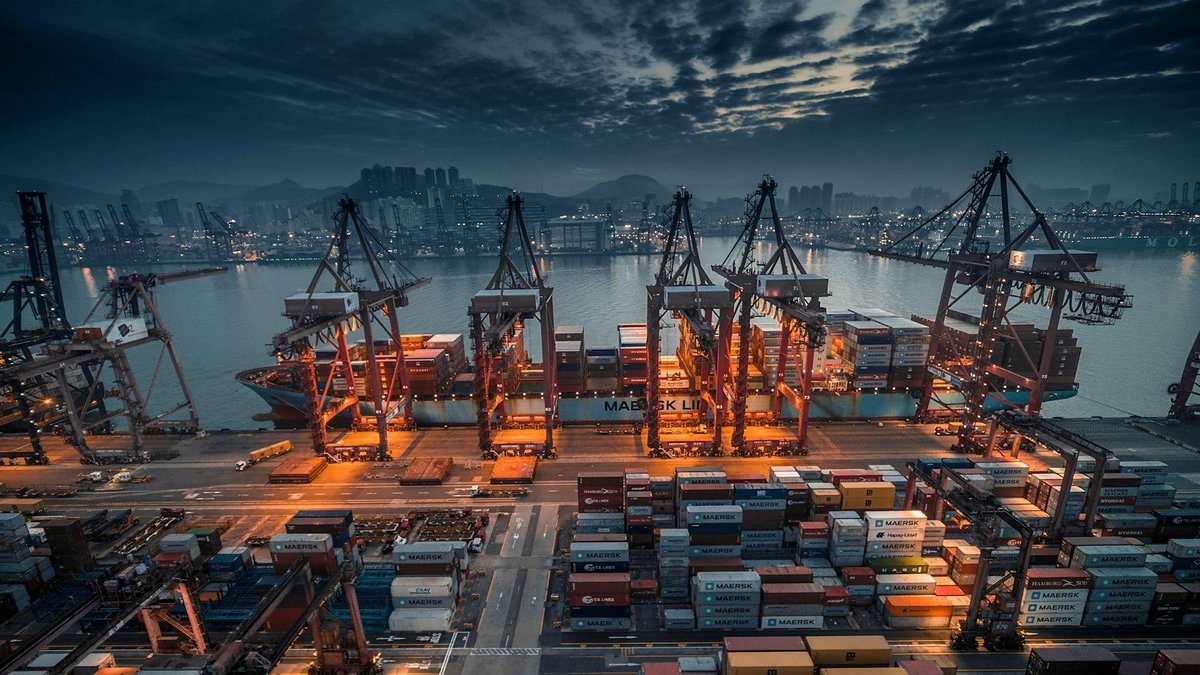
Port authorities could end the cycle of global supply chain disruptions by mandating that container terminals maintain a permanent capacity buffer in their concession contracts. This shift would force operators to build larger facilities than immediate demand requires, ensuring ports can absorb shocks that currently leave cargo stranded for weeks.
Yard density at major hubs has reached critical levels. Kuehne+Nagel reports that Tokyo’s AOM yard density hit 113%, Yokohama is above 100%, and Rotterdam’s ECT is at 94% occupancy. At Busan’s BNCT, overall density is 95%, leaving heavy-discharge ships at risk of losing priority as laden density nears 100%.
Drewry analysis shows that the recovery time for a terminal depends heavily on its utilization rate. A facility operating at 70% utilization can clear a one-day closure in two days. At 85% utilization or higher, that same one-day disruption takes a full week to clear. If multiple disruptions occur, such as the successive typhoons recently seen in Asia, high-utilization terminals may never fully clear the backlog.
Despite these operational failures, terminal operators reported strong third-quarter results for 2026. This financial success for operators and their carrier-sister companies comes as cargo owners and freight forwarders face rising costs from fractured supply chains.
Why it matters
The current terminal model rewards operators for running at maximum capacity because, as Drewry notes, no manager gets rewarded for having empty space. However, this lack of a buffer means the entire shipping system is vulnerable to ripples of mega-congestion. For shipowners and charterers, this translates into unpredictable berthing windows and increased vessel idle time that they cannot control.
By changing the terms of landlord-tenant agreements, port authorities can future-proof their infrastructure. Stipulating that an operator must build a terminal with 2.5 million TEU of nominal capacity to handle 2 million TEU of demand creates the necessary buffer to protect the hinterland supply chain. This would move the industry away from a system where terminal operators profit from the same congestion that penalizes their customers.
The cost of this extra capacity would likely land on terminal operators, but it would prevent the massive downstream expenses currently borne by cargo owners and consumers. Without these contractual mandates, terminals will continue to operate at the edge of failure, ensuring that any weather event or vessel delay turns into a weeks-long bottleneck.
What to watch
The next round of terminal concession renewals will reveal whether port authorities prioritize supply chain resilience over the higher bids offered by operators who intend to run yards at maximum density. Any shift in contract language toward mandatory spare capacity will set a new baseline for global port efficiency.
Source: The Loadstar