Navios Takes Delivery of LNG/Methanol-Ready Tanker | Mariner News
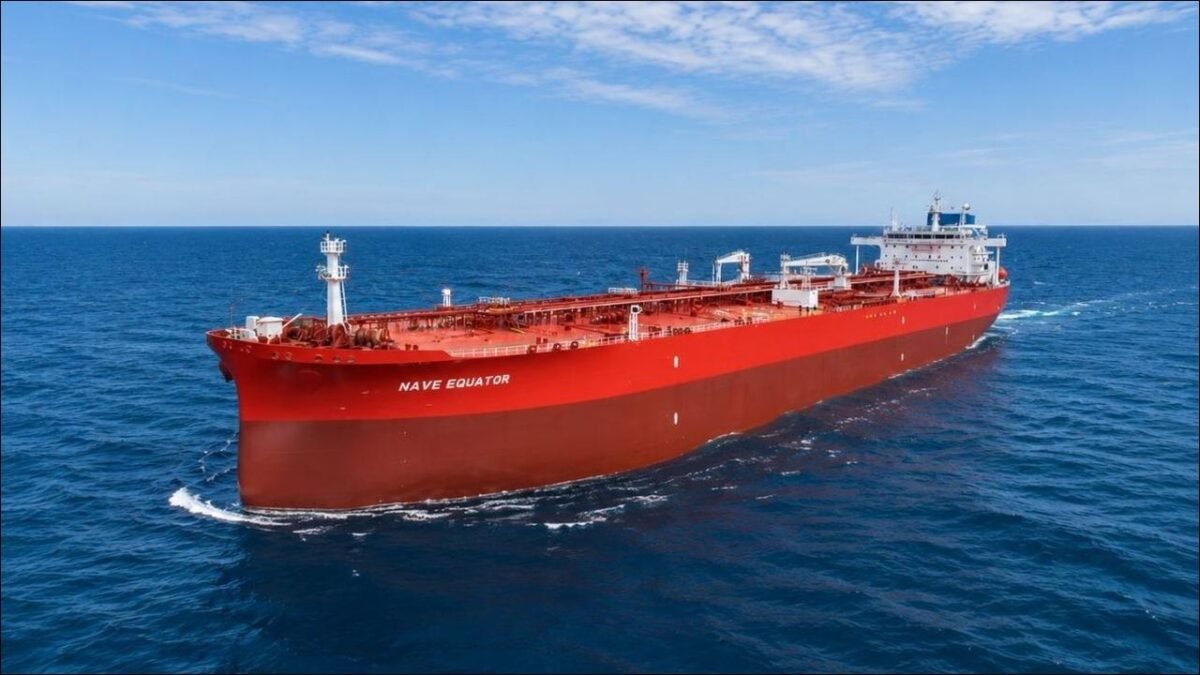
Navios Maritime Partners has significantly bolstered its formidable fleet with the strategic delivery of a new, state-of-the-art product tanker, the Nave Orbit, designed with readiness for future conversion to operate on liquefied natural gas (LNG) or methanol. This pivotal acquisition underscores Navios Maritime Partners’ proactive commitment to embracing sustainable shipping solutions and positioning itself at the forefront of the maritime industry’s decarbonization journey. The arrival of the 117,012 DWT Aframax/LR2 vessel, announced via a company LinkedIn post, marks a tangible step in the company’s ongoing efforts to modernize its fleet with environmentally conscious technologies. The decision to invest in an LNG and methanol-ready tanker like the Nave Orbit reflects a broader industry trend where shipowners are increasingly seeking flexibility in propulsion systems to navigate the evolving landscape of environmental regulations and alternative fuel availability. By ensuring the Nave Orbit can be adapted for cleaner fuels in the future, Navios Maritime Partners is not only enhancing its operational efficiency but also mitigating future compliance risks and contributing to a greener global supply chain. This strategic foresight allows the vessel to operate on conventional fuels initially, while providing a clear pathway to transition to more sustainable options as infrastructure and supply chains for LNG and methanol mature.
Pioneering Sustainable Tanker Design with Nave Orbit
The Nave Orbit represents a new generation of maritime vessels engineered for longevity and adaptability. As an Aframax/LR2 product tanker, it offers versatile cargo handling capabilities for refined petroleum products. Crucially, its design facilitates seamless conversion to alternative fuels, specifically LNG and methanol, signaling a robust commitment to environmental stewardship and future-proof operations in the evolving shipping sector. This strategic design provides a distinct advantage in a rapidly changing regulatory environment.
Equipped with advanced Framo Pumps, the Nave Orbit is optimized for cargo handling efficiency and safety. Beyond its operational prowess, the vessel integrates the latest environmentally friendly technologies to optimize energy efficiency. These design choices are foundational elements of Navios Maritime Partners’ broader strategy to strengthen its decarbonization pathway, ensuring new fleet additions align with future environmental imperatives. This proactive approach delivers significant long-term operational and environmental benefits.
The inherent flexibility of an LNG and methanol-ready vessel offers a significant strategic advantage. It allows shipowners to mitigate the considerable financial risks associated with investing heavily in a single alternative fuel technology before widespread adoption and infrastructure are fully mature. This “fuel-ready” concept provides a valuable bridge, enabling companies like Navios Maritime Partners to meet current demands while maintaining the agility to pivot to cleaner energy sources when market conditions and regulatory frameworks are more clearly defined. It’s a pragmatic solution to a complex, evolving challenge within the shipping industry.
Navios Maritime Partners’ Commitment to Green Shipping
Navios Maritime Partners, a prominent global shipping entity, operates a vast and diversified fleet, underscoring its significant presence across various maritime segments. With an impressive portfolio comprising 173 ships, boasting a combined carrying capacity of 15.9 million DWT and 287,243 TEU, the company consistently demonstrates its capacity for strategic growth and fleet optimization. The delivery of the Nave Orbit exemplifies their continuous investment in high-quality, efficient assets designed to serve global trade for decades, while simultaneously addressing pressing environmental concerns.
The company’s investment in vessels like the Nave Orbit aligns perfectly with its overarching vision for sustainable shipping. This involves not merely meeting current environmental regulations but actively anticipating and preparing for future, stricter mandates from bodies like the International Maritime Organization (IMO). By integrating advanced, environmentally conscious designs into new builds, Navios Maritime Partners is proactively working towards reducing its carbon footprint and contributing to the industry-wide goal of net-zero emissions by 2050. This proactive stance solidifies their position as a responsible and forward-thinking industry leader in maritime sustainability.
Navigating the Alternative Fuel Landscape for Decarbonization
The maritime industry is undergoing a profound transformation, driven by an urgent global imperative to reduce greenhouse gas emissions. The acquisition of LNG and methanol-ready vessels by Navios Maritime Partners directly reflects this monumental shift. Shipowners worldwide are grappling with the challenge of selecting viable alternative fuels and propulsion technologies that can deliver significant emissions reductions while ensuring operational viability and cost-effectiveness. LNG and methanol have emerged as leading contenders, each presenting unique advantages and challenges within the decarbonization journey.
LNG offers immediate reductions in sulfur oxides (SOx), nitrogen oxides (NOx), and particulate matter, alongside a notable decrease in CO2 emissions compared to conventional marine fuels. Methanol, meanwhile, gains traction due to lower capital expenditure for engine conversion and its potential for “green” production from renewable sources, offering a pathway to carbon neutrality. The flexibility to choose between these fuels via a ‘ready’ vessel design allows shipowners to adapt as the regulatory landscape tightens and the supply chain for each fuel matures. This cautious yet progressive approach is crucial in an uncertain future for maritime fuel options.
While alternative-fuel-ready vessels are gaining traction, the actual conversion rate to cleaner fuels remains relatively low. This highlights complexities like substantial capital investment for retrofits, the availability and cost of alternative fuels, and the need for adequate bunkering infrastructure. However, pioneering companies such as Hapag-Lloyd and Seaspan have successfully undertaken such retrofits, demonstrating the feasibility and long-term potential of these conversions. Their experiences provide valuable case studies for overcoming challenges associated with the maritime energy transition.
The strategic decision to order methanol- or LNG-ready ships stems from a pragmatic “wait-and-see” approach. This strategy enables companies to initially operate vessels on conventional fuels, benefiting from existing bunkering infrastructure and lower initial operating costs. Crucially, it provides the invaluable option to convert to cleaner, more sustainable fuels at a later stage, when economics, regulatory environment, and technological advancements become more favorable. This flexibility is paramount in an industry characterized by long asset lifespans and significant capital expenditure, allowing for a phased transition rather than an abrupt, risky leap.
Charting a Course for a Resilient and Green Maritime Future
The delivery of the Nave Orbit to Navios Maritime Partners is more than a routine fleet expansion; it signifies a robust declaration of intent in the race towards a greener maritime future. This investment in a technologically advanced, dual-fuel-ready tanker underscores a strategic vision that prioritizes environmental responsibility without compromising operational excellence. By incorporating the latest energy-efficient designs and anticipating future fuel transitions, Navios Maritime Partners is actively shaping a more sustainable global supply chain. This forward-thinking approach provides a blueprint for other industry players seeking long-term sustainability.
The trend towards alternative fuel-ready vessels is set to accelerate, driven by increasingly stringent environmental regulations, growing stakeholder pressure, and the undeniable economic benefits of reduced emissions and fuel consumption. As the global shipping community strives to meet ambitious decarbonization targets, the strategic flexibility offered by ships like the Nave Orbit will become indispensable. These vessels serve as crucial enablers for shipping companies to navigate the complexities of the energy transition, allowing them to remain competitive and compliant in a rapidly evolving market landscape.
Ultimately, the success of the shipping industry’s decarbonization efforts will hinge on a collaborative approach involving shipowners, technology providers, fuel suppliers, regulators, and financial institutions. Navios Maritime Partners’ move with the Nave Orbit exemplifies a key step by a major player in this collective journey, showcasing how individual company decisions contribute to the broader industry transformation. Their commitment to embracing innovative, sustainable solutions sets a positive precedent, paving the way for a more environmentally sound and resilient future for global maritime trade.