KCC Completes Wind-Assisted Vessel Program | Mariner News
In a significant milestone for sustainable maritime transport, Klaveness Combination Carriers (KCC) has proudly announced the completion of its ambitious newbuild program, marked by the final delivery of a state-of-the-art wind-assisted vessel. This achievement underscores KCC’s unwavering commitment to pioneering eco-friendly solutions and accelerating the decarbonization of the global shipping industry. The successful integration of wind propulsion technology into its fleet positions KCC at the forefront of maritime innovation, showcasing a tangible step towards a greener future for ocean freight. This final delivery not only represents the culmination of years of strategic planning and technological development but also sets a new benchmark for environmental responsibility within the specialized combination carrier segment. KCC’s dedication to developing and deploying these advanced vessels highlights a proactive approach to addressing climate change challenges and meeting stringent environmental regulations, while simultaneously optimizing operational efficiency and fuel consumption across its fleet.
Pioneering the Dawn of Wind-Assisted Maritime Transport
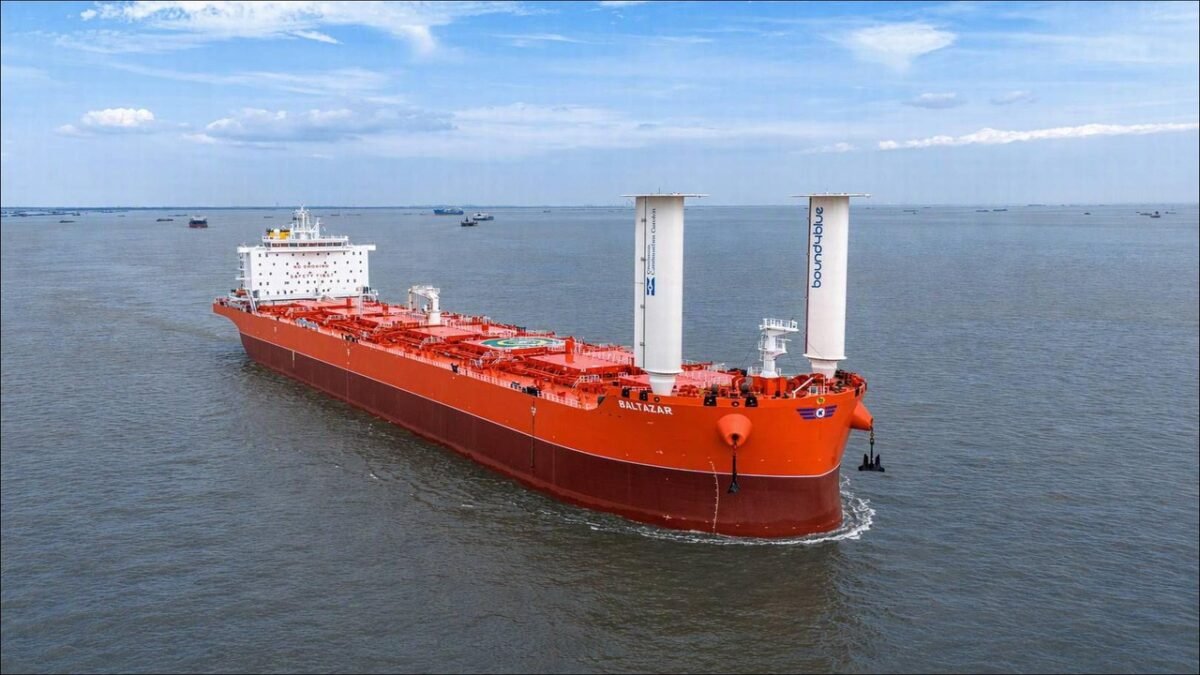
The completion of KCC’s wind-assisted vessel newbuild program marks a pivotal moment in the evolution of maritime transport. For decades, the shipping industry has relied heavily on fossil fuels, but growing environmental concerns and regulatory pressures have spurred a global quest for alternative propulsion methods. Wind-assisted propulsion, once a concept relegated to historical sailing ships, has re-emerged as a viable and highly promising solution, bolstered by modern engineering and automation. KCC’s investment in this technology signals a robust belief in its potential to significantly reduce greenhouse gas emissions and operational costs. These innovative vessels leverage the power of wind, primarily through advanced Flettner rotors, to provide supplementary propulsion, thereby reducing the workload on main engines and subsequently cutting fuel consumption and emissions. This strategic move by KCC not only demonstrates foresight but also serves as an inspiring example for other players in the maritime sector contemplating similar transitions towards more sustainable operations. The successful deployment of these ships across international routes will provide invaluable real-world data, further solidifying the business case for wind-assisted technology and accelerating its broader adoption throughout the global fleet. The maritime industry keenly observes these developments, understanding that KCC’s success could pave the way for a more widespread embrace of green technologies, fundamentally altering how goods are transported across the world’s oceans.
KCC’s Vision for Sustainable Shipping and Fleet Modernization
KCC’s vision extends far beyond simply adding new ships to its fleet; it encompasses a holistic approach to sustainable shipping. The newbuild program is an integral part of KCC’s broader strategy to modernize its fleet, enhance environmental performance, and maintain a competitive edge in a rapidly evolving market. By integrating wind-assisted technology, KCC is not just complying with future environmental regulations but actively shaping them, proving that economically viable and environmentally responsible shipping can coexist. This long-term commitment to sustainability is driven by a deep understanding of the industry’s role in global climate efforts and a desire to contribute positively to a low-carbon economy. The company’s focus on combination carriers, capable of carrying both wet and dry cargoes, already offers significant environmental advantages by reducing ballast leg journeys. Pairing this inherent efficiency with cutting-edge wind propulsion systems amplifies KCC’s environmental credentials, positioning them as a leader in green logistics. The investment reflects a strategic choice to future-proof their operations against escalating fuel prices and increasingly stringent environmental standards, ensuring operational resilience and long-term value creation. KCC is setting a new industry standard, encouraging other operators to explore similar avenues for fleet optimization and environmental stewardship. This forward-thinking approach is crucial for navigating the complexities of modern maritime trade while safeguarding the planet’s ecological balance for generations to come.
Technology Behind the Wind-Assisted Vessels: Efficiency and Innovation
At the heart of KCC’s new wind-assisted fleet lies sophisticated technology designed for maximum efficiency and reliability. The vessels are equipped with advanced Flettner rotor systems, which are tall, cylindrical structures that rotate to harness the Magnus effect, generating thrust from the wind. These rotors are highly automated and integrated with the ship’s navigation and propulsion systems, allowing for optimal performance across varying wind conditions and sea states. The operational benefits are substantial, including significant reductions in fuel consumption, which directly translates to lower operating costs and a smaller carbon footprint. Beyond the rotors, these vessels incorporate a suite of other energy-saving measures and digital solutions, from optimized hull designs to advanced route planning software that capitalizes on prevailing winds. The synergy between these technologies ensures that each vessel operates at peak efficiency, minimizing environmental impact without compromising speed or cargo capacity. The design process involved extensive research and development, collaborating with leading maritime technology firms to ensure the robust performance and safety of these innovative systems. Crew training has also been a critical component, preparing seafarers to operate these advanced ships effectively and safely, maximizing the benefits of the wind-assist technology. The successful implementation of these complex systems demonstrates KCC’s engineering prowess and its commitment to embracing and integrating cutting-edge solutions that promise to redefine maritime transport for decades to come, moving beyond conventional fossil fuel dependency.
Environmental and Economic Benefits of Modern Fleets
The widespread adoption of wind-assisted technology, as championed by KCC, offers a dual advantage: profound environmental benefits coupled with compelling economic incentives. Environmentally, the primary impact is a substantial reduction in greenhouse gas emissions, including CO2, NOx, and SOx, contributing significantly to the maritime industry’s global decarbonization targets. By supplementing conventional engine power with wind energy, these vessels lessen their reliance on heavy fuel oil, reducing air pollution and mitigating the overall ecological footprint of shipping operations. This move aligns perfectly with international mandates such as the IMO’s ambitious goals for emission reduction. Economically, the advantages are equally compelling. Fuel constitutes a major portion of a vessel’s operating expenses, and by reducing fuel consumption, KCC stands to achieve considerable cost savings over the lifespan of these new vessels. This financial efficiency provides a strong business case for sustainable investments, demonstrating that green shipping can also be smart business. Furthermore, a reduced carbon footprint can enhance a company’s brand reputation, attracting environmentally conscious clients and investors, and potentially opening new market opportunities in a world increasingly valuing sustainability. These modern, efficient fleets are also better positioned to navigate future carbon taxes or emission trading schemes, providing a competitive advantage and long-term financial stability. KCC’s proactive investment in these advanced ships exemplifies how environmental responsibility can seamlessly integrate with sound economic strategy, creating a model for profitable and sustainable growth in the maritime sector.
The Future of Decarbonized Shipping and KCC’s Enduring Legacy
KCC’s completion of its wind-assisted vessel program is more than just a delivery; it’s a testament to the future of decarbonized shipping. This initiative firmly establishes KCC as a frontrunner in the movement towards a more sustainable maritime industry, setting a powerful precedent for other shipping companies globally. The success of this program will undoubtedly inspire further innovation and investment in alternative propulsion systems, fostering a collaborative environment where industry players work together to accelerate the transition away from fossil fuels. The enduring legacy of KCC’s efforts will be seen in the reduced carbon emissions, improved air quality, and the overall positive environmental impact generated by its modern fleet. As the world increasingly focuses on climate action, KCC’s pioneering spirit demonstrates that practical, scalable solutions exist to tackle one of the most challenging aspects of global commerce: sustainable logistics. The future of shipping is increasingly green, digital, and efficient, and KCC’s latest achievements place it firmly at the vanguard of this transformation. This commitment to environmentally sound practices not only ensures the company’s relevance in a rapidly changing world but also contributes to a healthier planet for all. KCC’s journey underscores a critical message: innovation, when coupled with a clear vision for sustainability, can drive meaningful change and chart a course towards a truly decarbonized maritime future. Their dedicated pursuit of wind-assisted technology is a shining example of how industry leaders can and must contribute to global sustainability goals, proving that a greener ocean is indeed an achievable reality, propelling the entire maritime sector towards a more responsible and efficient era of transport.