Marine Heatwaves: Impact on Ocean Ecosystems & Climate Change | Mariner News
The ocean, often perceived as an immutable vastness, is undergoing a profound transformation. Reports of widespread fish die-offs and the haunting specter of bleached coral are not isolated incidents but rather stark indicators of a global phenomenon: marine heatwaves. These invisible yet incredibly potent forces are cooking ocean ecosystems, and scientific consensus projects they will only grow stronger and more frequent in the coming decades. As our planet continues to warm at an unprecedented rate, understanding the mechanics, impacts, and potential responses to marine heatwaves becomes paramount for the health of our marine environments and, by extension, human society.
Marine heatwaves are defined by extended periods where ocean temperatures remain abnormally hot for a particular region and time of year. While they may appear invisible from the shore, their devastating impacts beneath the surface are undeniable. These events can trigger a cascade of ecological disruptions, from the immediate mortality of sensitive species to long-term alterations of entire ocean food webs. The escalating frequency and intensity of marine heatwaves represent a critical challenge that demands immediate global attention and concerted action, reinforcing the urgent need to address climate change at its root.
Understanding Marine Heatwaves: The Science Behind Ocean Warming
Marine heatwaves, though amplified by anthropogenic climate change, are a fascinating interplay of natural oceanographic and atmospheric processes. They typically form when a combination of factors leads to anomalous warming. One common pathway involves hot, dry, and windless conditions near the ocean surface, preventing the usual mixing of warmer surface waters with cooler, deeper layers. This stratification traps heat, causing temperatures to climb steadily over days, weeks, or even months. Another mechanism involves unusually strong currents that transport vast quantities of warmer water from tropical regions into colder ocean areas, effectively carrying a ‘heat pulse’ across basins.
Scientists identify marine heatwaves by continuously monitoring ocean temperatures and comparing these observed values against a historical average, or baseline, for a specific location and time of year. When temperatures exceed a certain threshold (typically the 90th percentile of historical observations) for five consecutive days or more, a marine heatwave is declared. These events can vary dramatically in duration, intensity, and spatial extent, ranging from localized warming anomalies impacting a few square kilometers to vast heat domes covering entire ocean basins, persisting for months on end. The duration and intensity of these marine thermal extremes are critical determinants of their ecological impact, as prolonged heat exposure often pushes marine organisms beyond their physiological limits.
Factors like atmospheric high-pressure systems, El Niño events, and suppressed cloud cover can all contribute to the conditions ripe for marine heatwave formation. As global ocean temperatures steadily rise due to greenhouse gas accumulation, the baseline itself is shifting upwards. This means that what was once considered an extreme warm event may soon become the new normal, increasing the likelihood and severity of future marine heatwaves even further. Understanding these complex interactions is crucial for improving prediction models and developing effective early warning systems for vulnerable marine regions worldwide.
Devastating Impacts on Vulnerable Ocean Ecosystems
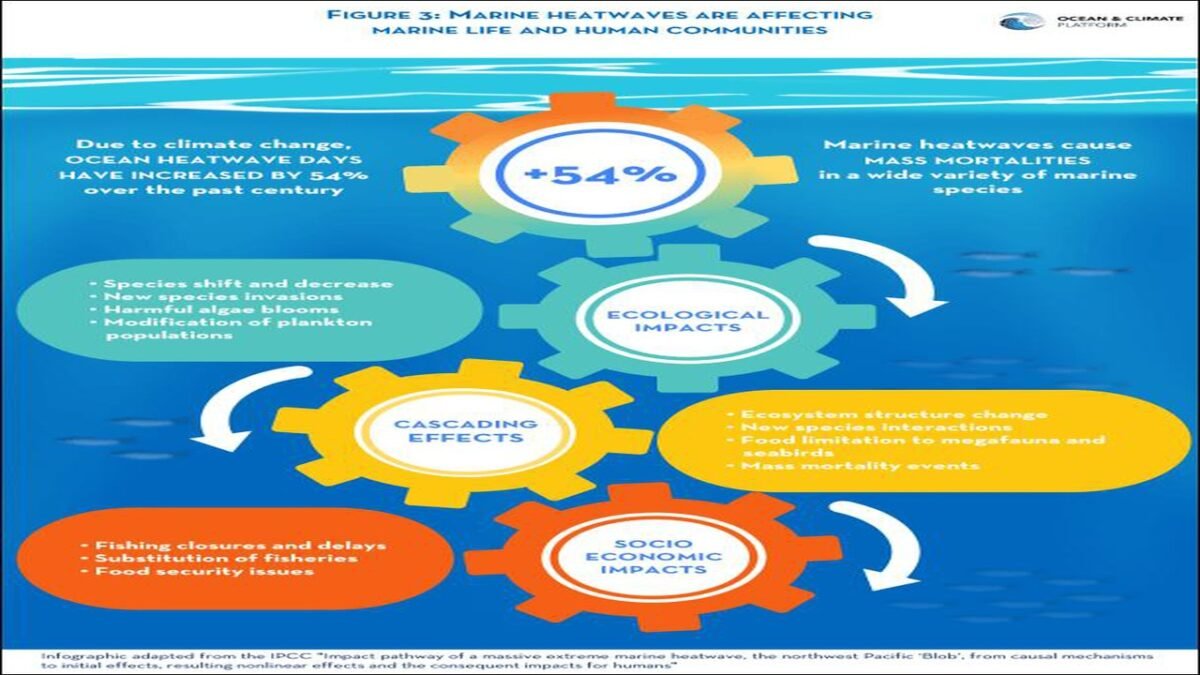
The consequences of marine heatwaves are far-reaching, directly threatening the intricate balance of ocean ecosystems and the livelihoods that depend on them. Perhaps the most iconic and visually striking impact is coral bleaching. When exposed to prolonged high temperatures, corals expel the symbiotic algae living in their tissues, losing their vibrant color and primary food source. While corals can recover from mild bleaching, severe or recurrent events lead to widespread coral mortality, transforming thriving reefs into barren landscapes. Given that coral reefs support an estimated 25% of all marine species, their degradation has catastrophic implications for global marine biodiversity.
Beyond corals, marine heatwaves wreak havoc on a wide array of marine life. Seagrass meadows, vital nursery grounds and carbon sinks, can experience significant die-offs, destabilizing coastal ecosystems and accelerating erosion. Fish populations are severely impacted, leading to mass mortality events, altered migration patterns, and reduced reproductive success. This disruption directly affects commercial and artisanal fisheries, resulting in economic losses for coastal communities reliant on healthy fish stocks. Shellfish, crustaceans, and other invertebrates also suffer, impacting the base of the marine food web and creating trophic cascades that can affect larger predators.
Furthermore, the stress from marine heatwaves can make organisms more susceptible to diseases, alter species distributions as marine life attempts to find cooler waters, and even lead to changes in ocean chemistry, such as localized acidification. These combined stresses weaken the resilience of entire ecosystems, making them less able to cope with other pressures like pollution or overfishing. The cumulative effect is a profound reshaping of marine environments, with long-term ecological and socioeconomic ramifications that are still being fully understood.
Climate Change: Fueling Stronger and More Frequent Marine Heatwaves
The most significant driver behind the observed increase in marine heatwave frequency and intensity is anthropogenic climate change. The excessive emission of greenhouse gases, primarily from the burning of fossil fuels, traps heat in the Earth’s atmosphere, and a substantial portion of this excess heat – over 90% – is absorbed by the ocean. This continuous ocean warming is raising global average sea surface temperatures, effectively shifting the baseline against which marine heatwaves are measured. Consequently, what were once considered rare extreme temperature events are now becoming more common and more severe.
Scientific models project a future where marine heatwaves will not only be more frequent but also longer-lasting and more intense, impacting regions that were historically spared. The Intergovernmental Panel on Climate Change (IPCC) has repeatedly highlighted the direct link between human activities and the escalating crisis in our oceans. Every increment of global warming translates into a significant increase in the risk and severity of these marine thermal extremes, pushing vulnerable ecosystems closer to critical tipping points from which recovery may be impossible. This relentless warming exacerbates existing environmental stressors and reduces the capacity of ocean ecosystems to provide essential services like oxygen production, carbon sequestration, and food provision.
Moreover, the warming ocean contributes to positive feedback loops that can further accelerate climate change impacts. For example, warmer water holds less dissolved carbon dioxide, potentially reducing the ocean’s capacity as a carbon sink and leaving more CO2 in the atmosphere. The melting of polar ice, driven by global warming, also introduces fresh water into the ocean, which can alter circulation patterns and potentially influence regional heat distribution, further complicating the dynamics of future marine heatwaves. Addressing the root cause – climate change – is therefore not merely an environmental concern but an existential one for the health of our blue planet.
Navigating the Crisis: Strategies for Mitigation and Adaptation
While the prospect of escalating marine heatwaves is daunting, there are concrete strategies that can be implemented to mitigate their impacts and enhance the resilience of ocean ecosystems. The most critical long-term solution lies in drastically reducing global greenhouse gas emissions to slow and ultimately halt the progression of climate change. This requires a rapid transition to renewable energy sources, improved energy efficiency, and sustainable land-use practices on a global scale. International cooperation and robust policy frameworks are essential to achieve these ambitious targets and safeguard our marine environments.
In addition to global emission reductions, local and regional adaptation strategies play a vital role. Establishing and effectively managing marine protected areas (MPAs) can enhance ecosystem resilience by reducing other stressors like overfishing and pollution, allowing marine life to better withstand thermal extremes. Restoring degraded habitats, such as coral reefs and seagrass beds, through active intervention can also help build a buffer against heatwave impacts. Scientists are also exploring innovative solutions, such as developing heat-tolerant coral strains, although these are typically small-scale and cannot replace broader conservation efforts.
Improved scientific research and monitoring are paramount for better predicting marine heatwaves and their potential effects. Developing advanced early warning systems can provide valuable lead time for managers and communities to implement emergency measures, such as temporarily restricting fishing or relocating vulnerable species. Public awareness campaigns and education are also crucial to foster a sense of urgency and collective responsibility. By understanding the gravity of the marine heatwave crisis and implementing a multifaceted approach combining global climate action with targeted local conservation, we can strive to protect our precious ocean ecosystems for future generations. The time for decisive action to protect our oceans from the intensifying threat of marine heatwaves is now.