

Aarhus Tests Denmark’s First Shore Power for Containerships
The Port of Aarhus has successfully completed a trial docking using Denmark’s first shore power facility for containerships, marking a significant step in the port’s infrastructure electrification strategy. The 2,150 TEU vessel Dettifoss, operated by Iceland-based Eimskip, connected to the grid for nearly 10 hours during the test, drawing approximately 6.5 MWh of electricity. Operational […]
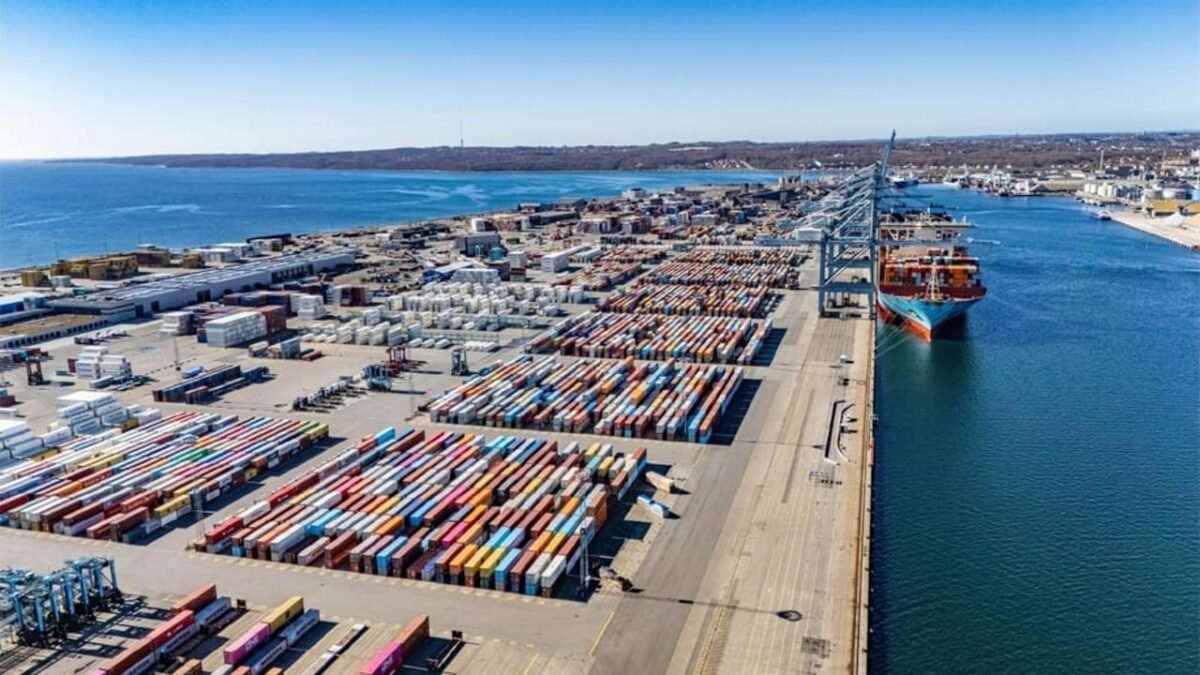
The Port of Aarhus has successfully completed a trial docking using Denmark’s first shore power facility for containerships, marking a significant step in the port’s infrastructure electrification strategy. The 2,150 TEU vessel Dettifoss, operated by Iceland-based Eimskip, connected to the grid for nearly 10 hours during the test, drawing approximately 6.5 MWh of electricity.
Operational Readiness
The port plans to move to full daily operations for the shore power system by January 2027. While the immediate goal is to mitigate noise and particle emissions in the local environment, the installation serves a strategic function as the port prepares for impending EU regulations mandating at-berth vessel connectivity.
Competitive Implications
Beyond environmental compliance, the Port of Aarhus is positioning shore power as a long-term competitive advantage. As a critical hub for Danish container cargo, the port’s ability to offer cold ironing capabilities to its primary liner operators shifts the facility from a passive utility provider to an active partner in its customers’ decarbonization roadmaps.
For shipping lines like Eimskip, which already operate in jurisdictions with established shore power infrastructure, the development reduces technical friction for their Scandinavian transit routes. As EU regulatory pressure mounts, the ability to prioritize and streamline berth access for vessels capable of connecting to shore power may eventually become a differentiating factor in port congestion management and scheduling priority for major container lines.