

Green fund aims to finance wind propulsion for 200 ships
The Global Centre for Maritime Decarbonisation (GCMD) has launched an initiative to finance wind propulsion installations for 200 vessels by 2030, a project that hinges on closing a substantial capital shortfall. While the organization has set a funding target of USD 500 million, current commitments from partners remain limited to USD 35 million. The initiative […]
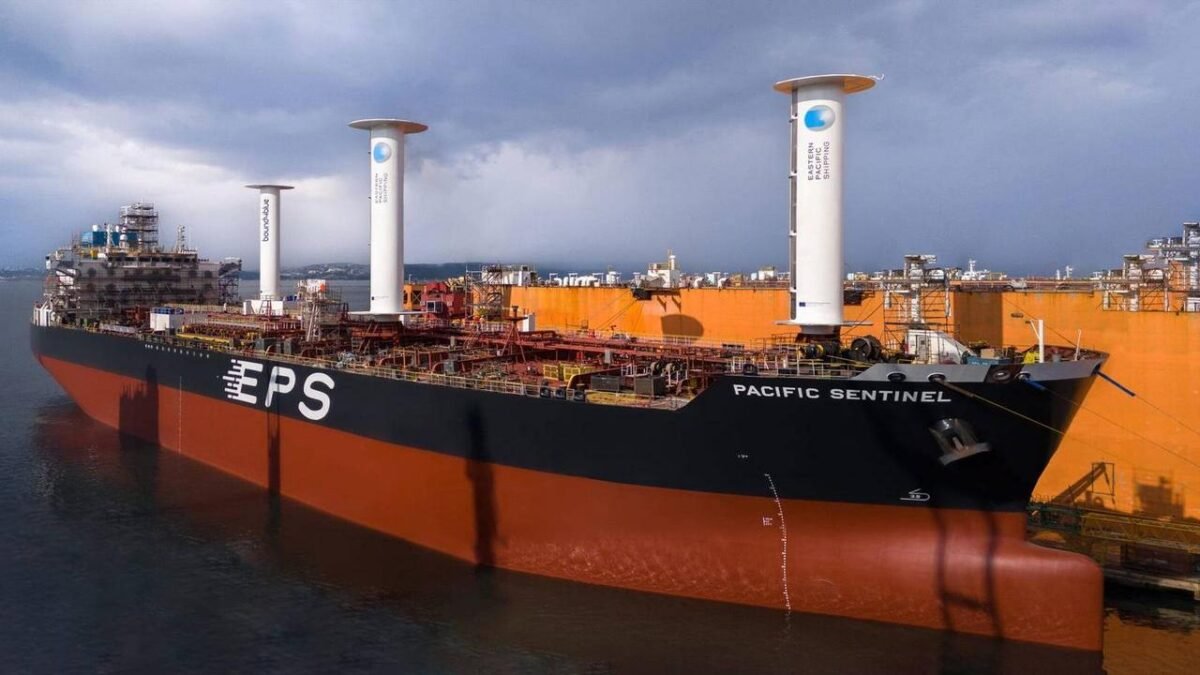
The Global Centre for Maritime Decarbonisation (GCMD) has launched an initiative to finance wind propulsion installations for 200 vessels by 2030, a project that hinges on closing a substantial capital shortfall. While the organization has set a funding target of USD 500 million, current commitments from partners remain limited to USD 35 million.
The initiative aims to scale the adoption of wind-assisted propulsion systems, which have demonstrated measurable efficiency gains. Research indicates that suction sails, such as those recently installed on the Eastern Pacific Shipping vessel Pacific Sentinel, can reduce carbon dioxide emissions by an average of 8 percent. The Pacific Sentinel project served as an early proof of concept, supported by the Fund for Energy Efficiency in Technologies.
The disparity between the GCMD’s USD 500 million goal and the USD 35 million currently raised highlights the challenge of de-risking wind technology for commercial shipowners. While the 8 percent efficiency improvement is statistically significant in the context of current decarbonization mandates, the capital intensity of retrofitting remains a primary barrier to widespread adoption.
For the industry, the reliance on specialized funding pools like the one utilized by Eastern Pacific Shipping suggests that wind-assisted propulsion may struggle to gain traction through traditional maritime financing alone. If the GCMD cannot bridge the current nine-figure funding gap, the industry may see a bifurcation in ship performance, where only firms with dedicated sustainability budgets or access to specialized green finance can afford the operational fuel savings associated with wind-assisted technology.