Japanese Chemical Tanker Completes First Methanol Bunkering | Mariner News
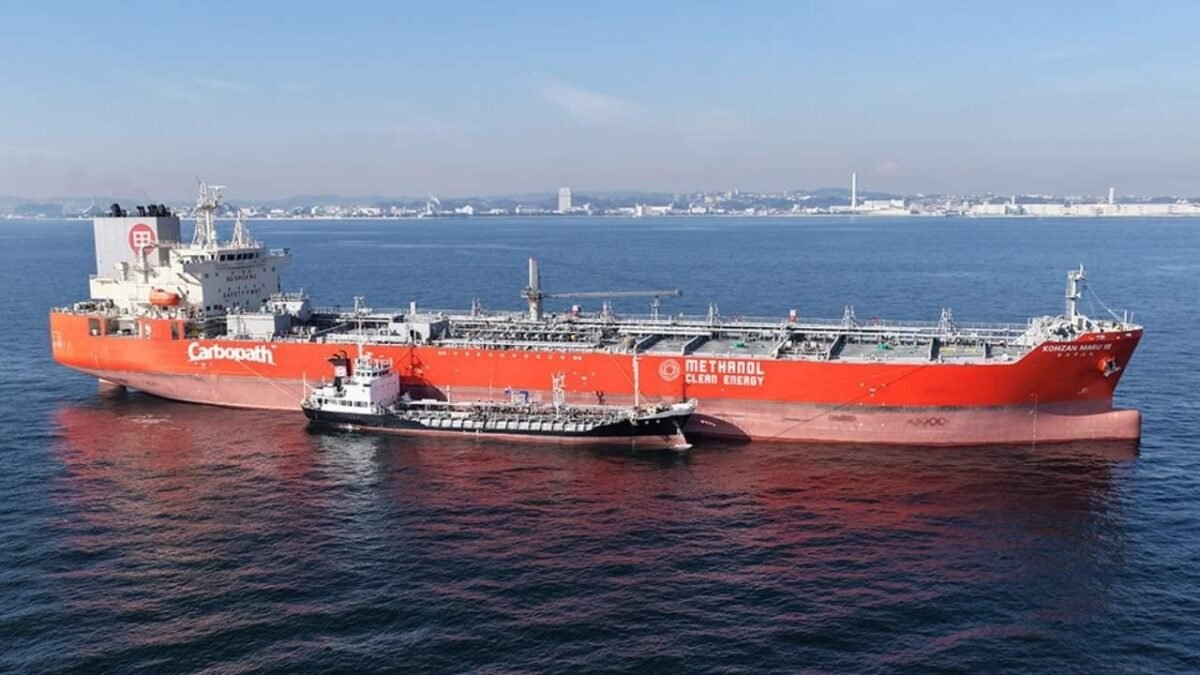
A Japanese chemical tanker, the 498 GT Kokuryu Maru, has successfully completed its inaugural methanol bunkering, utilizing domestically produced bio-methanol. This milestone represents a tangible step in Japan’s strategic efforts to reduce emissions from its domestic shipping sector.
Operated by Kokuka Sangyo and chartered by Mitsubishi Gas Chemical (MGC), the Koa Sangyo-built vessel is Kokuka Sangyo’s first dedicated methanol-fuelled vessel, equipped with a methanol-fuelled main engine from Hanshin Diesel Works. The bunkering operation took place at Kinoe Port on September 24.
Significantly, the Kokuryu Maru is designed for a dual role: it will primarily transport methanol domestically while also serving as a methanol bunkering vessel. This operational flexibility offers an innovative model for developing bunkering infrastructure in regional waters, potentially accelerating the adoption of methanol as a marine fuel by integrating fuel delivery into standard cargo routes.
The fuel supplied for the bunkering included bio-methanol produced at MGC’s Niigata Plant, highlighting the development of a localized supply chain for alternative marine fuels within Japan. MGC anticipates that using methanol will reduce CO2 emissions by approximately 17.5% compared to conventional heavy fuel oil.
The project received support under a Japanese government program designed to promote LNG and methanol fuel systems in the maritime sector, underscoring a national commitment to decarbonization and the transition to alternative marine fuels.