

India Calls for De-Politicization of Global Supply Chains at G20
External Affairs Minister S. Jaishankar warns against the weaponization of market share and calls for diversified global production networks.
India is advocating for a fundamental restructuring of global trade routes, urging G20 members to de-politicize markets and resist the weaponization of market share and production capabilities. Speaking at the G20 Summit in Atlanta, External Affairs Minister S. Jaishankar emphasized that securing supply chains has transitioned from a logistics concern to a central pillar of global economic stability.
The minister’s call for de-risking through diversification suggests a strategic shift away from the high-concentration manufacturing models that have dominated the maritime landscape for decades. For the shipping industry, this push for multiple, transparent supply chains signals a move toward a more fragmented global trade map. Such a transition would likely increase the complexity of vessel deployment and demand for more robust regional connectivity as production shifts across a broader geographical footprint.
Resisting Market Concentration
Jaishankar specifically warned against predatory practices and the use of natural resources or finance as tools of coercion. By promoting the right of nations to industrialize, India is positioning itself as a leader for emerging economies seeking to break the dominance of established manufacturing hubs. This policy framework implies that future trade agreements and maritime partnerships may prioritize redundancy and security over the lowest-cost routing.
The emphasis on equitable economic growth and fair competition suggests that market share is increasingly viewed as a security risk factor. This could lead to a long-term shift in port investment strategies, favoring the development of new gateways that bypass traditional chokepoints and concentrated logistics corridors.
Operational Milestones in India
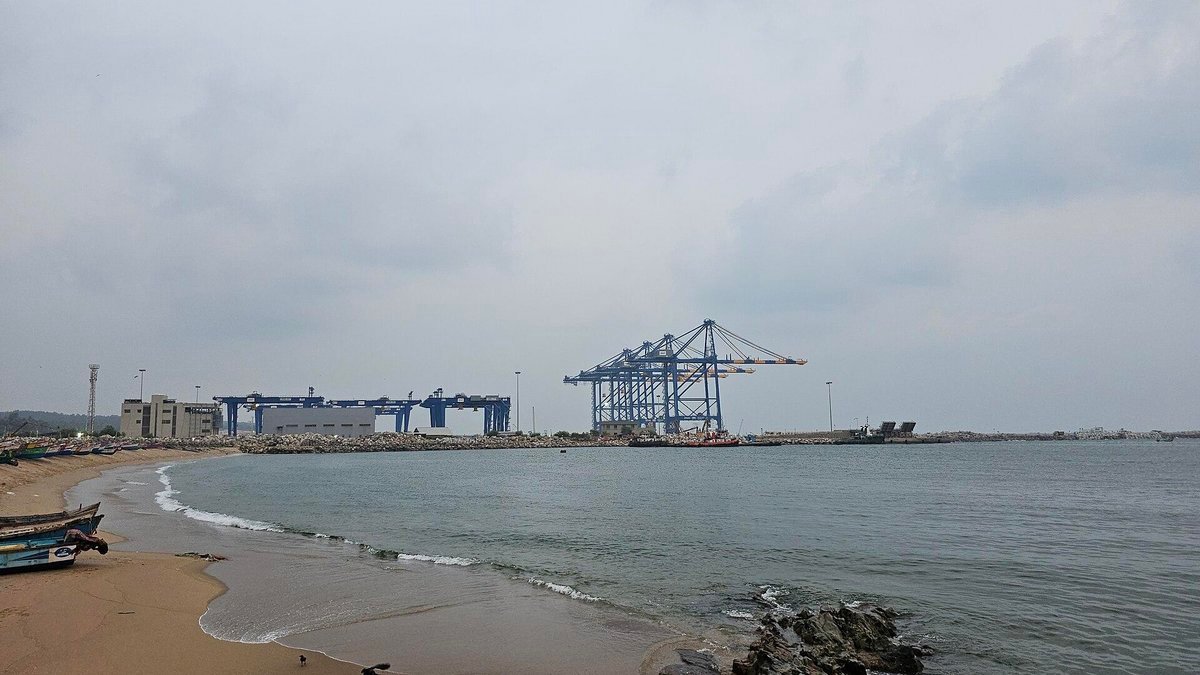
The call for diversified connectivity is already manifesting in regional operational developments. Vizhinjam has commenced its first direct import operations with the arrival of the MSC Sabrina III from Ningbo, marking a significant step in India’s effort to establish independent transshipment and import hubs.
Simultaneously, Paradip Port’s East Quay Coal Terminal has set a new monthly cargo handling record of 2.23 million metric tonnes. These developments underscore India’s commitment to building the domestic infrastructure necessary to support the resilient and multiple supply chains Jaishankar championed at the summit.
Source: indiashippingnews