Greek Shipowners Back Panama-Liberia NZF Plan Ahead of IMO | Mariner News
Greek shipowners have publicly endorsed the Panama-Liberia Net-Zero Framework (NZF) proposal, positioning it as a practical foundation for international discussions at upcoming IMO technical talks. This significant move signals a strong desire within the Greek shipping community for a realistic and globally applicable deal on maritime decarbonisation.
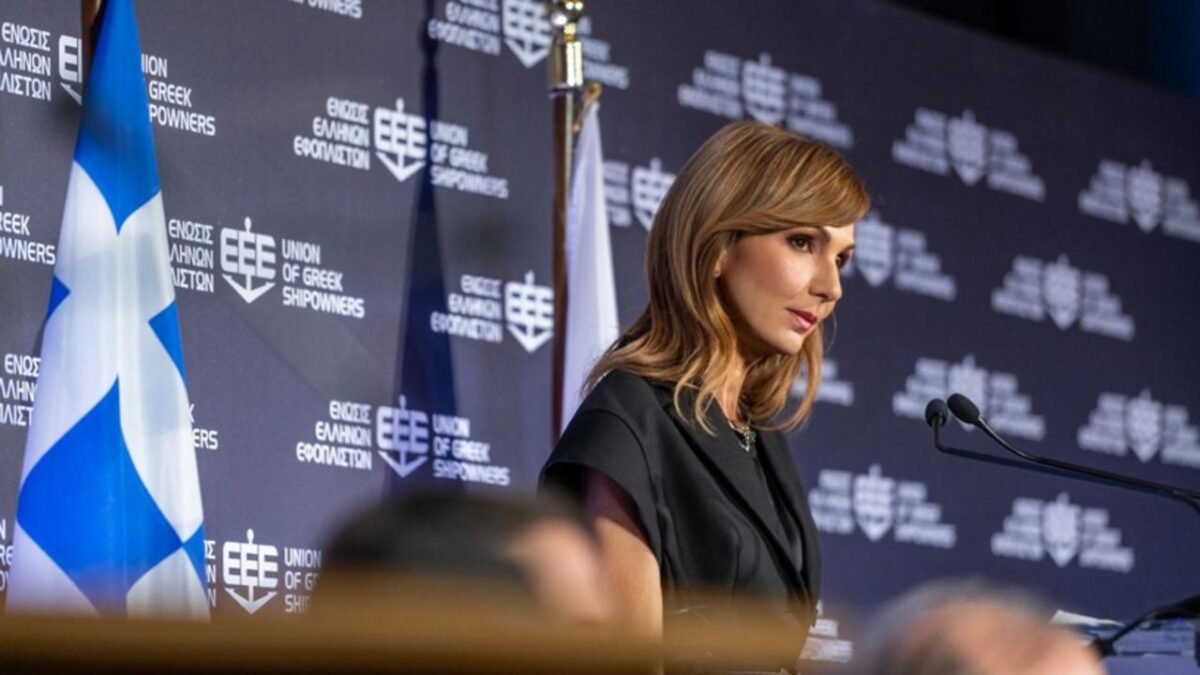
Melina Travlos, President of the Union of Greek Shipowners (UGS), affirmed the industry’s commitment to reducing emissions. However, she emphasized that any decarbonisation targets set by the International Maritime Organization (IMO) must align with current technological advancements and market realities.
Critique of Current IMO Framework
Travlos highlighted what she described as “significant weaknesses” within the proposed IMO Net-Zero Framework as currently formulated. She stated that the framework, in its present form, is “clearly not the solution” to the challenges faced by the global shipping industry in achieving its environmental goals.
Conversely, the UGS President characterized the Panama-Liberia approach as a “balanced and pragmatic foundation” for future negotiations, while acknowledging that it still has room for improvement and refinement.
Understanding the Panama-Liberia Proposal
The Panama-Liberia proposal, initially put forward ahead of the MEPC 84 meeting earlier this year, seeks to link the NZF’s Greenhouse Gas (GHG) fuel-intensity targets directly to the price and commercial availability of alternative marine fuels. This link is seen as crucial for ensuring that decarbonisation efforts remain feasible and economically viable for shipowners and operators worldwide.
The proposal garnered support from several IMO member states during its initial presentation, indicating a broader appetite for a framework that addresses practical implementation challenges.
Rationale for Greek Shipowner Support
The Greek shipowners’ endorsement stems from the proposal’s consideration of several key factors vital for the shipping sector’s transition to a greener future. Travlos noted that the Panama-Liberia plan accounts for the affordability, widespread availability, and scalability of alternative fuels. These elements are critical for the successful adoption of new propulsion technologies and low-carbon fuels across the diverse global fleet.
Furthermore, the proposal recognizes the ongoing importance of ship energy efficiency measures, which continue to play a crucial role in reducing maritime emissions even as the industry explores new fuel types. This holistic view, integrating both fuel strategies and operational efficiencies, underpins the Greek shipowners’ support.
Achieving Realistic Decarbonisation Targets
Ultimately, the Union of Greek Shipowners believes that while ambitious decarbonisation targets are necessary for the future of shipping, these targets must remain firmly rooted in realism. The Panama-Liberia NZF proposal is viewed as a significant step towards developing a framework that is both environmentally effective and practically implementable for the international maritime community.