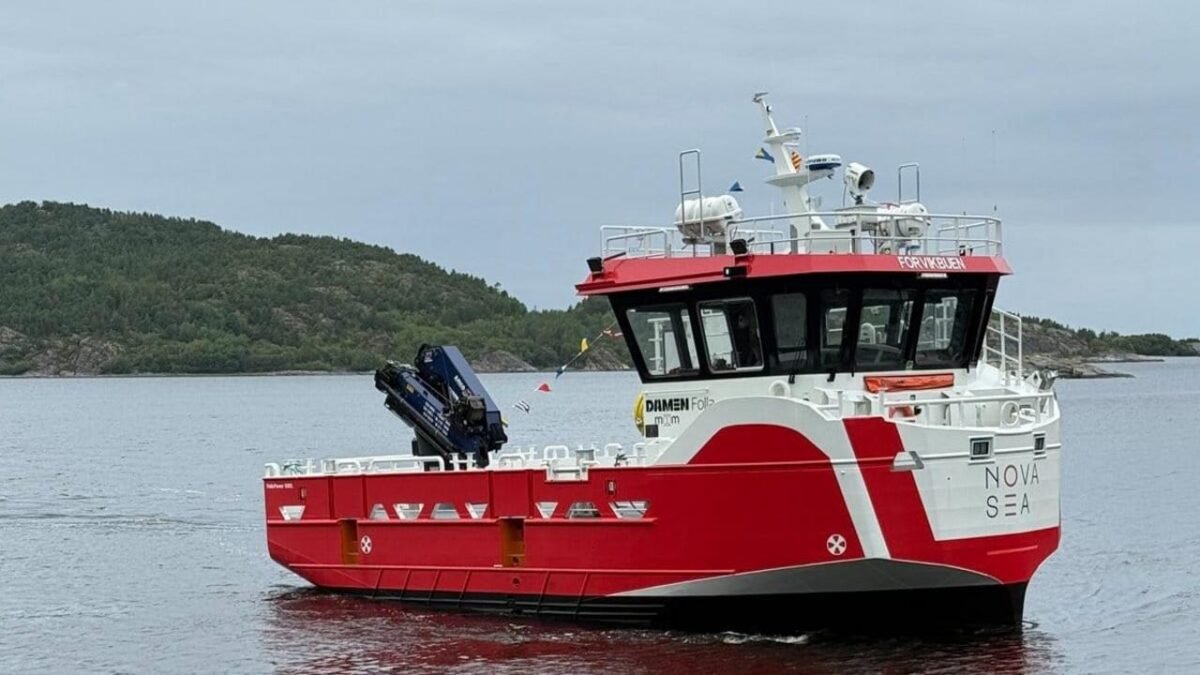
Damen Delivers Hybrid-Electric Workboat to Mowi Norway | Mariner News
In a significant move toward more sustainable maritime operations, Damen Folla has delivered a state-of-the-art hybrid-electric workboat to Mowi Norway, marking a pivotal advancement in aquaculture operations. This delivery underscores the growing commitment within the global shipping and fish farming industries to embrace greener technologies and reduce environmental impact. The new vessel, an innovative addition to Mowi Norway’s fleet, is set to revolutionize daily tasks in aquaculture by offering enhanced efficiency, lower emissions, and quieter operation, thereby setting a new standard for eco-friendly workboat technology. This development not only highlights Damen’s prowess in marine innovation but also Mowi Norway’s strategic vision for a sustainable future in seafood production.
Damen’s Advanced Hybrid-Electric Workboat: A Closer Look at the SeV 1508
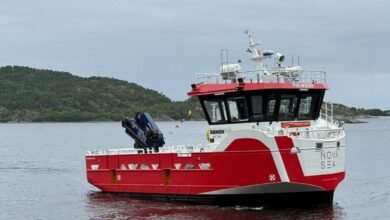
Damen’s latest offering to Mowi Norway is the SeV 1508, a meticulously engineered hybrid-electric workboat designed for the demanding environment of aquaculture. This vessel, handed over during the prestigious Nor-Fishing event in Trondheim on August 19, represents the culmination of advanced marine technology tailored for specific operational needs. The SeV 1508 is constructed from durable aluminum, measuring 14.9 meters in length, providing a robust yet agile platform for various fish farming tasks. Its compact size belies its sophisticated power system, which is at the forefront of sustainable shipping solutions.
At the heart of the SeV 1508’s innovative design is its powerful hybrid-electric propulsion system. This system integrates a substantial 444 kWh of battery capacity with a conventional generator and efficient electric thrusters. This configuration allows for flexible power management, enabling operators to switch between fully electric mode for silent, emission-free operations in sensitive areas, and hybrid mode for tasks requiring more sustained power. The benefits are manifold: significantly reduced fuel consumption, a drastic cut in greenhouse gas emissions, and notably quieter operations, which not only improves the working environment for the crew but also minimizes disturbance to the marine ecosystem, crucial for successful aquaculture operations. This integration of battery power with a generator ensures reliability and extended operational range, addressing common concerns about fully electric vessels in continuous duty cycles. The design showcases Damen’s commitment to delivering high-performance vessels that align with stringent environmental standards and operational efficiency requirements.
This delivery is particularly significant as it marks the seventh and final vessel under a comprehensive framework agreement. Initially signed with Nova Sea in 2022, this agreement laid the groundwork for modernizing the aquaculture fleet with more efficient and environmentally friendly vessels. The foresight embedded in this agreement is now fully realized, with each vessel contributing to a more sustainable and technologically advanced maritime infrastructure. The successful execution of this framework highlights the collaborative efforts between Damen and its clients to push the boundaries of marine innovation. The SeV 1508 stands as a testament to practical sustainability, demonstrating how advanced workboat technology can seamlessly integrate into traditional industries to achieve substantial environmental and operational benefits.
Mowi Norway’s Commitment to Sustainability and Operational Excellence
Mowi Norway’s embrace of hybrid-electric workboat technology is a clear indicator of its strategic direction towards sustainable aquaculture. The context of this delivery is further enriched by Mowi’s acquisition of Nova Sea in 2025, an integration that brought Nova Sea’s operations into Mowi Norway’s Northern Region. This consolidation has allowed Mowi to standardize and elevate its fleet capabilities, replacing older, less efficient workboats with modern, eco-friendly alternatives. The framework agreement, initiated with Nova Sea, thus gained broader significance under Mowi’s expansive operations, aligning perfectly with the company’s overarching goals for environmental stewardship and operational efficiency.
Mowi, as a global leader in seafood, places a high priority on environmental performance and responsible farming practices. The investment in hybrid-electric vessels like the SeV 1508 directly supports these corporate values by providing practical solutions to lower emissions and reduce the carbon footprint of its extensive aquaculture operations. By adopting vessels with electric thrusters and substantial battery capacity, Mowi is not only reducing its reliance on fossil fuels but also enhancing its reputation as a pioneer in green maritime. This strategic fleet renewal is essential for maintaining productivity while minimizing ecological impact, demonstrating that economic success and environmental responsibility can go hand in hand. The enhanced operational efficiency provided by these advanced workboats also translates into improved working conditions for staff, reduced noise pollution, and more reliable service, all critical factors in maintaining a competitive edge in the global seafood market.
Furthermore, Mowi’s proactive approach to adopting sustainable technologies extends beyond individual vessel deliveries. It reflects a broader commitment to optimizing the entire aquaculture value chain for environmental benefit. From feed innovation to waste management, Mowi consistently seeks to implement best practices. The addition of the Damen hybrid-electric workboat strengthens this comprehensive strategy, ensuring that the company’s logistical and operational backbone is as sustainable as its farming practices. This commitment resonates with growing consumer demand for sustainably sourced products, reinforcing Mowi’s position as a responsible and forward-thinking industry leader. The strategic investment in such advanced workboat technology is a testament to Mowi’s long-term vision for sustainable growth and a healthier planet.
The Broader Impact: Hybrid-Electric Propulsion Driving Green Maritime Innovation
The delivery of the Damen hybrid-electric workboat to Mowi Norway is not an isolated event but rather a significant marker in a much larger global trend towards green maritime innovation. Hybrid-electric propulsion is rapidly gaining traction across various segments of the marine industry, particularly in workboats and short-sea shipping. These sectors, characterized by frequent port calls, variable operational loads, and often operating in environmentally sensitive areas, are ideal candidates for hybridization. The ability to operate on battery power alone for specific durations allows vessels to reduce local emissions dramatically, improve air quality in harbors, and comply with increasingly stringent environmental regulations.
While full battery-electric power is highly effective for shorter voyages and specific vessel types, hybrid-electric systems offer a practical and versatile solution for vessels requiring greater endurance or power output. The combination of batteries with conventional generators provides the best of both worlds: the environmental benefits of electric propulsion coupled with the reliability and range of traditional diesel-electric setups. This makes hybrid-electric technology a compelling choice for a wide array of marine applications, from tugboats and ferries to offshore support vessels and, as demonstrated by Damen and Mowi, sophisticated aquaculture workboats. The continuous advancements in battery technology and power management systems are making these hybrid solutions more efficient, cost-effective, and robust than ever before.
Damen, as a global shipbuilding conglomerate, is at the forefront of this technological shift. Their continuous investment in research and development for sustainable shipping solutions underscores their leadership in marine innovation. The successful deployment of the SeV 1508 highlights Damen’s capability to deliver bespoke, high-tech vessels that meet the specific and evolving needs of their clients while pushing the agenda for a more environmentally responsible maritime sector. This commitment extends to a broad portfolio of eco-friendly designs, from fully electric tugs to methanol-powered chemical tankers, all aimed at drastically reducing the environmental footprint of global shipping. The collaboration with Mowi Norway serves as a powerful example of how shipbuilders and operators can collectively drive progress towards a cleaner, more efficient, and sustainable future for the entire maritime industry, setting precedents for other sectors to follow. This synergy between advanced workboat technology and industry leadership is critical for achieving widespread adoption of sustainable practices across the globe.
The delivery of the hybrid-electric workboat to Mowi Norway represents more than just a transaction; it symbolizes a significant stride forward in sustainable aquaculture and the broader journey towards a greener maritime future. This innovative vessel will undoubtedly enhance Mowi’s operational efficiency while substantially reducing its environmental impact, setting a precedent for other companies in the industry. As the global shipping industry continues to navigate the complexities of decarbonization, such collaborations between leading shipbuilders like Damen and forward-thinking operators like Mowi will be crucial in achieving long-term sustainability goals. The SeV 1508 is a tangible example of how advanced technology can be harnessed to protect our oceans and secure a more sustainable future for essential industries worldwide.