Conoship Unveils Battery-Electric Cargo Ship with 650 NM Range | Mariner News
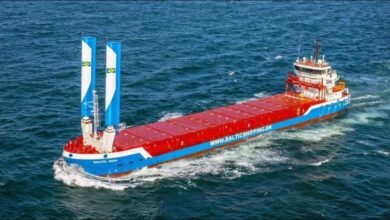
The maritime industry is charting a new course towards environmental stewardship, with innovative designs pushing the boundaries of what’s possible in sustainable shipping. Leading this charge, Dutch ship design firm Conoship International has unveiled a groundbreaking battery-electric cargo ship design that promises to redefine short-sea and inland waterway transportation. This fully electric version of their established CIP3800 general cargo vessel platform boasts an impressive range of up to 650 nautical miles on battery power alone, marking a significant stride in the global effort to decarbonize the maritime sector. This development represents a pivotal moment for shipping, offering a tangible solution for reducing emissions and fostering a greener future for global trade routes.
Conoship’s commitment to innovation is evident in this new design, which integrates a robust 40 MWh battery system at its core. This substantial power capacity allows the electric vessel to achieve its remarkable range, operating for extended periods without fossil fuels. At an efficient speed of 8 knots, the ship can cover 650 nautical miles, while increasing speed to 10 knots provides a still-considerable range of 350 nautical miles. These specifications make the battery-electric cargo ship an ideal candidate for numerous regional trade lanes, offering silent, zero-emission operations that minimize environmental impact. This initiative not only addresses pressing ecological concerns but also positions Conoship at the forefront of the marine energy transition.
Pioneering Electric Propulsion in Maritime Shipping
The introduction of a fully electric general cargo vessel marks a transformative step for the maritime sector, setting a new benchmark for sustainable operations. The 40 MWh battery system is a powerhouse, meticulously engineered to provide reliable and efficient propulsion for the CIP3800 platform. This substantial energy storage allows the vessel to perform its cargo duties with unprecedented environmental benefits. The ability to navigate up to 650 NM on a single charge positions this electric vessel as a game-changer for short-sea voyages, coastal shipping, and inland waterway logistics where predictable routes and access to charging infrastructure are becoming more prevalent. This range ensures operational flexibility, enabling seamless point-to-point journeys without the need for frequent refueling stops typical of conventional vessels.
Beyond the impressive range, the adoption of battery-electric propulsion brings a host of operational advantages. Noise pollution is drastically reduced, enhancing conditions for both crew and coastal communities. Local air quality improves significantly, as the vessel emits zero nitrogen oxides (NOx), sulfur oxides (SOx), and particulate matter during operation. These environmental gains are critical for ports and densely populated coastal areas. Furthermore, the operational efficiency derived from electric motors, which are known for their high torque and precise control, contributes to smoother voyages and potentially lower maintenance costs compared to complex internal combustion engines. This holistic approach to design underscores the growing imperative for green shipping solutions across the global fleet.
Innovative Design for Optimal Efficiency and Reliability
Conoship’s design philosophy for this cutting-edge battery-electric cargo ship prioritizes both innovation and proven reliability. Instead of developing an entirely new hull form, the company wisely opted to retain the existing and highly optimized CIP3800 hull geometry. This strategic decision offers multiple advantages: it minimizes hydrodynamic resistance, ensuring maximum energy efficiency, and significantly reduces the technical and financial risks associated with an unproven design. By building upon a successful foundation, Conoship ensures that the vessel maintains its excellent seakeeping characteristics and cargo capacity while integrating advanced electric propulsion. This clever approach accelerates time-to-market for sustainable maritime solutions and builds confidence in their viability.
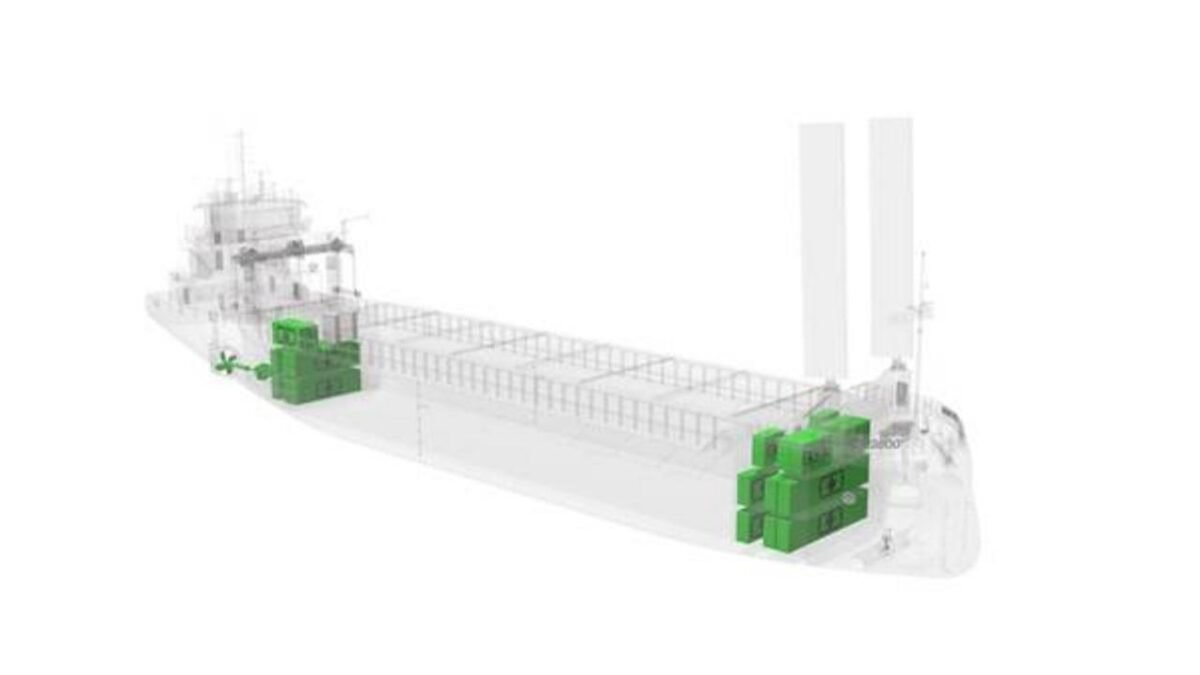
To accommodate the substantial battery banks while maintaining vessel stability and performance, Conoship’s naval architects engineered an intelligent weight distribution system. The batteries are strategically split between forward and aft compartments, a design choice that helps to maintain optimal trim without the need for additional water ballast. This not only saves energy but also maximizes cargo volume. Furthermore, the removal of traditional fuel tanks and associated fuel systems effectively offsets the added weight of the batteries, ensuring the vessel’s overall displacement remains within operational parameters. This meticulous attention to detail in naval architecture highlights Conoship’s expertise in blending cutting-edge technology with practical, robust ship design principles, delivering a high-performance electric cargo vessel that is both environmentally friendly and operationally sound.
Bridging Gaps with Flexible Range Extender Options
Recognizing that shore power infrastructure is still evolving in many parts of the world, Conoship has incorporated a pragmatic and flexible solution into its battery-electric cargo ship design: an optional range-extender generator. This feature addresses the current limitations of global charging networks, ensuring that the vessel remains operational and adaptable even on routes where dedicated electric charging facilities are not yet fully established. The range extender is designed to be downsized compared to conventional generators, reflecting its role as a supplementary power source rather than the primary propulsion system. This intelligent hybrid approach ensures that the vessel’s operations are not solely dependent on grid availability, providing critical operational resilience.
Crucially, this range-extender generator is designed to run on advanced, low-carbon fuels such as Hydrotreated Vegetable Oil (HVO) or biodiesel. This commitment to sustainable fuels further minimizes the carbon footprint of the vessel, even when operating in its hybrid mode. By utilizing HVO or biodiesel, the electric vessel can maintain a significantly reduced emissions profile compared to conventional diesel generators, bridging the gap between current infrastructure capabilities and a fully electric future. This flexibility is vital for the maritime industry’s transition, allowing for incremental adoption of zero-emission technologies while ensuring uninterrupted global trade. Conoship’s forward-thinking design anticipates and mitigates potential operational challenges, offering a truly versatile and future-proof maritime transport solution.
The Broader Impact on Sustainable Maritime Transport
Conoship’s new battery-electric cargo ship represents more than just an engineering feat; it’s a powerful statement about the future direction of sustainable maritime transport. This zero-emission vessel directly contributes to global efforts to combat climate change, aligning with the ambitious decarbonization targets set by the International Maritime Organization (IMO) and various national governments. By offering a viable, large-scale electric solution for cargo transport, Conoship is accelerating the industry’s shift away from fossil fuels, reducing greenhouse gas emissions, and mitigating the environmental impact of shipping. This vessel serves as a tangible example of how innovative technology can be harnessed to create a cleaner, healthier planet for future generations.
The adoption of such advanced electric designs carries significant implications for operational economics as well. While the initial capital investment for battery-electric systems might be higher, the long-term operational savings are compelling. Reduced fuel costs, lower maintenance requirements for electric propulsion systems, and potential access to green shipping incentives can lead to a favorable total cost of ownership over the vessel’s lifespan. Furthermore, the ability to operate silently and without local emissions opens up new opportunities for vessels to call at environmentally sensitive ports or operate in designated emission control areas with greater flexibility. This transformative approach by Conoship highlights that sustainability and profitability can indeed go hand-in-hand, paving the way for a more responsible and economically robust maritime future.
Conoship’s Vision for Green Shipping Innovation
Conoship International has long been a pioneer in naval architecture, consistently pushing the boundaries of ship design to meet evolving industry demands. With the introduction of this battery-electric cargo ship, the Groningen-based company reaffirms its leadership in developing sustainable maritime solutions. Their vision extends beyond merely complying with regulations; it encompasses a proactive approach to engineering vessels that are not only efficient and reliable but also fundamentally environmentally sound. By focusing on practical, scalable designs, Conoship is actively shaping the landscape of green shipping, inspiring other industry players to accelerate their own decarbonization initiatives.
Looking ahead, the success of such electric vessels is intrinsically linked to the ongoing development of port charging infrastructure and renewable energy sources. Conoship’s design serves as a catalyst, encouraging investments in these critical support systems. As the world transitions to a more sustainable energy paradigm, battery-electric ships like the CIP3800 will become increasingly common, forming the backbone of regional and potentially global maritime trade. Conoship’s dedication to research and development ensures that they will continue to deliver cutting-edge designs that address the complex challenges of modern shipping, cementing their role as a driving force in the sustainable evolution of the marine industry. This commitment ensures a future where greener oceans are not just a dream, but a tangible reality.
Conoship’s introduction of a battery-electric cargo ship with an impressive 650 NM range marks a momentous occasion for the global shipping industry. This innovative vessel, built on the proven CIP3800 platform, offers a robust, zero-emission solution for sustainable maritime transport. By combining advanced battery technology with intelligent design and flexible range-extender options, Conoship is not just designing ships; it’s engineering a greener, more sustainable future for the world’s oceans. This is a significant step towards achieving comprehensive decarbonization across the maritime sector.