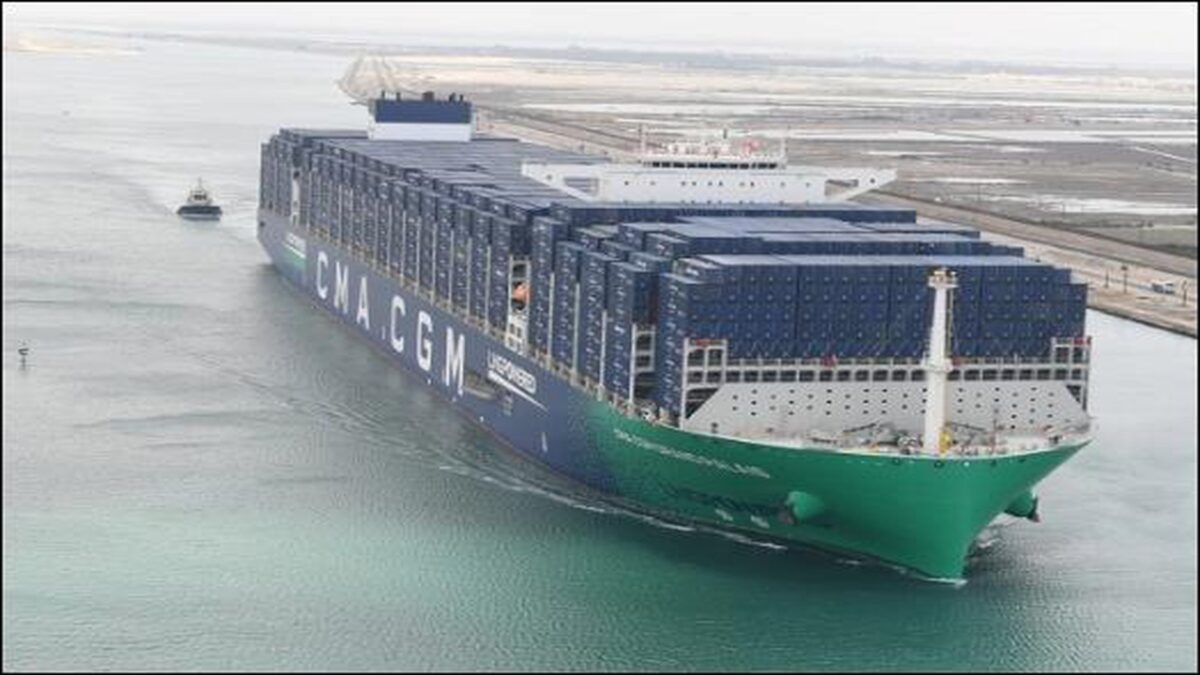
CMA CGM LNG Boxship Completes Maiden Suez Canal Transit | Mariner News
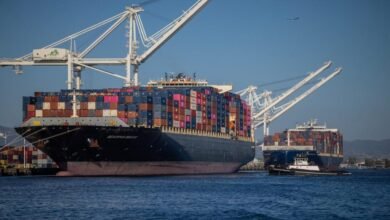
The maritime industry recently witnessed a significant milestone as the CMA CGM Grand Palais, an advanced LNG-fuelled container ship, successfully completed its maiden voyage through the historic Suez Canal. This momentous transit marks a new chapter for both the French shipping giant CMA CGM and the broader maritime sector’s relentless pursuit of decarbonization and enhanced operational efficiency. The majestic 24,000 TEU vessel, a testament to cutting-edge maritime engineering, navigated the vital waterway seamlessly, signaling a positive shift for one of the world’s most critical shipping arteries and underscoring the escalating prominence of sustainable shipping solutions. This pivotal event not only highlights CMA CGM’s unwavering commitment to environmental stewardship but also reinforces its strategic role in shaping the future trajectory of global logistics.
The CMA CGM Grand Palais: Pioneering Sustainable Container Shipping
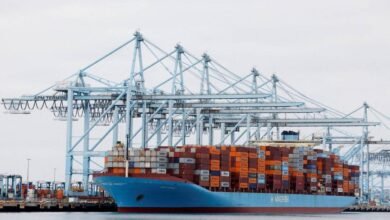
The CMA CGM Grand Palais is more than just another vessel; it represents the forefront of modern container shipping. With an astounding capacity of 24,000 TEU (Twenty-foot Equivalent Units), it stands among the largest container ships ever constructed, designed to handle immense volumes of cargo with unparalleled efficiency. Its recent delivery in March underscores CMA CGM’s ongoing fleet modernization efforts, specifically targeting the integration of eco-friendly technologies. This state-of-the-art vessel is a proud addition to the company’s growing fleet, symbolizing its dedication to leading the maritime industry towards a greener future.
At the heart of the CMA CGM Grand Palais’s innovative design lies its sophisticated dual-fuel engine technology. Equipped with advanced WinGD engines, the vessel boasts the flexibility to operate on both Liquefied Natural Gas (LNG) and conventional marine fuels. This capability is a game-changer for environmental performance, as LNG significantly reduces emissions compared to traditional heavy fuel oil. By embracing LNG, the Grand Palais contributes to a substantial decrease in sulfur oxides (SOx), nitrogen oxides (NOx), particulate matter, and CO2 emissions, positioning it as a critical component in CMA CGM’s comprehensive sustainability strategy and its ambitious journey towards achieving net-zero carbon emissions.
The introduction and successful transit of vessels like the CMA CGM Grand Palais hold profound strategic importance for CMA CGM. It signifies a tangible commitment beyond mere rhetoric, showcasing practical investments in green maritime solutions. The Grand Palais serves as a beacon within CMA CGM’s fleet, embodying the company’s ambitious environmental targets and its leadership role in driving the decarbonization of global supply chains. This strategic pivot towards LNG-fuelled container ships not only enhances operational resilience but also aligns with the increasing global demand for environmentally responsible logistics services, setting a benchmark for the entire industry.
The Suez Canal’s Enduring Importance and Evolving Dynamics
The Suez Canal has long been recognized as a linchpin of global trade, serving as an indispensable shortcut that connects Asia and Europe. By bypassing the lengthy and costly circumnavigation of the Cape of Good Hope, the canal dramatically reduces transit times, slashes fuel consumption, and optimizes shipping costs, making it an economically and strategically vital artery for international commerce. Its uninterrupted operation is crucial for maintaining the fluidity and predictability of global supply chains, affecting countless industries and consumers worldwide.
However, this critical maritime route has recently faced unprecedented challenges. The Red Sea and the Bab el-Mandeb Strait, gateway to the Suez Canal, became a high-risk zone due to security threats from Yemen’s Houthi movement in late 2023. These attacks compelled many shipping lines, including major players like CMA CGM, to divert their vessels around the African continent. This re-routing decision carried substantial implications: increased bunker demand due to longer distances, significantly extended transit times, and widespread disruptions to already fragile global supply chains, adding immense pressure on freight rates and delivery schedules.
Against this backdrop, the CMA CGM Grand Palais’s successful transit heralds a cautiously optimistic return of shipping traffic to the Suez Canal. As security concerns gradually ease, CMA CGM’s decision to bring more of its vessels back to this traditional route underscores a renewed confidence in improved safety measures and the undeniable economic advantages that the canal offers for international shipping operations. This strategic re-engagement is not just beneficial for individual carriers but is a vital step towards restoring stability and efficiency to global trade flows, demonstrating the maritime industry’s resilience in adapting to complex geopolitical realities.
LNG: A Bridge Fuel to a Decarbonized Maritime Future
Liquefied Natural Gas (LNG) has emerged as a crucial transitional fuel for the shipping industry on its ambitious journey towards decarbonization. Its appeal lies in significant environmental benefits compared to conventional marine fuels. Vessels running on LNG virtually eliminate sulfur oxides (SOx) and particulate matter emissions, drastically reduce nitrogen oxides (NOx), and achieve a substantial decrease in greenhouse gas (GHG) emissions – specifically, up to 20% less CO2 than equivalent operations using heavy fuel oil. This makes LNG a powerful tool in mitigating shipping’s environmental footprint in the immediate to medium term.
The growing adoption of LNG as a marine fuel is supported by rapid advancements in infrastructure and technology. Globally, there has been a steady expansion of LNG bunkering facilities, providing the necessary supply chain for this alternative fuel. Concurrently, the number of LNG-ready or LNG-powered vessels entering service continues to climb, reflecting a concerted industry-wide shift towards cleaner energy sources. This synchronized development of supply and demand infrastructure is accelerating the pace of energy transition within the maritime sector, making LNG a viable and increasingly accessible option for forward-thinking carriers.
While LNG offers considerable environmental advantages, the maritime industry acknowledges that it is a bridge fuel, not a zero-emission solution. The long-term vision involves evolving towards more sustainable variants like bio-LNG (produced from organic waste) and synthetic LNG (e-LNG, produced using renewable electricity and captured CO2). These advanced forms of LNG represent future steps to further reduce the carbon footprint, aligning with the industry’s ultimate goal of achieving net-zero emissions and complying with stringent international regulations set by organizations such as the International Maritime Organization (IMO). The Grand Palais, in its current form, is a strong step in that direction.
CMA CGM’s Broader Commitment to Environmental Stewardship
Beyond the individual achievements of vessels like the CMA CGM Grand Palais, CMA CGM is renowned for its holistic and ambitious approach to sustainability across its entire operational framework. The company has set clear, aggressive targets for carbon reduction, demonstrating a deep-seated commitment to environmental responsibility. This commitment is tangible through its significant investment in a diverse portfolio of alternative fuels and energy-efficient technologies, which are systematically integrated across its extensive global fleet. This proactive stance showcases CMA CGM’s dedication to being a frontrunner in the green maritime transition.
CMA CGM’s sustainability initiatives extend far beyond just adopting LNG. The company actively engages in optimizing vessel operations to reduce fuel consumption and emissions, explores innovative solutions such as wind-assisted propulsion systems, and diligently researches and pilots various biofuels and methanol-based solutions. Furthermore, CMA CGM is a strong proponent of collaborative partnerships, engaging with industry leaders, technology providers, and academic institutions to accelerate green maritime innovation. These multifaceted efforts position CMA CGM not merely as a participant but as a leading force in developing and implementing sustainable shipping practices globally.
These comprehensive environmental efforts are intricately linked to broader global environmental goals and the company’s corporate responsibility framework. CMA CGM’s proactive and strategic stance is instrumental in contributing to a more sustainable global economy, playing a vital role in mitigating the environmental impact of international trade. Moreover, by embracing and driving sustainable logistics, CMA CGM is effectively meeting the evolving demands of its customers, who increasingly prioritize greener supply chain solutions. This forward-thinking approach solidifies its reputation as a responsible and innovative leader in the shipping industry.
Shaping the Future of Global Maritime Logistics
The successful transit of the CMA CGM Grand Palais, alongside the broader trend of adopting advanced, LNG-fuelled container ships, profoundly influences the future of global maritime logistics. These developments enhance the resilience, efficiency, and predictability of global supply chains. The renewed confidence in strategic maritime routes like the Suez Canal, coupled with technological advancements, provides stability in a volatile world, allowing businesses to plan and execute their shipping operations with greater certainty and reduced risk of disruption.
Furthermore, the increasing adoption of alternative fuels like LNG by major global carriers such as CMA CGM sets a powerful precedent for the entire maritime industry. This leadership acts as a catalyst, encouraging other shipping operators, shipbuilders, and stakeholders to accelerate their own green transitions. It drives further investment in research and development for sustainable shipping technologies, fostering a competitive environment where environmental performance becomes a key differentiator and a standard expectation across the sector.
Ultimately, the maiden transit of the CMA CGM Grand Palais through the Suez Canal is far more than just a single event; it is a profound symbol of the maritime sector’s unwavering progress towards a greener, more efficient, and resilient future. This singular achievement underscores the collective commitment to innovation that is reshaping global shipping, demonstrating a clear path forward where environmental responsibility and operational excellence converge for the benefit of global trade and the planet.
The successful maiden transit of the CMA CGM Grand Palais through the Suez Canal stands as a powerful symbol of the maritime industry’s unwavering commitment to embracing sustainability while navigating complex geopolitical landscapes. This monumental achievement by CMA CGM not only showcases cutting-edge LNG-fuelled technology but also marks a crucial step in normalizing traffic through a vital global artery. As the shipping world continues its journey towards decarbonization, vessels like the Grand Palais illuminate the path forward, demonstrating that operational excellence and environmental responsibility can, and must, go hand in hand to ensure a sustainable future for global trade.