Cargo Ship Veers into Netherlands Canal Embankment | Mariner News
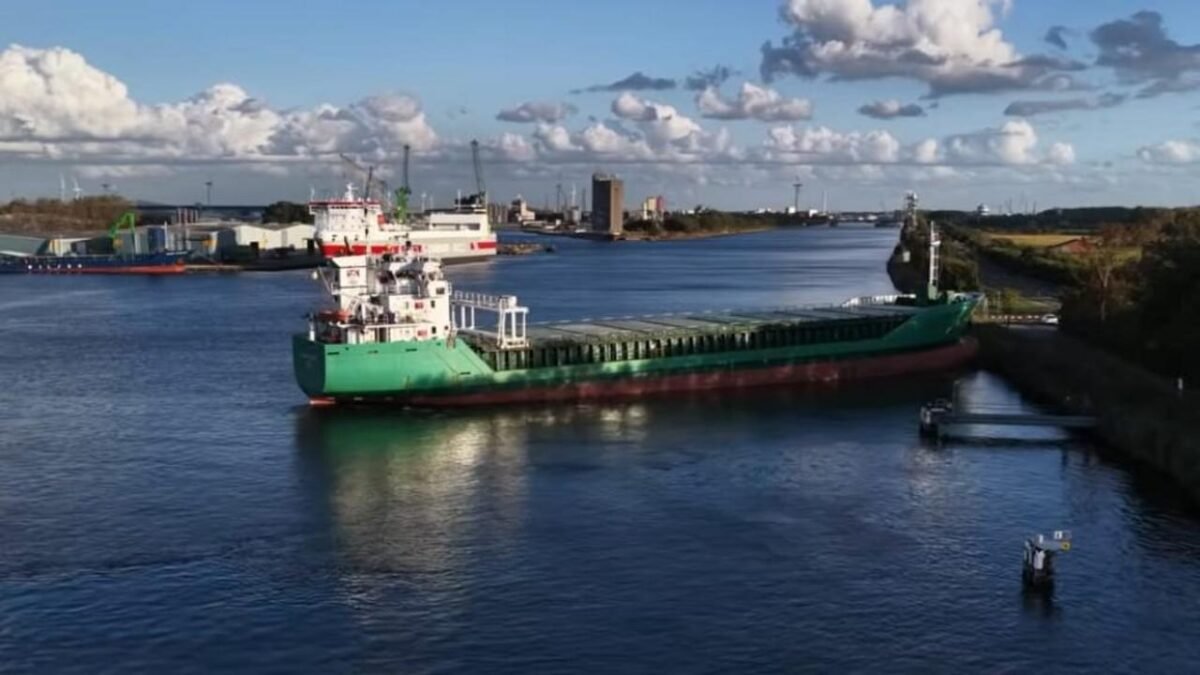
A recent maritime incident on the bustling Ghent-Terneuzen canal has captured significant attention across the shipping industry, with video footage circulating widely showing an Irish cargo ship veering sharply off course and striking a canal embankment in the Netherlands. This event, involving the general cargo vessel Arklow Falcon, underscores the ever-present challenges of ship navigation in congested waterways and highlights the critical importance of robust maritime safety protocols. While thankfully no serious injuries or significant structural damage were reported, the incident has prompted a thorough investigation by Dutch water authorities, particularly as it marks the second such occurrence in the same critical navigation area within a single month, raising pertinent questions about vessel safety and operational procedures.
This particular shipping accident occurred on Thursday evening, August 20, as the 90-meter Arklow Falcon, registered in Ireland, was transiting the canal en route to Ghent, Belgium. Around 6:45 p.m. local time, near Terneuzen in the Netherlands, the 4,972-dwt vessel reportedly experienced a loss of rudder control. This critical mechanical failure caused the Irish cargo ship to deviate dramatically from its intended course, ultimately driving its bow firmly into the soft mud of the canal embankment, leaving it listing at an awkward angle to the main shipping lane. The rapid succession of events, captured visually, serves as a stark reminder of the unpredictable nature of maritime operations and the speed at which routine voyages can become complex maritime incidents.
The swift response by local authorities was instrumental in mitigating potential further complications. Within minutes of the incident, notifications were sent, and by approximately 7:15 p.m., a coordinated effort was underway. The Rijkswaterstaat, the Dutch Directorate-General for Public Works and Water Management, dispatched a patrol boat, while a tug from Multraship was also deployed to the scene. These specialized maritime assistance units worked efficiently to assess the situation and prepare for the delicate recovery operation. Their prompt action ensured that the vessel, though temporarily stranded, remained stable and that the navigation channel was not unduly obstructed for an extended period, preventing wider disruption to the flow of maritime traffic.
Approximately one hour after the initial grounding, through expert maneuvering and the powerful assistance of the tug, the Arklow Falcon was successfully backed off the embankment. Following this critical phase, the tug continued to assist in repositioning the ship, carefully guiding it away from the immediate area of the incident. The Irish cargo ship was then escorted to a designated anchorage point, where it would undergo a comprehensive vessel inspection. This thorough examination is crucial for determining the full extent of any damage, identifying the precise cause of the reported rudder failure, and ensuring that all necessary repairs and safety checks are completed before the vessel is permitted to resume its voyage. Such meticulous post-incident procedures are standard practice within the shipping industry to uphold maritime safety standards.
The Ghent-Terneuzen canal is far more than just a waterway; it is a vital maritime artery connecting the important Belgian port of Ghent with the North Sea. This strategic link facilitates a substantial volume of international trade, making it a critical conduit for European logistics and global supply chains. The canal’s continuous flow of cargo vessels, ranging from bulk carriers to general cargo ships, necessitates stringent rules and vigilant monitoring to ensure safe ship navigation. The narrow confines, combined with the often-strong currents and dense traffic, present unique challenges for mariners, demanding constant vigilance and impeccable ship control. Incidents like the grounding of the Irish cargo ship highlight the delicate balance required to maintain efficient and safe passage through such crucial infrastructure.
Alarmingly, the Arklow Falcon incident was not an isolated event. Earlier in the same month, on August 7, another significant shipping accident occurred near Terneuzen, involving the DFDS cargo RoRo Primula Seaways. This much larger 200-meter vessel, arriving from Gothenburg, Sweden, also reportedly lost control and drove its bow into the canal embankment. Unlike the Arklow Falcon, the Primula Seaways was less fortunate, becoming stuck for several hours and sustaining noticeable damage. The recurrence of such maritime incidents in close proximity, both geographically and chronologically, raises serious questions for the Rijkswaterstaat and other regulatory bodies about potential systemic issues, whether they be mechanical, operational, or environmental. The similarities between the two canal incidents are particularly concerning.
Investigations into both maritime incidents are ongoing, with a particular focus on the reported rudder failure in the Arklow Falcon case and the loss of control experienced by the Primula Seaways. These inquiries will meticulously examine various factors, including potential mechanical malfunctions, crew training and performance, adherence to maritime safety protocols, and environmental conditions such as strong currents or wind gusts that might have contributed to the shipping accidents. Understanding the root causes is paramount for preventing future occurrences and enhancing overall vessel safety in Dutch waterways. Recommendations derived from these investigations often lead to updated navigation rules, improved equipment standards, or enhanced training for ship navigation personnel, ultimately bolstering the resilience of the entire shipping industry.
From an operational standpoint, shipping accidents, even minor ones, can have ripple effects beyond the immediate incident site. They can lead to temporary disruptions in port operations, cause delays for other vessels, and incur significant costs related to salvage, repairs, and administrative procedures. For the shipping industry, maintaining an impeccable safety record is not just about compliance; it’s about reputation, efficiency, and the uninterrupted flow of global trade. Therefore, continuous improvement in maritime safety practices and swift, transparent investigations into any maritime incident are fundamental to sustaining confidence in ship navigation and the entire maritime transport sector. The lessons learned from the Arklow Falcon and Primula Seaways incidents will undoubtedly contribute to the ongoing evolution of maritime safety standards.
The video of the Irish cargo ship veering into the canal embankment near Terneuzen serves as a powerful visual reminder of the complexities and potential hazards inherent in maritime operations. While the Arklow Falcon incident concluded without severe consequences thanks to rapid intervention, it, coupled with the prior event involving the Primula Seaways, underscores the need for unwavering vigilance on the Ghent-Terneuzen canal and all busy waterways. The ongoing investigation by Rijkswaterstaat is crucial, not only for understanding the specific circumstances of these two shipping accidents but also for informing broader strategies to enhance maritime safety for all vessels navigating through the Netherlands and beyond. Ensuring secure and efficient ship navigation remains a paramount concern for every stakeholder in the global shipping industry, necessitating continuous attention to technology, training, and robust maritime safety protocols to prevent future maritime incidents.