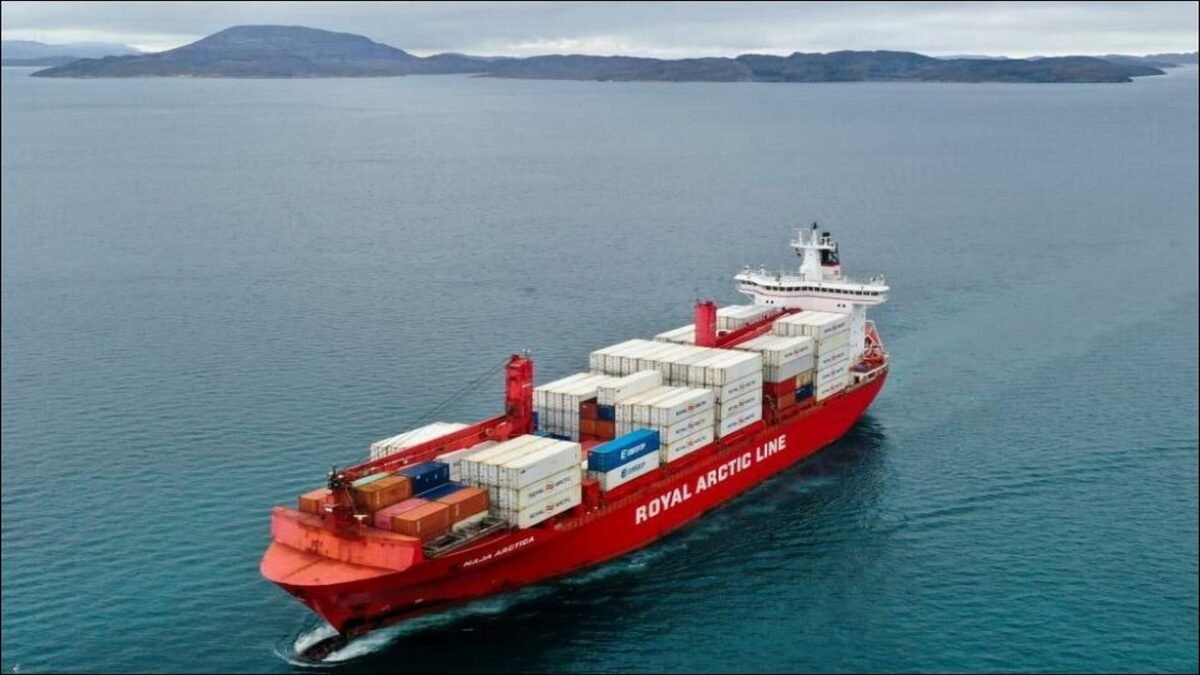
Arctic Route Use for Asia-Europe Container Trade Alarms Clean Arctic Alliance | Mariner News
The Clean Arctic Alliance has issued a grave warning regarding the accelerating commercial interest in the Northern Sea Route for Asia-Europe container trade. This alarm comes as global shipping lines increasingly eye the Arctic Route as a viable alternative to traditional southern passages, driven by the promise of significantly shorter voyage times and reduced fuel consumption. However, environmental campaigners emphasize that the burgeoning use of this fragile polar environment for container shipping poses severe risks, particularly concerning increased black carbon emissions and their direct impact on the region’s rapidly disappearing sea ice.
Responding to reports of vessels like the Liberian-flagged container ship Dubai Tower, operated by Chinese firm Sea Legend, embarking on Arctic crossings from Ningbo to European ports such as Felixstowe, Hamburg, and Gdynia, the Alliance underscored its profound concern. South Korea’s PanStar has also acquired a ship for an imminent Arctic crossing, signaling a growing trend within the maritime logistics sector. While the allure for operators lies in a route several thousand miles shorter than traversing the Suez Canal, offering economic benefits at a time of escalating operational costs and global supply chain pressures, the environmental toll of such shortcuts remains a critical unaddressed challenge. The unique conditions of the Arctic environment amplify the negative impacts of shipping, making the calls for enhanced regulatory measures more urgent than ever.
The Allure of the Arctic Route: Economic Promise vs. Ecological Peril
For shipping companies, the Northern Sea Route presents an undeniable economic advantage. It drastically cuts transit times between Asia and Europe, potentially reducing fuel consumption and operational costs for container vessels. This efficiency gain is particularly attractive given the volatile geopolitical landscape affecting other major shipping lanes and the continuous industry pressure to optimize supply chain performance. The vision of a faster, more direct route across the top of the world has captivated logistics planners and investors, spurring new investments in ice-strengthened vessels and Arctic navigation technologies. The prospect of bypassing chokepoints and reducing voyage durations by as much as two weeks offers a compelling incentive for the global container trade.
However, this economic calculus often overlooks, or at least downplays, the profound ecological consequences for the Arctic ecosystem. The region is already warming at a rate significantly faster than the global average, leading to unprecedented sea ice melt and permafrost degradation. Increased shipping activity introduces a host of environmental threats, including noise pollution disrupting marine mammal habitats, the risk of oil spills in pristine and difficult-to-clean environments, and the deposition of ship-generated waste. The potential for accidents and groundings in poorly charted waters, coupled with limited rescue and response capabilities in remote Arctic regions, further compounds the ecological peril associated with the expansion of container shipping along the Arctic Route.
Black Carbon Emissions: Accelerating Arctic Sea Ice Melt
The primary concern highlighted by the Clean Arctic Alliance revolves around black carbon emissions from maritime shipping. Black carbon, a component of particulate matter, is formed from the incomplete combustion of fossil fuels, particularly heavy fuel oil (HFO) commonly used by ships. When released into the atmosphere, it absorbs sunlight, contributing to atmospheric warming. More critically for the Arctic, when black carbon particles settle on snow and ice surfaces, they darken the white, reflective layer, reducing its albedo. This diminished reflectivity causes the snow and ice to absorb more solar radiation, accelerating melting. The feedback loop is destructive: less ice means more open water, which absorbs more heat, leading to further melting and warming.
Scientific studies consistently demonstrate that black carbon emissions from Arctic shipping have a disproportionately high impact on the region’s climate. Even small increases in shipping traffic can lead to significant localized warming and ice loss. The unique meteorological conditions of the Arctic, including lower atmospheric mixing and longer periods of sunlight during the shipping season, mean that black carbon persists longer and is deposited more readily on ice and snow. The Alliance points to data showing a concerning rise in black carbon emissions from Arctic shipping between 2019 and 2024, signaling an escalating crisis as more vessels navigate the Northern Sea Route. This direct link between ship emissions and climate impact underscores why black carbon is often considered the second most potent climate-warming agent after carbon dioxide in the Arctic.
Regulatory Gaps and the Push for Cleaner Fuels in Polar Waters
Despite growing awareness of the environmental risks, existing international regulations are deemed insufficient to adequately address the challenge of black carbon emissions in the Arctic. While the International Maritime Organization (IMO) introduced a ban on the use and carriage of heavy fuel oil (HFO) for ships operating in the Arctic from January 1, 2024, with some exceptions until 2029, campaigners argue this measure alone will not sufficiently cut black carbon. HFO is a major source of black carbon, but even distillate fuels, such as marine gas oil (MGO), can produce significant black carbon emissions depending on engine type and operating conditions. Furthermore, the HFO ban includes loopholes that allow certain vessels, particularly those registered to Arctic states, to continue using HFO, undermining the ban’s overall effectiveness.
Recognizing these regulatory shortcomings, the Clean Arctic Alliance strongly advocates for the IMO to adopt a proposal requiring ships operating in polar waters to switch to distillate fuels, such as MGO. Distillate fuels generally produce lower black carbon emissions compared to HFO, especially when combined with modern engine technologies and exhaust gas cleaning systems. Beyond the type of fuel, the Alliance also calls for strict limits on black carbon emissions, based on proven measurement and abatement technologies. Such measures would provide a clearer framework for the shipping industry to transition towards more environmentally responsible practices in the Arctic, aligning economic aspirations with critical climate protection goals. The urgency for these changes is amplified by the increasingly visible impacts of climate change on indigenous communities and the unique biodiversity of the Arctic.
Navigating a Sustainable Future for Arctic Shipping and Global Trade
The debate over the Arctic Route for Asia-Europe container trade encapsulates a broader global challenge: how to balance economic development with environmental stewardship, particularly in vulnerable ecosystems. The maritime industry stands at a critical juncture, with increasing pressure from consumers, governments, and advocacy groups to decarbonize and operate more sustainably. While the economic appeal of the Northern Sea Route is undeniable, the long-term costs to the environment and global climate could far outweigh the short-term financial gains. A truly sustainable future for Arctic shipping requires more than just a shift in routes; it demands a fundamental re-evaluation of operational practices, fuel choices, and regulatory frameworks.
Achieving this balance necessitates robust international cooperation and a shared commitment from all stakeholders—shipping companies, port authorities, national governments, and international bodies like the IMO. Investment in cleaner propulsion technologies, such as hydrogen or ammonia fuels, and the development of zero-emission vessels capable of operating in challenging Arctic conditions, are crucial for long-term viability. Furthermore, enhanced monitoring and enforcement mechanisms are essential to ensure compliance with environmental regulations and to mitigate potential impacts on sensitive Arctic environments and indigenous populations who depend on a healthy ecosystem. The future of the Arctic Route, and indeed the future of global maritime logistics, must be guided by principles of caution, transparency, and a steadfast dedication to preserving our planet’s most vital and fragile regions. The Clean Arctic Alliance’s warning serves as a powerful reminder that while innovation drives progress, responsible governance must always define its boundaries for the health of our planet and generations to come.