US Strikes Iranian Oil Tankers After Navy Attacks | Mariner News
US military forces have struck three Iranian oil tankers in the Strait of Hormuz and Gulf of Oman, in direct retaliation for attempted ballistic missile attacks on US Navy ships operating in the region. The incident marks a significant escalation, as Washington explicitly targeted commercial vessels linked to Iran’s Islamic Revolutionary Guard Corps (IRGC) to impose an “economic cost.”
On Saturday, US Central Command (CENTCOM) confirmed its forces disabled the M/T Downy off Kharg Island and the M/T Stark 1 near Jask. Additionally, the unladen M/T Kylo, also known as the “Noxen,” was destroyed in the Gulf of Oman after its crew was ordered to abandon the vessel. CENTCOM stated these tankers were part of a shadow network generating funds for the IRGC and its regional proxies.
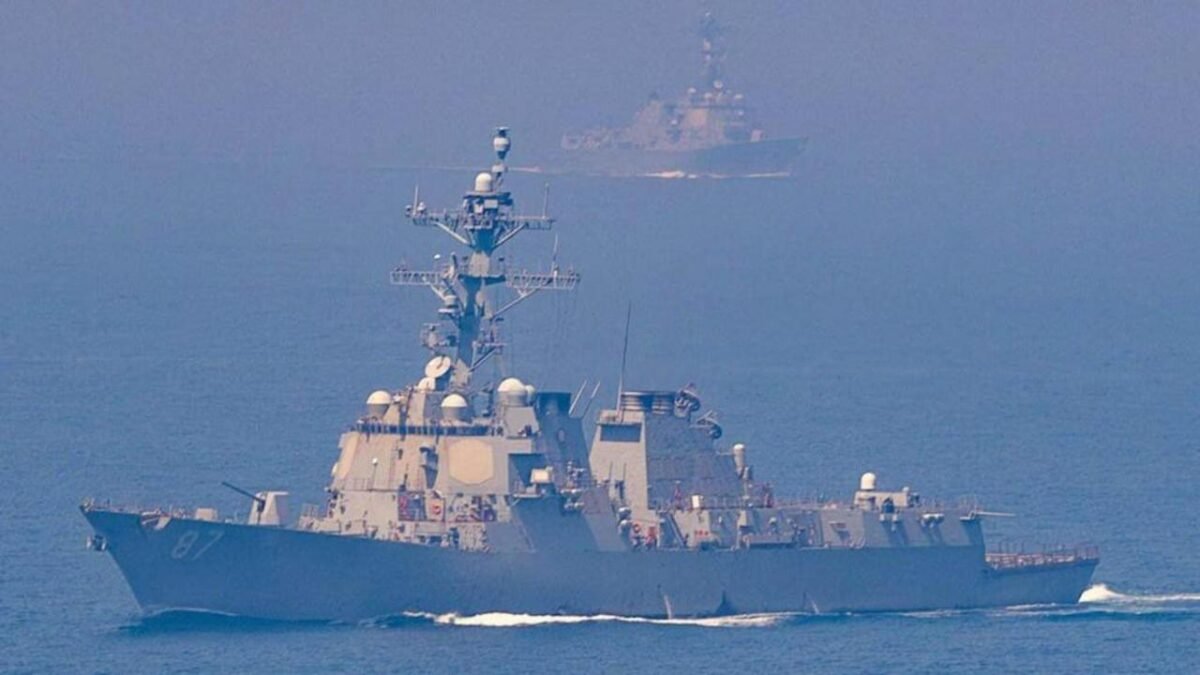
The strikes followed multiple ballistic missile attacks launched by the IRGC against a US aircraft carrier and a guided-missile destroyer, which were reportedly evaded. Admiral Brad Cooper, commander of CENTCOM, stated the retaliatory policy clearly: “If you shoot at two of our ships, we will impose an even higher economic cost —taking out three of yours.”
This direct targeting of commercial tanker assets sets a new precedent for military response in the region, fundamentally altering the risk calculus for vessels operating near the Strait of Hormuz and Gulf of Oman. The explicit strategy of imposing an “economic cost” against a “shadow network” broadens the scope of potential targets beyond traditional military assets, increasing perceived threats for any vessel deemed connected to illicit financing or adversarial state interests.
The immediate market reaction saw crude oil prices climb. The ICE November Brent contract traded at $97.39/bl on Monday morning, up 1.1% from Friday’s settlement of $96.28/bl, driven by fears of further disruptions to a critical global oil transit choke point. This sustained market volatility underscores heightened operational and insurance risks for the tanker sector in the region.