

TCI Seaways Expands Coastal Fleet with TCI SETU Delivery
TCI Seaways adds the 500 TEU TCI SETU to its fleet, the first of two newbuilds aimed at strengthening India-Myanmar coastal connectivity.
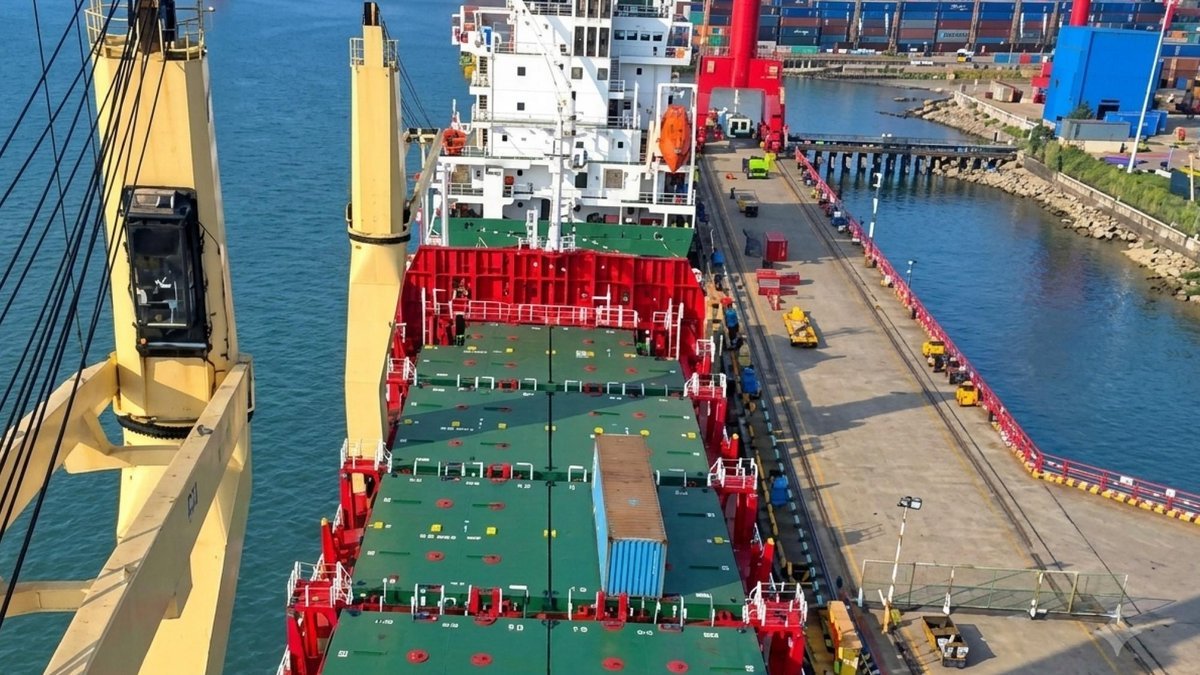
TCI Seaways, a division of Transport Corporation of India Limited (TCI), has taken delivery of the TCI SETU, a 500 TEU container vessel, marking the first of two newbuilds commissioned to strengthen India’s coastal shipping infrastructure. The vessel, which has a deadweight capacity of approximately 7,300 metric tons, is the seventh ship to join the TCI Seaways fleet.
Built by Taizhou Sanfu Ship Engineering Co. Ltd. in China, the TCI SETU represents an investment of ₹178.8 crore. Notably, the acquisition was funded entirely through internal accruals, signaling a high degree of financial independence and a low-leverage approach to fleet expansion in a capital-intensive sector.
Strategic Fleet Optimization
The delivery highlights a strategic shift toward purpose-built assets optimized for regional connectivity. While the 500 TEU capacity is modest by international standards, it is specifically suited for the draft restrictions and operational requirements of secondary ports on India’s East Coast and the Andaman Islands, as well as routes into Myanmar. This allows TCI Seaways to maintain reliable schedules in locations where larger feeder vessels might struggle with port access.
The new vessel is designed for higher economic efficiency and lower carbon performance compared to older tonnage. This modernization is central to TCI’s strategy of integrating coastal shipping with its established road and rail networks to create a more resilient multimodal logistics chain.
The TCI SETU is the first of two sister vessels contracted from the Taizhou Sanfu yard. As India continues to prioritize the decarbonization of its transport sector, TCI’s investment in modern, efficient coastal tonnage positions the company to capture a larger share of the shift from road to sea freight.