Singapore Maritime Week: Phi Earth & ABS Green Fuels MOU | Mariner News
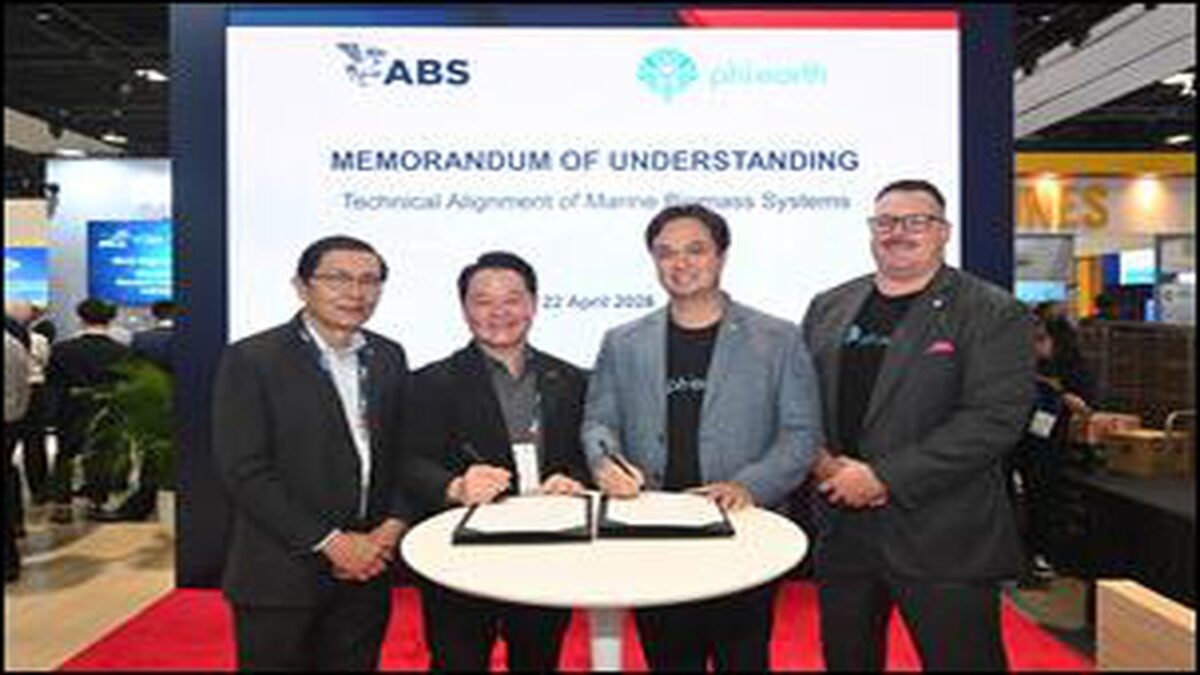
The global maritime sector is navigating an unprecedented journey toward decarbonization, driven by urgent environmental imperatives and stringent regulatory frameworks. In a landmark development signaling significant progress, Phi Earth Technologies Pte. Ltd. and the American Bureau of Shipping (ABS) formally cemented their partnership by signing a crucial Memorandum of Understanding (MOU) at the prestigious Singapore Maritime Week. This collaborative agreement, executed on April 22, 2026, marks a pivotal step in developing credible, auditable, and scalable regenerative biomass systems designed to power the next generation of marine biofuels. The strategic alliance aims to provide essential, verifiable inputs for the burgeoning marine fuel supply chain, directly contributing to the industry’s ambitious decarbonization targets and fostering a new era of maritime sustainability. This initiative underscores a collective commitment to accelerating the transition to cleaner, more environmentally responsible shipping practices worldwide.
Forging a Path to Sustainable Marine Fuels
The maritime industry stands at a critical juncture, tasked with dramatically reducing its carbon footprint in alignment with the International Maritime Organization’s (IMO) ambitious decarbonization targets. Achieving these goals necessitates a fundamental shift in fuel sources and a robust, transparent framework for their production and verification. It is within this challenging yet opportunity-rich landscape that the MOU between Phi Earth and ABS emerges as a beacon of innovation. Signed amidst the vibrant backdrop of Singapore Maritime Week, a global hub for maritime innovation and discussion, this agreement directly addresses the urgent need for sustainable and verifiable alternative fuels. The signing ceremony, featuring Theo Davies, CEO and Founder of Phi Earth Technologies, alongside representatives from ABS, underscored the mutual dedication to pioneering practical solutions for future-proof shipping.
The collaboration isn’t merely about finding new fuels; it’s about establishing an entirely new paradigm for their genesis. Historically, the focus of fuel sustainability has often been on the combustion phase. However, as the maritime sector intensifies its drive toward environmental stewardship, scrutiny is increasingly shifting upstream. Stakeholders now demand greater transparency and assurance regarding how fuel inputs are produced, measured, and ultimately verified throughout their entire lifecycle. This comprehensive perspective is vital for ensuring that truly green fuels deliver on their promise of reduced environmental impact without inadvertently shifting ecological burdens elsewhere. The partnership leverages the unique strengths of both organizations to tackle this complex challenge head-on, providing a blueprint for auditable and traceable biofuel production.
By focusing on regenerative biomass systems, the Phi Earth and ABS alliance is setting a new standard for supply chain integrity within the marine fuel sector. The agreement’s strategic intent is to develop frameworks that allow for rigorous evaluation of environmental performance across the full value chain, from “soil to oil.” This integrated approach ensures that the environmental benefits of marine biofuels are not only substantial but also demonstrable and fully auditable. The technical collaboration, therefore, represents a proactive and pioneering effort to bridge the existing gaps in the maritime fuel landscape, offering solutions that are both environmentally sound and economically viable for a rapidly evolving industry. This forward-thinking initiative is poised to significantly influence the trajectory of maritime sustainability for decades to come, moving beyond aspirational goals to tangible, measurable progress.
The Power of Regenerative Biomass Systems
At the heart of Phi Earth’s contribution to this groundbreaking partnership lies its advanced biological infrastructure platform. This platform is meticulously designed to cultivate purpose-built agroforestry systems, which are instrumental in producing scalable and genuinely traceable feedstocks essential for marine biofuel and industrial decarbonization. These innovative agroforestry approaches go beyond traditional agriculture, focusing on regenerative practices that enhance soil health, sequester carbon, and promote biodiversity, creating a truly sustainable source for biomass. The concept of “Soil to Oil” is central to Phi Earth’s methodology, emphasizing a holistic, land-based approach that ensures the raw materials for biofuels are ethically and sustainably sourced from the very beginning of their journey. This meticulous attention to the upstream production process is critical for delivering fuels that meet the highest environmental standards.
To ensure the integrity and transparency of its feedstock production, Phi Earth integrates sophisticated digital twin monitoring and audit-ready Measurement, Reporting, and Verification (MRV) tools. These cutting-edge technologies provide real-time data and verifiable insights into every stage of the biomass cultivation and processing, offering unparalleled traceability. Digital twins create virtual replicas of physical assets, allowing for precise monitoring of growth conditions, resource consumption, and carbon sequestration. This level of detail ensures that every batch of feedstock can be tracked back to its origin, verifying its sustainability credentials and lifecycle carbon intensity. Such robust data infrastructure is paramount for satisfying the increasing demands for accountability and transparency from regulators, investors, and environmentally conscious consumers within the global maritime sector.
The capability to produce scalable, traceable feedstocks is a game-changer for the marine fuel supply chain. It provides the foundational elements for developing marine biofuels that are not only effective in reducing greenhouse gas emissions but are also demonstrably sustainable and ethically produced. By offering auditable inputs, Phi Earth directly addresses the industry’s need for solutions that withstand rigorous scrutiny and verification. This innovative approach moves beyond theoretical commitments to practical, measurable environmental performance, enabling the maritime industry to confidently invest in and utilize biofuels that truly contribute to its decarbonization objectives. The integration of advanced biological systems with digital verification tools establishes a new benchmark for sustainable fuel production, paving the way for a greener, more responsible future for global shipping.
ABS’s Role in Ensuring Traceability and Credibility
The American Bureau of Shipping (ABS) brings over 160 years of expertise as a leading global maritime classification society and technical advisor to this pivotal collaboration. ABS’s involvement is critical in establishing robust frameworks and providing technical guidance necessary for ensuring the provenance, traceability, and lifecycle carbon intensity assessment of the regenerative biomass systems. Their role extends beyond mere certification; it involves developing methodologies and standards that connect upstream feedstock production directly with downstream fuel and industrial applications. This comprehensive oversight is essential for allowing the environmental performance of biofuels to be reliably evaluated and validated across the entire value chain, from the agricultural source to the ship’s engine.
In an era where “greenwashing” is a significant concern, the credibility of ABS is indispensable. The organization’s long-standing reputation for independence, technical rigor, and adherence to the highest safety and environmental standards provides the necessary assurance that the biomass-derived fuels developed through this partnership will meet stringent industry requirements. ABS will specifically focus on providing expert guidance on verification protocols, ensuring that the MRV tools implemented by Phi Earth are robust and internationally recognized. This includes establishing clear guidelines for measuring carbon sequestration, assessing emissions throughout the production process, and verifying the sustainable practices employed in the agroforestry systems. Such guidance is fundamental for building trust and facilitating widespread adoption of these innovative fuel solutions.
The partnership with ABS effectively bridges the critical gap between land-based biomass production and its application in the maritime sector. Their technical guidance will create a verifiable link, ensuring that the claims of sustainability for marine biofuels are not just aspirational but are backed by solid, auditable data. This level of technical collaboration is vital for scaling up the production and acceptance of sustainable alternative fuels, providing clarity and confidence for shipowners, operators, and regulators alike. By defining industry-leading standards for traceability and carbon intensity, ABS helps transform complex biological and logistical processes into transparent, credible inputs for the global marine fuel supply chain, accelerating the pace of maritime decarbonization.
Driving Maritime Decarbonization Through Innovation
The Phi Earth and ABS MOU signifies more than just a collaboration; it represents a commitment to driving profound innovation within the maritime industry’s journey toward decarbonization. This partnership exemplifies how cross-sectoral alliances, combining biological expertise with maritime technical leadership, are crucial for tackling the multifaceted challenges of climate change. By focusing on creating auditable and traceable marine biofuels from regenerative biomass systems, the initiative directly supports the industry’s efforts to comply with increasingly stringent environmental regulations, including the IMO decarbonization targets. This innovative approach provides a tangible pathway for shipping companies to reduce their greenhouse gas emissions, transition away from fossil fuels, and ultimately contribute to a cleaner global ecosystem.
The impact of this technical collaboration extends far beyond the immediate development of sustainable feedstocks. It fosters a ripple effect across the entire marine fuel supply chain, encouraging greater transparency, accountability, and the adoption of best practices. As more companies seek verifiable green solutions, partnerships like this one set a precedent for integrated approaches that address environmental performance from source to consumption. The insights gained from tracking biomass provenance, implementing digital twin monitoring, and refining lifecycle carbon intensity assessments will inform future policy, investment decisions, and technological advancements within the broader sustainable maritime solutions landscape. This forward momentum is indispensable for accelerating the industry’s shift towards a net-zero future.
Ultimately, the alliance between Phi Earth and ABS at Singapore Maritime Week is a powerful testament to the maritime sector’s unwavering dedication to environmental stewardship. It highlights the critical role of innovation, collaboration, and robust verification in achieving a truly sustainable future for global shipping. The development of high-integrity marine biofuels from regenerative sources is not just an option but a necessity. This partnership is laying the groundwork for widespread adoption of such fuels, ensuring that shipping, the backbone of global trade, can continue to thrive while significantly reducing its ecological footprint. It’s a proactive step toward a green horizon, where climate action and economic vitality move hand-in-hand.