Northern Lights Adds Fourth LNG CO2 Carrier | Mariner News
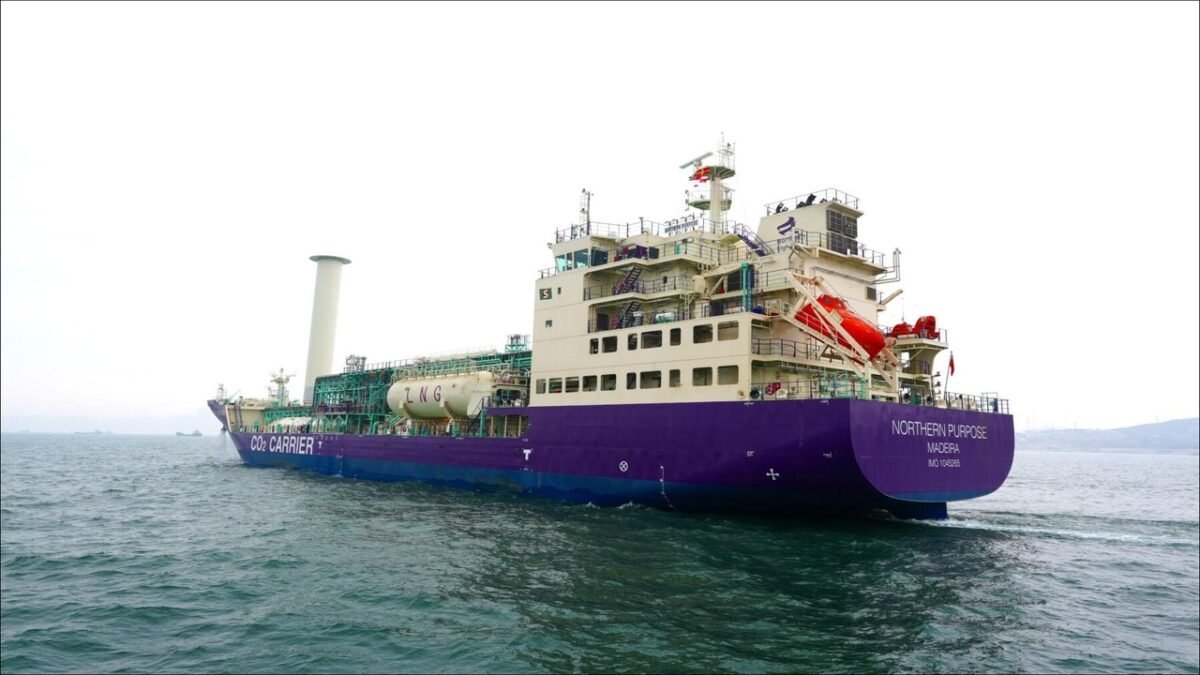
Northern Lights has significantly bolstered its sustainable shipping capabilities with the recent addition of its fourth LNG dual-fuel liquefied CO2 carrier, the Northern Purpose, to its growing fleet. This pivotal expansion marks a crucial step in enhancing Europe’s infrastructure for carbon capture and storage (CCS), providing essential marine logistics for industrial emitters seeking to reduce their environmental footprint. The arrival of this advanced vessel underscores the joint venture’s commitment to pioneering decarbonization efforts within the maritime sector, setting a new benchmark for eco-friendly CO2 transport across the continent.
The Northern Purpose completes Northern Lights’ initial four-vessel fleet for Phase 1 operations, joining its sister ships, the Northern Pioneer, Northern Pathfinder, and Northern Phoenix. Each vessel is designed to transport captured CO2 from various industrial customers in northwest Europe to Norway for permanent offshore storage, leveraging cutting-edge technology to ensure safe and efficient operations. This fleet is a cornerstone of a larger vision aimed at developing a commercially viable and scalable CO2 transport and storage service, which is vital for achieving climate targets.
Northern Lights Expands Sustainable CO2 Transport Fleet
The delivery of the 7,500 m3 capacity Northern Purpose by China’s Dalian Shipbuilding Offshore Company represents a major achievement for Northern Lights. This vessel is not merely a cargo carrier; it embodies a new era of sustainable marine logistics. Its sophisticated design integrates advanced environmental technologies, making it a critical asset in the burgeoning carbon capture and storage value chain.
With the Northern Purpose now operational, Northern Lights solidifies its position as a frontrunner in maritime CO2 transport. The company’s strategic expansion reflects the increasing demand for reliable and efficient solutions to manage industrial emissions. This enhanced fleet capacity directly addresses the growing need for robust infrastructure to support various industries in their journey towards decarbonization.
Tim Heijn, managing director of Northern Lights JV, emphasized the significance of this milestone, stating, “With the arrival of Northern Purpose, we have completed the vessel fleet required for Phase 1 operations. This is an important milestone for Northern Lights to ensure reliable and flexible CO₂ transport and storage services to our customers across Europe.” This statement highlights the practical impact of the fleet on fulfilling the company’s service commitments and fostering a greener industrial landscape.
Pioneering Carbon Capture and Storage Solutions in Europe
Northern Lights is a groundbreaking joint venture formed by leading energy companies Equinor, Shell, and TotalEnergies. Its mission is to develop the world’s first open-source CO2 transport and storage infrastructure, offering an essential service to industries struggling to reduce their carbon footprint. The project is a vital component of Europe’s broader strategy to combat climate change and achieve net-zero emissions.
The initiative focuses on capturing CO2 from industrial sources, liquefying it, and then transporting it via purpose-built carriers to an onshore terminal in Norway. From there, the CO2 is pumped through pipelines to offshore geological formations deep beneath the seabed for permanent and safe storage. This complete value chain offers a secure and environmentally sound solution for managing CO2 emissions that would otherwise be released into the atmosphere.
The vision extends beyond initial operations. Northern Lights is already planning to expand its transport capacity under Phase 2, with larger CO2 carriers expected to enter service from 2028. This forward-thinking approach demonstrates the long-term commitment of the joint venture to scale up carbon capture and storage, making it an accessible and affordable option for a wider range of industries across Europe and potentially globally.
Advanced LNG Dual-Fuel Technology for Green Shipping
The Northern Purpose, like its sister vessels, is equipped with state-of-the-art LNG dual-fuel propulsion systems. This technology significantly reduces greenhouse gas emissions, including CO2, nitrogen oxides (NOx), sulfur oxides (SOx), and particulate matter, compared to traditional marine fuels. Utilizing liquefied natural gas (LNG) as a primary fuel source aligns with the maritime industry’s global push towards cleaner operations and lower environmental impact.
Beyond LNG dual-fuel capability, these innovative CO2 carriers also feature a wind propulsion system. This advanced auxiliary technology harnesses wind energy to further reduce fuel consumption and emissions, showcasing a holistic approach to sustainable vessel design and operation. The integration of such cutting-edge solutions positions Northern Lights at the forefront of green shipping practices.
The investment in these advanced technologies underscores Northern Lights’ dedication to environmental stewardship. By employing vessels that are both efficient and environmentally friendly, the company minimizes the carbon footprint associated with CO2 transport itself, ensuring that the entire CCS value chain contributes positively to climate action. This commitment to innovation is crucial for inspiring wider adoption of sustainable maritime solutions.
Strengthening Europe’s CO2 Logistics and Decarbonization Goals
The completion of Northern Lights’ Phase 1 fleet significantly enhances Europe’s capacity to manage and store industrial CO2 emissions. This infrastructure is critical for hard-to-abate sectors such as cement production, steel manufacturing, and waste-to-energy plants, which face significant challenges in decarbonizing their operations through other means. The availability of reliable CO2 transport and storage services offers these industries a viable pathway to meet stringent emission reduction targets.
By providing a robust marine logistics network for CO2, Northern Lights plays a vital role in accelerating Europe’s decarbonization journey. The project facilitates cross-border cooperation on climate action, allowing different countries and industries to pool resources and expertise to tackle shared environmental challenges. This collaborative model is essential for achieving ambitious regional and global climate goals.
The operational readiness of the four vessels ensures a continuous and flexible CO2 transport service for subscribing customers. This reliability is paramount for industries that generate a steady stream of CO2, allowing them to integrate carbon capture into their production processes without disruptions. The long-term vision for Phase 2 expansion further promises increased capacity, which will be essential as more industries adopt CCS technology.
The Global Outlook for Carbon Capture and Maritime Innovation
The Northern Lights project serves as a compelling case study for the global potential of carbon capture, utilization, and storage (CCUS) technologies. As nations worldwide grapple with the urgency of climate change, the success of large-scale projects like this provides invaluable insights and models for replication. The maritime sector, in particular, stands to benefit from the innovations pioneered by Northern Lights, inspiring further development in eco-friendly vessel design and operations.
The growing focus on CCUS as a critical climate solution is creating new opportunities for maritime innovation. The need for specialized vessels, advanced port infrastructure, and efficient logistics chains for CO2 transport is driving technological advancements and fostering new collaborations across the shipping, energy, and industrial sectors. This emerging market segment presents significant growth potential for the maritime industry.
Furthermore, the principles of sustainable shipping, exemplified by Northern Lights’ LNG dual-fuel and wind propulsion systems, are becoming increasingly vital for the entire global fleet. Regulatory pressures and consumer demand for greener supply chains are pushing ship owners and operators to invest in cleaner fuels and more efficient vessel designs. Northern Lights’ fleet represents a tangible step forward in this crucial transition.
Northern Lights: A Model for Eco-Friendly Marine Operations
Northern Lights is not just a project; it is a testament to what can be achieved through strategic partnerships and a commitment to sustainability. The venture demonstrates how industry leaders can collaborate to build essential infrastructure for a low-carbon future. Its operational model provides a blueprint for integrating advanced environmental technologies with complex industrial processes to achieve significant climate benefits.
The dedication to using LNG dual-fuel and wind propulsion systems highlights a proactive approach to minimizing the environmental impact of the transport process itself. This focus on internal sustainability within the CO2 value chain reinforces Northern Lights’ credibility as a leader in eco-friendly marine operations. It shows that responsible carbon management extends to every link in the chain.
Looking ahead, Northern Lights is poised to continue its expansion, further solidifying its role in Europe’s decarbonization efforts and potentially inspiring similar projects globally. The successful deployment and operation of its four-vessel fleet mark a significant achievement, offering tangible solutions for industrial carbon reduction and paving the way for a more sustainable maritime future.
With the Northern Purpose now integrated into the fleet, Northern Lights stands ready to expand its vital service. This completes a critical phase of development for the project, enabling the delivery of reliable and flexible CO2 transport and storage services across Europe. The continuous drive towards expansion and technological advancement reaffirms the company’s commitment to spearheading carbon capture and storage initiatives and contributing meaningfully to global climate action.