NextFloat Project EIA Approved for Floating Wind Pilot | Mariner News
The NextFloat Project has achieved a pivotal regulatory milestone, securing its Environmental Impact Assessment (EIA) approval for its installation site. This critical development clears the path for the pilot deployment of X1 Wind’s groundbreaking X100 8.5 MW floating offshore wind platform in the PlemCat test site, located off the coast of Catalonia, Spain. This approval is not merely a formality; it represents a significant leap forward for floating offshore wind technology and its crucial role in the global energy transition, signaling Spain’s commitment to pioneering sustainable energy solutions and protecting its marine environment. The project, led by Technip Energies and X1 Wind, is poised to demonstrate the viability and environmental compatibility of next-generation offshore wind power, offering a blueprint for future large-scale deployments.
A Landmark for Spanish Offshore Wind Development
The PlemCat test site, an integral part of the LEBA 1 commercial area in the Spanish Mediterranean Sea, is specifically designed to foster innovative floating offshore wind projects. The successful acquisition of the Environmental Impact Assessment approval is a testament to the meticulous planning and comprehensive environmental evaluations undertaken. In Spain, obtaining a favorable EIA under the stringent criteria of the Ministry for the Ecological Transition and the Demographic Challenge (MITECO) means passing the country’s most rigorous environmental assessment. This demanding process ensures that all proposed activities are thoroughly scrutinized for their potential impact on ecosystems and local communities.
This resolution, officially published in Spain’s Boletín Oficial del Estado (BOE) on July 8th, guarantees that the PlemCat test site and its associated projects, including the NextFloat Project, have undergone exhaustive planning and certify their full compatibility with environmental protection, the preservation of the marine environment, and local biodiversity. The EIA is an indispensable prerequisite for materializing any offshore wind installation in Spanish waters and advancing toward the occupation of the Maritime-Terrestrial Public Domain. This regulatory certainty provides a strong foundation for the project’s progression, reinforcing investor confidence and demonstrating a clear pathway for renewable energy initiatives in the region. It underscores Spain’s dedication to becoming a leader in the development and deployment of cutting-edge floating wind farms, setting a precedent for other nations contemplating similar large-scale sustainable energy infrastructure.
Unpacking the NextFloat Project and X1 Wind’s Innovative Technology
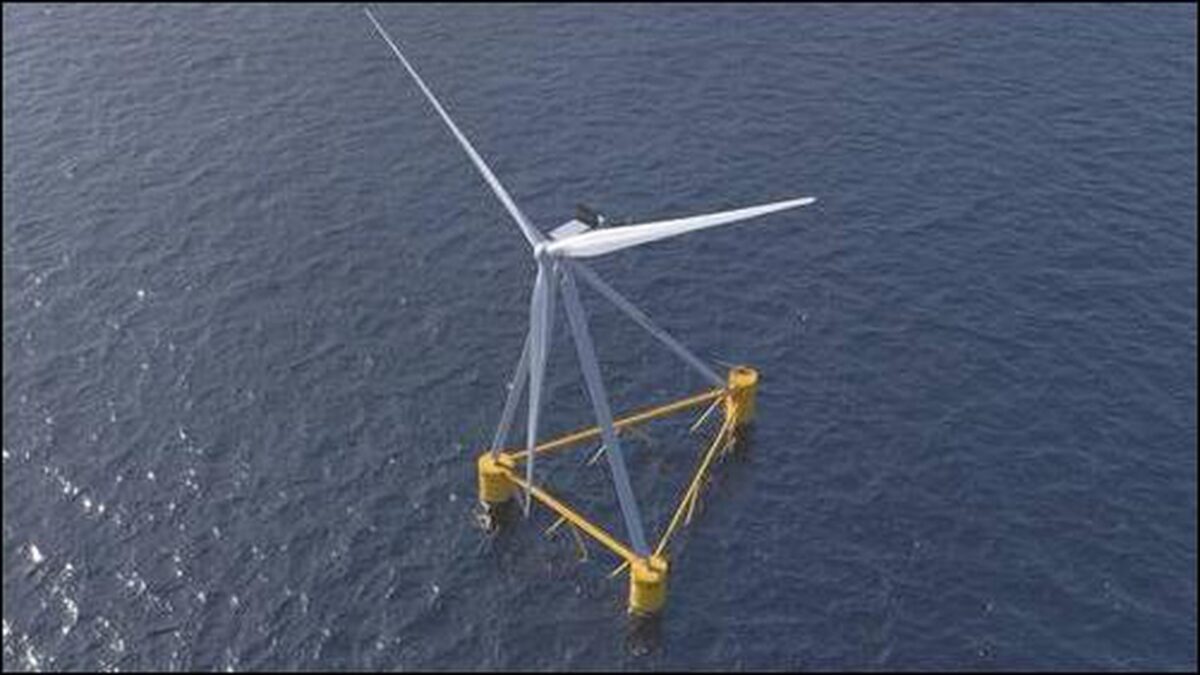
At the heart of the NextFloat Project is the deployment of X1 Wind’s first commercial-scale platform, the X100 8.5MW, a marvel of modern engineering designed to revolutionize floating offshore wind technology. X1 Wind’s innovative technology ingeniously combines the inherent stability and low environmental impact characteristics of a Tension-Leg Platform (TLP) with the recognized cost-efficiency of semi-submersible structures. This hybrid approach addresses some of the most pressing challenges associated with deepwater offshore wind installations, making them more economically viable and environmentally sound. The TLP mooring system, a key environmental advantage, significantly minimizes the platform’s footprint on the seabed.
Unlike traditional mooring systems that cover extensive areas of the seabed with heavy chains and anchors, the TLP design uses taut lines that are vertically anchored, resulting in a much smaller disturbance to the marine environment. This reduction in seabed interaction is crucial for preserving delicate marine ecosystems and local biodiversity, a primary concern highlighted and meticulously assessed during the EIA process. The X100 platform’s design also contributes to reduced structural weight and improved dynamic behavior, translating into lower material costs and a more efficient energy production system. This dual benefit of environmental stewardship and economic efficiency positions X1 Wind’s technology as a frontrunner in the next generation of floating offshore wind solutions, paving the way for wider adoption across global waters and accelerating the transition to a greener future.
Environmental Stewardship and Sustainable Energy
The successful EIA approval for the NextFloat Project unequivocally affirms the project’s commitment to environmental stewardship, a cornerstone of any sustainable energy endeavor. The rigorous assessment process, overseen by MITECO, ensured that every aspect of the project, from site selection to deployment methodology, adheres to the highest standards of marine environment protection and biodiversity preservation. This meticulous evaluation included comprehensive studies on potential impacts on marine life, migratory patterns, and local habitats, demonstrating a proactive approach to mitigating environmental risks and fostering ecological balance. The floating offshore wind sector, by its nature, offers distinct environmental advantages over land-based alternatives, particularly in minimizing visual impact and land use.
However, the challenge lies in ensuring that offshore developments are executed with minimal disturbance to sensitive marine ecosystems. The EIA for the NextFloat Project confirms that this pilot deployment will proceed in full compatibility with these critical environmental imperatives. This commitment extends beyond regulatory compliance; it embodies a philosophical alignment with global decarbonization goals and the urgent need to combat climate change. By deploying cutting-edge renewable energy technology in a responsible manner, the project not only contributes to Spain’s energy independence but also serves as a beacon for how large-scale industrial projects can coexist harmoniously with nature. This holistic approach, combining technological innovation with robust environmental safeguards, is vital for building public trust and accelerating the adoption of green energy solutions worldwide, making floating offshore wind an increasingly attractive option for coastal nations.
The Strategic Importance of PlemCat and Future Outlook
The PlemCat test site is more than just a location for the NextFloat Project; it is a strategic hub for pioneering offshore wind innovation within the Spanish Mediterranean. Its role as a dedicated infrastructure for developing and testing advanced floating offshore wind technologies is paramount for Europe’s renewable energy ambitions. The successful deployment and validation of X1 Wind’s X100 platform here will provide invaluable data and insights, significantly accelerating the learning curve for the entire industry. This demonstration of a commercial-scale platform under real-world conditions is crucial for de-risking future investments and scaling up floating wind farms to meet growing energy demands.
Beyond the immediate pilot, the replicability and scalability potential of the NextFloat Project are immense. The lessons learned from PlemCat will directly inform the design, development, and deployment of subsequent floating offshore wind projects, both in Spain and globally. This will have profound implications for Spain’s energy mix, enabling it to harness its vast offshore wind resources more effectively and cementing its position as a leader in sustainable energy technology. Furthermore, the project is expected to generate significant economic benefits, including job creation in high-tech manufacturing, engineering, and marine operations, fostering local industrial development and contributing to a resilient, green economy. The NextFloat Project therefore represents a critical step towards a future powered by clean, abundant, and environmentally responsible renewable energy sources.
In conclusion, the EIA approval for the NextFloat Project marks a monumental achievement for floating offshore wind in Spain and beyond. This regulatory milestone not only validates the environmental integrity of the project but also unlocks the immense potential of X1 Wind’s innovative technology to deliver sustainable energy solutions. As the deployment of the X100 8.5MW platform proceeds at the PlemCat test site, the NextFloat Project stands as a powerful testament to the collaborative spirit of renewable energy development, promising a cleaner, greener future for the maritime sector and global communities. This critical step reinforces confidence in floating offshore wind as a cornerstone of the world’s energy transition.