Molgas LNG Bunkering LCO2 Carrier in Norway | Mariner News
In a significant leap forward for sustainable shipping and maritime decarbonization, Molgas Energy Group has successfully completed a vital LNG bunkering operation for a liquefied CO2 (LCO2) carrier in Norway. This landmark event, involving the vessel Northern Pathfinder, highlights the growing commitment of the industry to adopt cleaner marine fuels and operational practices. The precise execution of this complex procedure underscores Molgas’s expertise and the strategic importance of liquefied natural gas (LNG) in the global energy transition, particularly for specialized vessels engaged in critical environmental initiatives like carbon capture and storage (CCS). This operation not only fueled an innovative vessel but also demonstrated the expanding infrastructure and logistical capabilities for LNG bunkering in key maritime regions.
A Landmark Achievement in Sustainable Maritime Operations
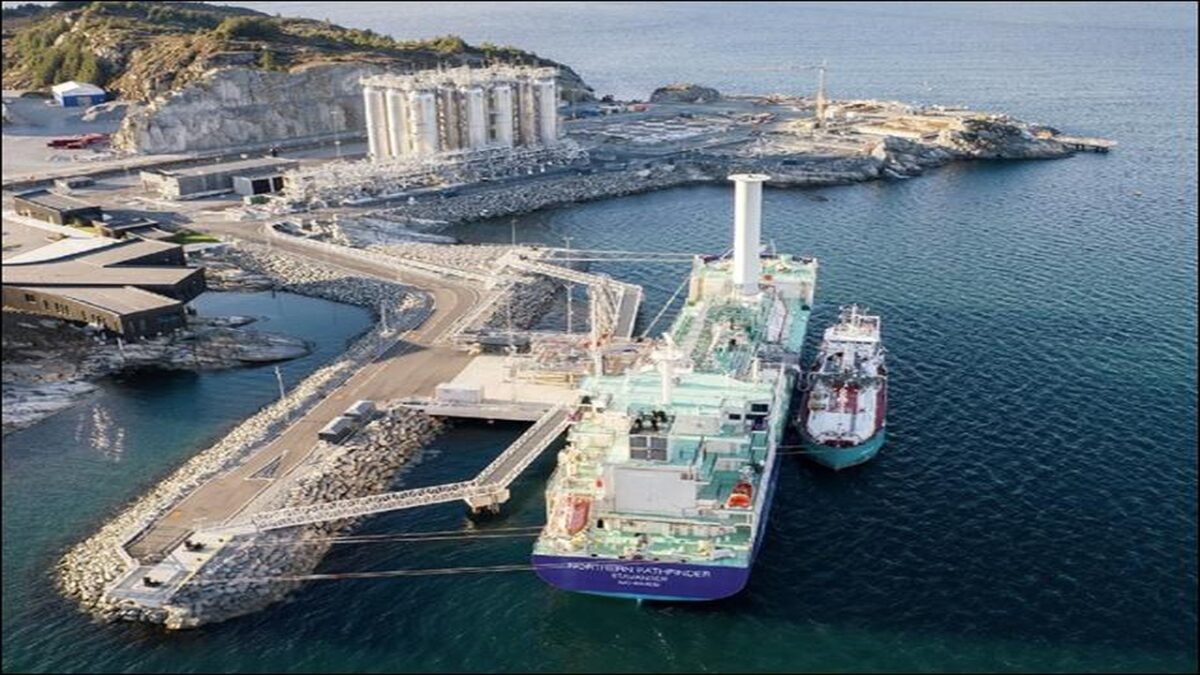
The meticulously planned operation saw Molgas Energy Group conduct both a cool-down and subsequent LNG bunkering for the dual-fuel LCO2 carrier, Northern Pathfinder. This intricate process took place at the Northern Lights’ LNG terminal in Oygarden, a strategic location on Norway’s western coast. The cool-down phase, crucial for preparing the vessel’s tanks for the cryogenic LNG fuel, was carried out at Energiparken, adjacent to the terminal’s production facility, ensuring optimal conditions for safety and efficiency. Following this, the actual LNG bunkering procedure was completed safely at Northern Lights’ dedicated quay, demonstrating seamless coordination between all parties involved.
Molgas utilized its advanced bunkering vessel, the Bergen LNG, to facilitate this crucial fuel transfer. The Bergen LNG is purpose-built for efficient and safe delivery of liquefied natural gas to various types of ships, making it an ideal choice for such a specialized operation. Furthermore, Integr8 Fuels played a pivotal role, acting as the broker for the entire bunkering transaction, ensuring a smooth commercial and logistical interface. This collaboration exemplifies the integrated approach required for successful high-profile operations in the evolving landscape of clean marine energy.
The successful completion of this operation represents more than just a refueling event; it is a testament to the robust capabilities of Molgas and the progressive vision of the maritime sector. It solidifies LNG’s position as a viable and increasingly preferred marine fuel, particularly for vessels with a mandate for environmental stewardship. The precision and safety protocols observed during the cool-down and LNG bunkering further affirm confidence in LNG as a mainstream solution for future shipping needs, promoting broader adoption across diverse fleets.
The Northern Pathfinder: Paving the Way for CO2 Transport
At the heart of this innovative bunkering operation is the Northern Pathfinder, a vessel designed for a truly pioneering purpose: the transport of captured CO2. Launched last year, this state-of-the-art LCO2 carrier is managed by K Line and operates under the banner of Northern Lights, a groundbreaking joint venture focused on carbon capture and storage. The Northern Pathfinder is not just any ship; it embodies the future of low-emission maritime transport, integrating several advanced technologies to minimize its environmental footprint.
Key to its sustainable design are its dual-fuel LNG engines, which allow the vessel to run on liquefied natural gas, significantly reducing sulfur oxide (SOx), nitrogen oxide (NOx), and particulate matter emissions compared to conventional marine diesel fuels. Additionally, the vessel is equipped with rotor sails, a sophisticated propulsion technology that harnesses wind power to further enhance fuel efficiency and reduce greenhouse gas emissions. These features combined make the Northern Pathfinder a leading example of how shipbuilding and operational practices are adapting to meet stringent environmental regulations and contribute positively to climate action.
This innovative LCO2 carrier plays a critical role in the broader carbon capture and storage value chain. By transporting liquefied CO2 from industrial emitters to offshore storage sites, the Northern Pathfinder facilitates the permanent removal of carbon from the atmosphere, a crucial step in mitigating climate change. Its design and operational capabilities reflect the commitment of its operators and owners to a future where heavy industries can decarbonize their operations through advanced technological solutions, making such vessels indispensable assets in the fight against global warming.
Molgas Energy Group’s Commitment to Green Fuels
Molgas Energy Group stands as a prominent player in the European natural gas sector, with a strong focus on the distribution and commercialization of LNG. Their involvement in this high-profile LNG bunkering operation underscores their unwavering commitment to supporting the maritime industry’s transition towards cleaner, more sustainable energy sources. Molgas has strategically invested in developing robust LNG supply chains, including dedicated bunkering vessels and extensive logistics networks, positioning them as a key enabler of maritime decarbonization across the continent.
The growing demand for LNG as a marine fuel is driven by its environmental benefits and its increasing availability. Molgas recognizes this trend and actively works to expand its bunkering capabilities and service offerings, ensuring that vessels adopting LNG propulsion have reliable access to fuel. Their expertise spans not only the physical delivery of LNG but also providing comprehensive technical support and operational guidance to shipowners and operators, fostering confidence in the adoption of this green fuel technology.
Molgas’s strategy is deeply rooted in contributing to a more sustainable future for global shipping. By providing reliable and efficient LNG bunkering solutions, they empower shipping companies to meet increasingly stringent environmental regulations, such as those set by the International Maritime Organization (IMO), and enhance their own environmental performance. This forward-thinking approach cements Molgas’s reputation as a leader in clean energy solutions for the maritime sector, actively shaping the landscape of future marine fuels and accelerating the pace of environmental progress within the industry.
The Strategic Importance of LNG as a Marine Fuel
Liquefied natural gas (LNG) has emerged as a cornerstone of the shipping industry’s decarbonization efforts, serving as a transitional fuel that offers immediate and significant environmental benefits. Its combustion produces virtually no sulfur oxides (SOx) or particulate matter, and substantially lower nitrogen oxide (NOx) emissions compared to traditional heavy fuel oil (HFO). Furthermore, LNG reduces CO2 emissions by approximately 20-25%, playing a crucial role in helping vessels meet current and future emission reduction targets set by regulatory bodies like the IMO.
The adoption of LNG as a marine fuel is not just about compliance; it’s about future-proofing vessel investments and enhancing operational efficiency. The global LNG bunkering infrastructure is steadily expanding, with new terminals and dedicated bunkering vessels coming online in key ports worldwide. This increasing availability, coupled with the proven safety record and technological maturity of LNG propulsion systems, makes it an attractive option for a wide range of vessel types, from cargo ships and cruise liners to specialized carriers like the Northern Pathfinder.
While the industry continues to explore other alternative fuels such as ammonia, methanol, and hydrogen, LNG currently offers a mature and scalable solution that can be implemented today. Its economic viability, coupled with its environmental advantages, positions LNG as a critical bridge fuel, enabling the shipping sector to progressively reduce its carbon footprint while research and development continue for zero-emission technologies. The sustained growth in LNG-fueled newbuild orders underscores the industry’s confidence in its long-term strategic importance.
Northern Lights: Pioneering Carbon Capture and Storage
The Northern Lights Joint Venture, a collaboration between energy giants Equinor, Shell, and TotalEnergies, represents a monumental effort in developing large-scale carbon capture and storage (CCS) solutions. This pioneering project aims to establish the world’s first cross-border open-source CO2 transport and storage infrastructure, offering industrial emitters across Europe a viable pathway to decarbonize their operations. The role of the Northern Pathfinder LCO2 carrier is central to this ambitious undertaking, providing the essential maritime link in the CCS value chain.
The Northern Lights project involves capturing CO2 from industrial sources, liquefying it, transporting it via specialized vessels like the Northern Pathfinder, and then permanently storing it in a geological reservoir beneath the North Sea. This comprehensive approach addresses the challenge of industrial emissions by providing a robust and secure method for carbon management. The successful LNG bunkering of the Northern Pathfinder directly supports the operational readiness of this vital infrastructure, ensuring that the vessel can perform its critical function efficiently and sustainably.
By pooling their expertise and resources, Equinor, Shell, and TotalEnergies are demonstrating a collaborative model for tackling global climate challenges. The Northern Lights initiative not only aims to achieve significant CO2 reductions but also seeks to create a commercially viable market for CCS, encouraging wider adoption across various industries. The operational success of vessels like the Northern Pathfinder, powered by cleaner fuels like LNG, is integral to showcasing the feasibility and environmental benefits of this innovative climate solution, paving the way for a more sustainable industrial future.
The Future of Decarbonized Shipping and Energy Transition
The successful Molgas LNG bunkering operation for the Northern Pathfinder is a powerful symbol of the ongoing energy transition and the shipping industry’s determined push towards decarbonization. While LNG serves as a crucial transitional fuel, the long-term vision for shipping involves a diverse mix of alternative fuels, including ammonia, methanol, and hydrogen, each with its own set of advantages and challenges. The maritime sector is actively investing in research, development, and pilot projects to explore and scale these next-generation fuels, aiming for a net-zero future.
Partnerships between fuel suppliers, technology providers, shipowners, and financial institutions are becoming increasingly vital to accelerate this transition. Collaborative efforts are essential for developing the necessary infrastructure, ensuring fuel availability, and de-risking investments in new propulsion technologies. The Molgas-Northern Lights collaboration exemplifies this synergistic approach, where expertise in fuel supply meets innovation in environmental transport, creating tangible progress towards climate goals.
Looking ahead, the commitment to innovation and sustainability will continue to drive the shipping industry. The integration of advanced vessel designs, efficient operational practices, and cleaner energy sources will be paramount. As global trade continues to grow, ensuring that this growth is environmentally responsible is a collective imperative. The milestone achieved in Norway with the Molgas LNG bunkering operation serves as an inspiring example of how dedicated efforts and strategic partnerships can propel the maritime world towards a cleaner, more sustainable, and decarbonized future, benefiting both the industry and the planet for generations to come.