LR Approves First 100% Hydrogen Marine Engine | Mariner News
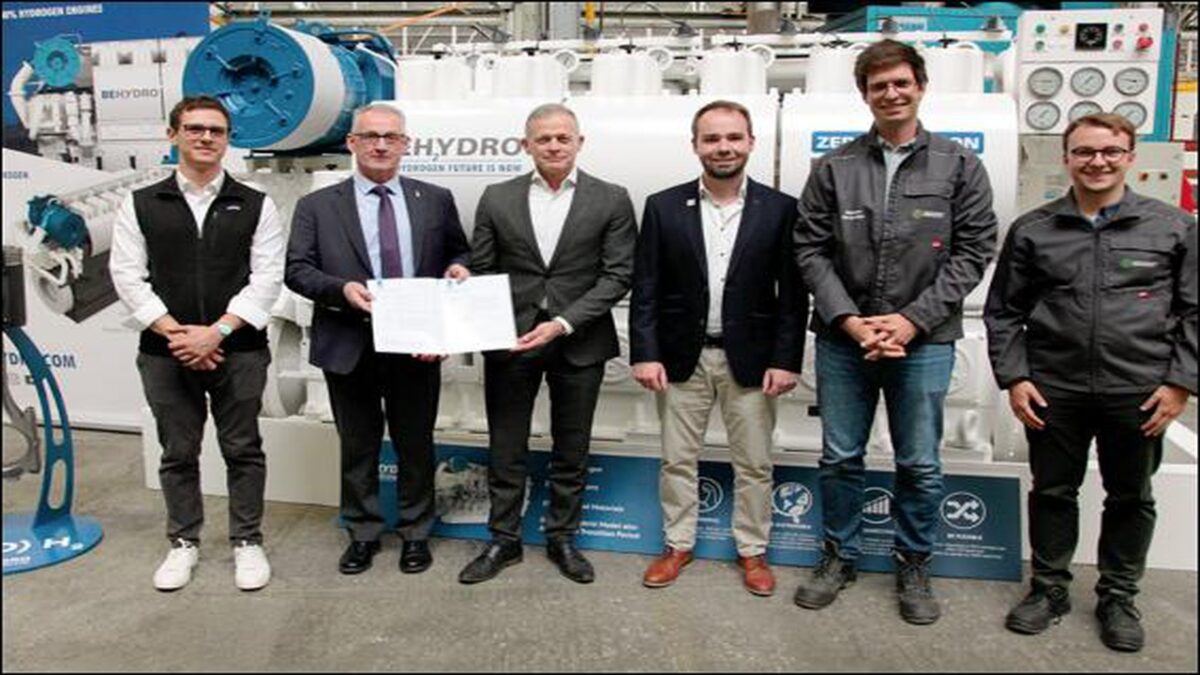
The maritime industry has taken a monumental leap towards a sustainable future with the approval of the first 100% hydrogen-fuelled marine engine. Lloyd’s Register (LR), a globally recognized leader in marine classification, has issued the inaugural type approval certificate for a marine engine that runs entirely on hydrogen, eliminating the need for traditional pilot fuels for ignition. This groundbreaking achievement, spearheaded by BeHydro, a joint venture between ABC Engines and CMB.TECH, signifies a pivotal moment in the global effort to decarbonize shipping and offers a tangible pathway towards zero-emission vessel operations. The certification underscores the growing maturity of hydrogen internal combustion engine technology and its readiness to power the next generation of eco-friendly fleets, fundamentally reshaping the landscape of marine propulsion.
A New Era of Clean Marine Propulsion: The 100% Hydrogen Engine
The newly certified BeHydro hydrogen-fuelled marine engine stands as a beacon of innovation in maritime technology. Developed and rigorously tested at ABC Engines’ advanced facility in Ghent, Belgium, this engine range boasts an impressive power output from 900 kW to 2,670 kW, making it suitable for a diverse array of marine applications. Its most remarkable feature is its ability to operate purely on hydrogen, a significant departure from earlier dual-fuel systems that still required a small amount of conventional fuel for ignition. This ‘no pilot fuel’ capability means that vessels equipped with this engine can achieve truly zero-emission operation at the point of use, releasing only water vapor into the atmosphere during combustion.
This technological breakthrough is not merely incremental; it represents a foundational shift in how the industry approaches clean marine power. By harnessing hydrogen as the sole energy source for combustion, BeHydro has effectively addressed one of the core challenges in fully transitioning away from fossil fuels. The engine’s robust design and performance, now validated by LR, confirm its reliability and safety for demanding marine environments. This development provides ship operators with a viable, scalable, and environmentally superior alternative for their vessel propulsion systems, directly supporting global climate targets and stringent environmental regulations.
Lloyd’s Register: The Guardian of Maritime Safety and Innovation
Lloyd’s Register’s role in this landmark approval cannot be overstated. As one of the world’s leading classification societies, LR is entrusted with ensuring the safety, performance, and reliability of marine vessels and offshore structures. The process of type approval is incredibly stringent, involving exhaustive reviews of design, materials, manufacturing processes, and comprehensive testing under various operational conditions. For a novel technology like a 100% hydrogen engine, this certification provides crucial validation, confirming that the engine meets LR’s exacting requirements and international maritime standards.
LR’s stamp of approval instills confidence among shipowners, operators, and regulatory bodies, acting as a critical enabler for the widespread adoption of new marine technologies. Their meticulous assessment ensures that while innovation is embraced, safety is never compromised. This certification not only validates BeHydro’s engineering excellence but also signals to the broader maritime community that hydrogen internal combustion engines are a robust and safe solution for marine propulsion, capable of delivering sustainable shipping without sacrificing operational integrity. LR’s commitment to fostering green shipping solutions positions them as a key partner in the industry’s energy transition.
BeHydro’s Journey to Pure Hydrogen: A Milestone for Sustainable Shipping
This latest achievement by BeHydro builds upon a strong foundation of innovation. In 2023, LR granted the first type approval for BeHydro’s hydrogen dual-fuel engine, which was a significant step forward at the time. The evolution from a dual-fuel system, which still relied on a pilot fuel, to a completely hydrogen-fuelled marine engine demonstrates BeHydro’s rapid progress and unwavering dedication to pioneering advanced clean marine power solutions. This progressive development underscores the company’s strategic vision for a hydrogen-powered future.
The collaborative effort between ABC Engines, renowned for its expertise in engine manufacturing, and CMB.TECH, a leader in hydrogen applications, has been instrumental in bringing this technology to fruition. Their combined knowledge has enabled the successful design, development, and testing of an engine capable of harnessing hydrogen’s full potential. This continuous advancement in hydrogen engine technology by BeHydro highlights the maturity and viability of hydrogen as a primary fuel source for the maritime sector, setting a new benchmark for clean marine technology and demonstrating tangible progress towards a truly sustainable shipping industry.
Accelerating Maritime Decarbonization: The Promise of Hydrogen Fuel
Maritime decarbonization is a pressing global imperative, with international regulations and societal pressures demanding a rapid transition to cleaner energy. The International Maritime Organization (IMO) has set ambitious targets for reducing greenhouse gas emissions from shipping, pushing the industry to explore and adopt alternative marine fuels. Among the various options, hydrogen stands out as a particularly promising contender due to its ability to produce zero carbon emissions at the point of combustion. When produced from renewable energy sources (green hydrogen), it offers a complete lifecycle decarbonization solution.
The widespread integration of 100% hydrogen-fuelled marine engines can dramatically accelerate the industry’s journey towards meeting these environmental goals. By eliminating fossil fuel dependence, these engines contribute significantly to reducing air pollution, mitigating climate change, and safeguarding marine ecosystems. The availability of proven and certified hydrogen engine technology empowers shipowners and operators to make confident investments in green shipping, propelling the entire sector towards a more environmentally responsible and sustainable operational model. This technology is a cornerstone in building a future where shipping operates in harmony with our planet.
Overcoming Challenges: Paving the Way for Hydrogen Adoption in Shipping
While the approval of a 100% hydrogen-fuelled marine engine marks a significant triumph, the path to widespread adoption in shipping still presents several challenges. Key among these are the development of robust hydrogen bunkering infrastructure at ports worldwide, the complex logistics of storing hydrogen on board vessels (whether as compressed gas or cryogenic liquid hydrogen), and the substantial upfront costs associated with both hydrogen production and specialized engine systems. Safety considerations, given hydrogen’s flammability, also necessitate rigorous design and operational protocols, further guided by classification societies and evolving regulatory frameworks.
However, these challenges are being actively addressed through collaborative efforts across the industry, supported by governmental initiatives and ongoing research and development. Investments are flowing into scalable green hydrogen production, innovative storage solutions, and the establishment of international safety standards. Pilot projects for hydrogen-powered vessels are increasingly common, providing invaluable real-world experience and data. The certification of BeHydro’s engine serves as a powerful catalyst, stimulating further investment and innovation to overcome these hurdles, thereby creating a more viable and accessible ecosystem for hydrogen propulsion in global fleets.
Economic and Environmental Implications of Hydrogen Propulsion
The economic and environmental implications of adopting 100% hydrogen propulsion are profound. Environmentally, the shift promises a drastic reduction in greenhouse gas emissions, alongside significant cuts in harmful pollutants such as nitrogen oxides (NOX), sulfur oxides (SOX), and particulate matter. This directly contributes to cleaner air in port cities, healthier marine environments, and a substantial boost to the shipping industry’s overall sustainability profile. Companies embracing this technology will enhance their corporate social responsibility and meet evolving stakeholder expectations for environmental stewardship.
Economically, while initial investments might be higher, the long-term benefits are substantial. As green hydrogen production scales up, its cost is expected to become increasingly competitive, offering greater fuel price stability compared to volatile fossil fuel markets. Furthermore, compliance with future carbon taxes, emissions trading schemes, and stricter environmental regulations will increasingly penalize conventional fuels, making clean alternatives like hydrogen more economically attractive. Early adopters of hydrogen-fuelled engines may also gain a competitive advantage in a market increasingly valuing green shipping solutions, potentially unlocking access to new eco-conscious clients and financing opportunities.
The Horizon of Marine Energy: Integrating Hydrogen into Global Fleets
Looking ahead, the horizon of marine energy is undeniably shifting towards clean alternatives, with hydrogen playing a central role. The LR approval of BeHydro’s 100% hydrogen-fuelled marine engine is a critical step in translating this vision into reality. This technology holds immense potential for integration across various vessel segments, from ferries and tugboats to offshore support vessels and eventually larger cargo ships, contributing to a truly sustainable global fleet. The scalability of the engine range (900 kW to 2,670 kW) ensures its applicability across a significant portion of the maritime spectrum.
Realizing this future will require continued innovation, cross-sector collaboration among engine manufacturers, shipyards, energy providers, and port authorities, as well as supportive government policies and robust international regulatory frameworks. Classification societies like Lloyd’s Register will remain indispensable in guiding this complex transition, ensuring that cutting-edge technologies are safely and effectively integrated into maritime operations. The advent of the 100% hydrogen-fuelled engine signifies not just a technological advancement, but a profound commitment from the maritime industry towards achieving a truly carbon-neutral and sustainable future for global shipping, charting a course towards cleaner oceans and a healthier planet for generations to come.