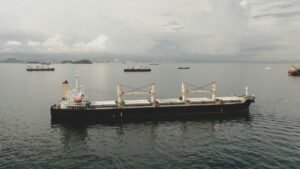
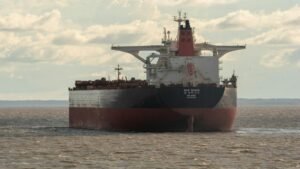
India demands end to Black Sea shipping attacks after seafarer deaths

India calls for safe navigation in the Black Sea at the UNSC, citing seafarer deaths and global food security risks for the Global South.
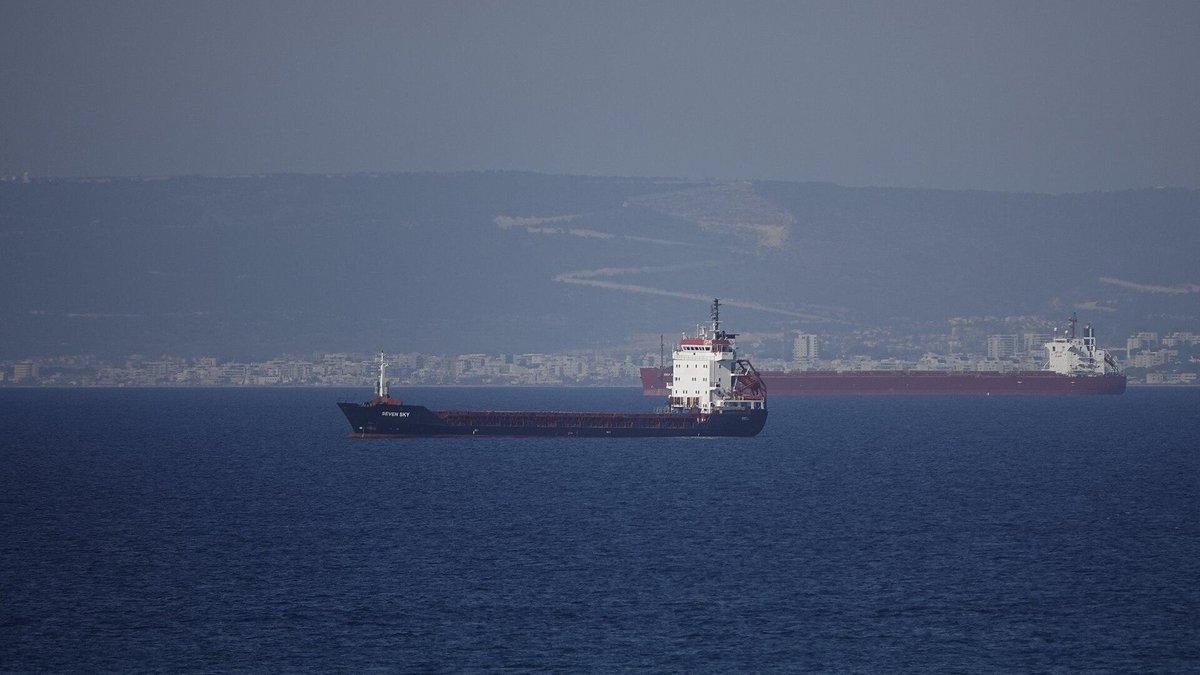
India is leveraging its position as a global food producer to demand an immediate end to Black Sea shipping attacks, warning that the targeting of merchant vessels is now a direct threat to the Global South’s essential supplies.
Addressing the United Nations Security Council, India’s Permanent Representative, Ambassador Harish Parvathaneni, called for the immediate restoration of safe navigation through international waterways. He stated that the conflict has caused far-reaching consequences for interconnected global supply chains.
Parvathaneni confirmed that recent attacks have taken a specific toll on Indian maritime workers. An Indian crew member died during an attack on the MV Omorfi on July 18. In October, three Indian nationals were aboard the MV Royad Mammadov when it was struck. Attacks on the MV Golden Leo and MV AGN RAGNAR resulted in four dead and two missing Indian seafarers.
The envoy noted that the Black Sea region and India together produce nearly 20% of global cereals. Russia and Ukraine alone account for approximately 25% of global exports of wheat, maize, and barley. To address these risks, India and Liberia recently launched the Group of Friends on Safety and Security of Shipping and Seafarers at the UN.
Why it matters
The deaths of Indian seafarers on the MV Omorfi and other vessels change the calculus for New Delhi. Given the casualties, shipowners and managers likely face a future where India uses its diplomatic weight to push for stronger maritime security corridors, as the country is now engaging both sides of the conflict directly on shipping safety. This move signals that India may no longer accept the status quo of merchant ships being treated as targets.
For charterers and traders, the focus on the food basket link is a warning that the economic burden of the conflict is falling disproportionately on the Global South. By linking the 1943 Bengal famine to current disruptions, India is signaling that it views the protection of grain and energy flows as a non-negotiable necessity rather than a secondary trade issue.
The partnership with Liberia to form a new maritime safety group suggests a shift toward industry-specific coalitions. This mechanism aims to support the IMO and ILO, which could lead to new standards or reporting requirements for vessels operating in high-risk zones. This move points to a growing frustration with the Security Council’s inability to guarantee freedom of navigation.
What to watch
The next trigger will be the operational output of the India-Liberia Group of Friends and whether it can secure concrete safety guarantees for the grain export corridors from both Russian and Ukrainian authorities.