

HKC Entry Into Force Leaves Ship Recycling Regulatory Conflict Unresolved
The Hong Kong Convention's entry into force has not yet resolved legal overlaps with the Basel Convention, leaving shipowners in a regulatory limbo.
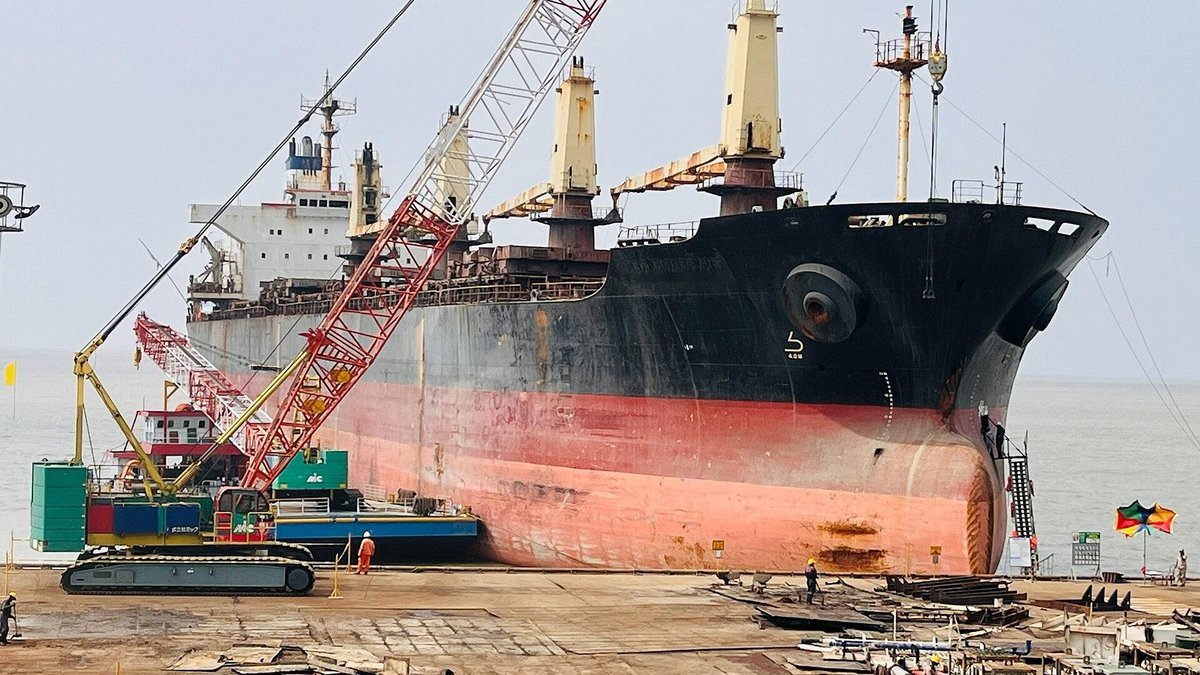
The Hong Kong Convention (HKC) officially entered into force on June 26, 2025, marking a milestone for global ship recycling standards. However, the convention’s arrival has not yet resolved a fundamental legal conflict with the 1989 Basel Convention, leaving shipowners and regulators in a state of uncertainty regarding transboundary waste movements.
The core of the issue lies in the dual nature of an end-of-life vessel, which can be classified simultaneously as an operational ship under the HKC and as hazardous waste under the Basel Convention. While the HKC focuses on authorized facilities and hazardous material inventories, the Basel Convention requires notification and consent for the movement of waste across borders. Compliance with one does not currently guarantee satisfaction of the other, creating a potential liability gap for owners selling tonnage into the major recycling hubs of South Asia and Türkiye.
The Gap Between Paperwork and Protection
The entry into force of the HKC highlights a critical disconnect between administrative certification and actual environmental and occupational outcomes. UNCTAD data for 2024 shows that 91.7 percent of the recycling market is concentrated in Bangladesh, India, Pakistan, and Türkiye. In these regions, the distance between legal paperwork and the actual handling of toxic substances like asbestos and heavy metals remains the primary point of international debate.
Recent regulatory steps have attempted to bridge this gap, but progress remains slow. The IMO’s Marine Environment Protection Committee approved provisional guidance in late 2024, and the Basel COP-17 in May 2025 invited further comments on coordination. However, definitive legal clarity is not expected until at least late 2026, following a working-group cooperation deadline on October 30 of that year.
Moving Toward a Joint Assessment Framework
For the shipping industry, the lack of a unified standard means that an HKC authorization cannot yet settle concerns regarding downstream waste disposal. To address this, a proposed joint assessment framework involving the IMO, the Basel Secretariat, and the International Labour Organization (ILO) aims to move beyond institutional assertions of regulatory superiority. This framework would distinguish between mandatory safety outcomes and improvements that can be phased in based on a nation’s technical capacity.
Bangladesh is emerging as the primary testing ground for this reconciliation. As a major market player that has acceded to the HKC, its yards are expected to serve as pilots for a new system of transparent, empirical research. This approach would replace simple certification with reproducible indicators covering soil contamination, air emissions, and medical surveillance for workers.
Until these two conventions are fully harmonized, shipowners must recognize that HKC certificates are the beginning of scrutiny rather than the end of it. The industry now faces a period where commercial efficiency and recycling speed must be balanced against the risk of violating Basel Convention obligations, which remain in force regardless of a yard’s HKC status.
Source: The Maritime Executive