HD Hyundai Leads TerraPower SMR Nuclear Project | Mariner News
HD Hyundai’s selection as preferred bidder for TerraPower’s SMR project marks a significant milestone in advanced nuclear technology and sustainable energy. This strategic partnership between HD Hyundai Heavy Industries, a global leader in shipbuilding and heavy industry, and TerraPower, an innovative U.S. small modular reactor (SMR) developer, is poised to redefine clean energy generation and maritime propulsion. The collaboration underscores a shared commitment to pioneering solutions for global energy demands and environmental concerns. This project isn’t just about constructing next-generation nuclear reactors; it’s about forging a path towards a more sustainable and energy-secure future, with HD Hyundai at the forefront.
The Global Imperative for Advanced Nuclear Energy and SMRs
The world faces an urgent need for reliable, carbon-free energy sources. Small Modular Reactors (SMRs) offer a revolutionary leap in nuclear power generation, providing a compelling solution. Unlike traditional large plants, SMRs are smaller, more flexible, and can be factory-built, reducing construction times and costs. Their inherent safety features, including passive cooling systems, make them robust and secure. These advanced nuclear reactors operate with enhanced efficiency and a reduced environmental footprint, ideal for grid applications, industrial process heat, and remote communities.
The scalability and economic competitiveness of SMR technology are key drivers for its increasing adoption worldwide, positioning it as a cornerstone of the future energy mix. Investing in these innovative nuclear power solutions is critical for global decarbonization goals and energy independence. The modular nature of SMRs allows for staged deployment, matching energy demand more precisely and minimizing financial risks associated with large infrastructure projects. This flexibility makes them an attractive option for diverse energy markets seeking to transition away from fossil fuels.
HD Hyundai’s Strategic Vision and Contribution to the TerraPower SMR Project
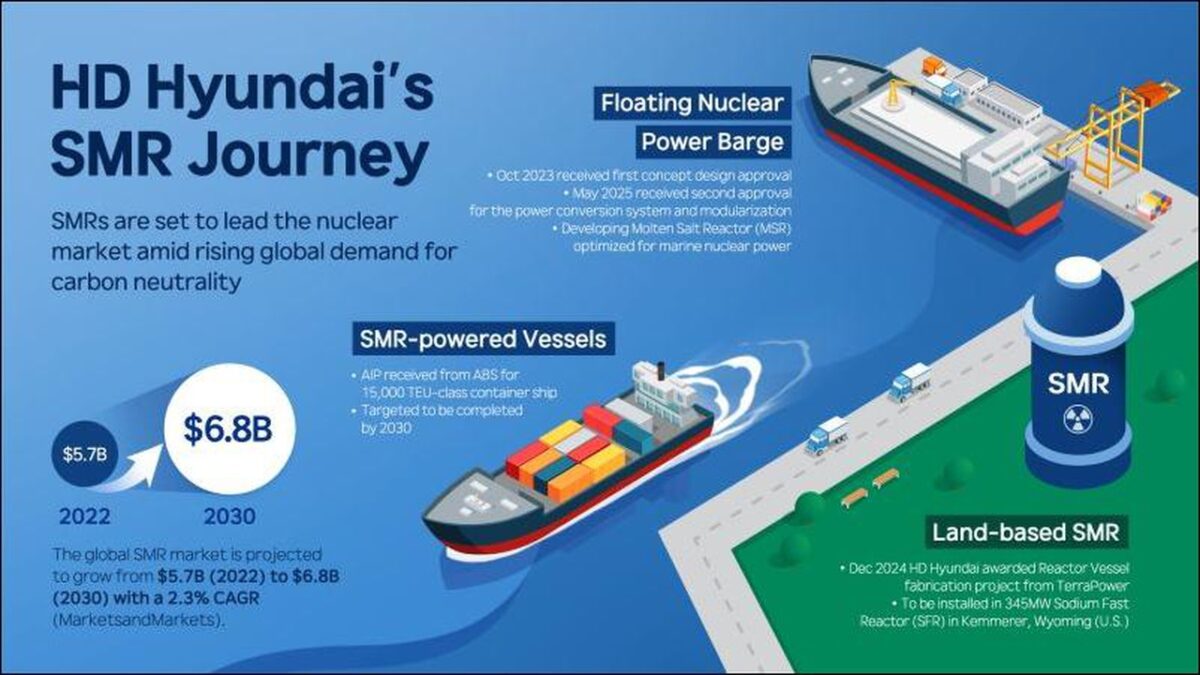
HD Hyundai Heavy Industries’ selection as preferred bidder for TerraPower’s SMR project highlights its engineering capabilities and strategic vision. This agreement places HD Hyundai at the heart of next-wave nuclear technology development. Under the framework agreement, HD Hyundai Heavy Industries will crucially manufacture and supply key reactor equipment for TerraPower’s advanced nuclear reactor designs. This leverages HD Hyundai’s extensive experience in industrial fabrication, precision manufacturing, and project management, ensuring high standards for critical nuclear components.
The company’s engagement in the SMR sector reflects a strategic diversification beyond traditional shipbuilding, aiming to solidify its position as a global heavy industry leader. By contributing to the TerraPower SMR project, HD Hyundai enhances its technological portfolio and makes a substantial contribution to the global clean energy transition, demonstrating commitment to innovation and sustainable growth. This move not only expands HD Hyundai’s market reach but also positions it as a key player in the nascent but rapidly expanding advanced nuclear energy sector, driving technological advancements within the broader heavy industries.
Unveiling TerraPower’s Groundbreaking Natrium Reactor Technology
At the core of this monumental collaboration is TerraPower’s innovative Natrium reactor, a cutting-edge sodium-cooled fast reactor technology. Developed with a vision for safety, efficiency, and sustainability, the Natrium reactor represents a significant advancement over conventional Generation III nuclear plants. This SMR design uses liquid sodium as a coolant, allowing operation at higher temperatures and atmospheric pressures, which enhances thermal efficiency and offers greater flexibility in power generation.
A key advantage is its integration with a molten salt energy storage system, providing unparalleled flexibility to balance variable renewable energy sources. This allows the plant to dispatch carbon-free electricity on demand, ensuring grid stability. Furthermore, the Natrium reactor design is known for improved fuel utilization, reduced waste generation, and enhanced safety features, making it an economically viable and environmentally responsible choice for future power grids. TerraPower, supported by figures like Bill Gates, is at the vanguard of developing these transformative advanced nuclear solutions, aiming for clean, affordable, and sustainable energy.
The Natrium reactor’s unique characteristics also include its ability to burn spent nuclear fuel from conventional reactors, thereby reducing the volume and radioactivity of nuclear waste, a critical aspect of sustainable nuclear energy. This closed fuel cycle capability further highlights the project’s long-term environmental benefits and commitment to a comprehensive waste management strategy. The technological sophistication of the Natrium reactor, combined with HD Hyundai’s manufacturing prowess, promises a robust and efficient path to cleaner energy production.
Pioneering Nuclear-Powered Vessels for Maritime Decarbonization
Beyond land-based power, the partnership holds profound implications for the maritime industry, particularly nuclear-powered vessels. HD Hyundai has been actively developing and applying SMR technology for potential maritime applications. The concept of nuclear-powered ships, while not new, is resurging given the urgent need for shipping decarbonization. Conventional marine fuels contribute significantly to global emissions, and SMRs for propulsion offer a pathway to truly zero-emission shipping.
These advanced nuclear reactors could provide clean, long-duration power for large commercial vessels like container ships and tankers, drastically reducing their carbon footprint and operational costs. HD Hyundai’s shipbuilding prowess, combined with TerraPower’s SMR expertise, creates a powerful synergy for revolutionizing future fleets. The integration of SMRs into marine vessels presents a complex engineering challenge, but the environmental and economic benefits—including extended range, reduced refueling needs, and compliance with stringent regulations—make it a compelling avenue for maritime innovation. This collaboration positions HD Hyundai as a leader in developing sustainable, next-generation nuclear-powered vessels, driving the shipping industry towards a greener horizon.
Considering the ambitious decarbonization targets set by international maritime organizations, nuclear propulsion offers a viable, large-scale solution for deep-sea shipping where battery or hydrogen technologies might have limitations. The potential for continuous operation without frequent refueling significantly enhances operational efficiency and supply chain reliability, providing a competitive advantage in global trade. This forward-thinking approach by HD Hyundai solidifies its role not just as a shipbuilder but as an innovator shaping the future of global maritime logistics and environmental sustainability.
Driving Economic Growth and Ensuring Energy Security with Advanced Nuclear
The HD Hyundai-TerraPower SMR project is more than a technological feat; it is a catalyst for economic growth and enhanced energy security. The development and deployment of advanced nuclear technologies like the Natrium reactor will spur significant investment, create high-skilled jobs across sectors from manufacturing to operations. This project demonstrates the tangible benefits of international collaboration in tackling global challenges, fostering technological exchange and industrial advancement.
For nations seeking energy independence, SMRs offer a decentralized and resilient energy solution. Furthermore, establishing a robust supply chain for SMR components, facilitated by HD Hyundai’s industrial capabilities, will strengthen domestic manufacturing and promote innovation within the clean energy sector. This initiative underscores how strategic partnerships in advanced nuclear power are crucial for environmental stewardship, economic prosperity, and bolstering national energy resilience, paving the way for a more stable and prosperous global future. The long-term stability provided by reliable, carbon-free energy sources is invaluable for industrial development and societal well-being, making this collaboration a cornerstone of future economic strategies.
Conclusion
The selection of HD Hyundai as preferred bidder for TerraPower’s SMR project represents a landmark achievement in sustainable energy and technological innovation. This collaboration between a shipbuilding giant and a pioneering nuclear developer will accelerate the deployment of next-generation nuclear reactors, offering a clean, reliable, and cost-effective power source for terrestrial and maritime applications. As HD Hyundai strengthens its position in advanced nuclear technology and the development of nuclear-powered vessels, the world watches an exciting evolution in how we generate power and navigate our oceans.
This partnership is a powerful testament to the potential of strategic alliances in driving the global energy transition, promising a future where clean energy and cutting-edge engineering converge to benefit humanity and the planet. HD Hyundai continues to lead the charge towards a sustainable, energy-secure future, proving that innovation knows no bounds. The integration of SMR technology into various sectors, spearheaded by this visionary alliance, is set to leave a lasting impact on energy production, environmental protection, and global industrial advancement.