

Hapag-Lloyd rejects 2027 overcapacity fears as profits surge 482%
Hapag-Lloyd CEO Rolf Haben Jansen says demand is strong enough to absorb new tonnage and the return to Suez Canal routings in 2027.
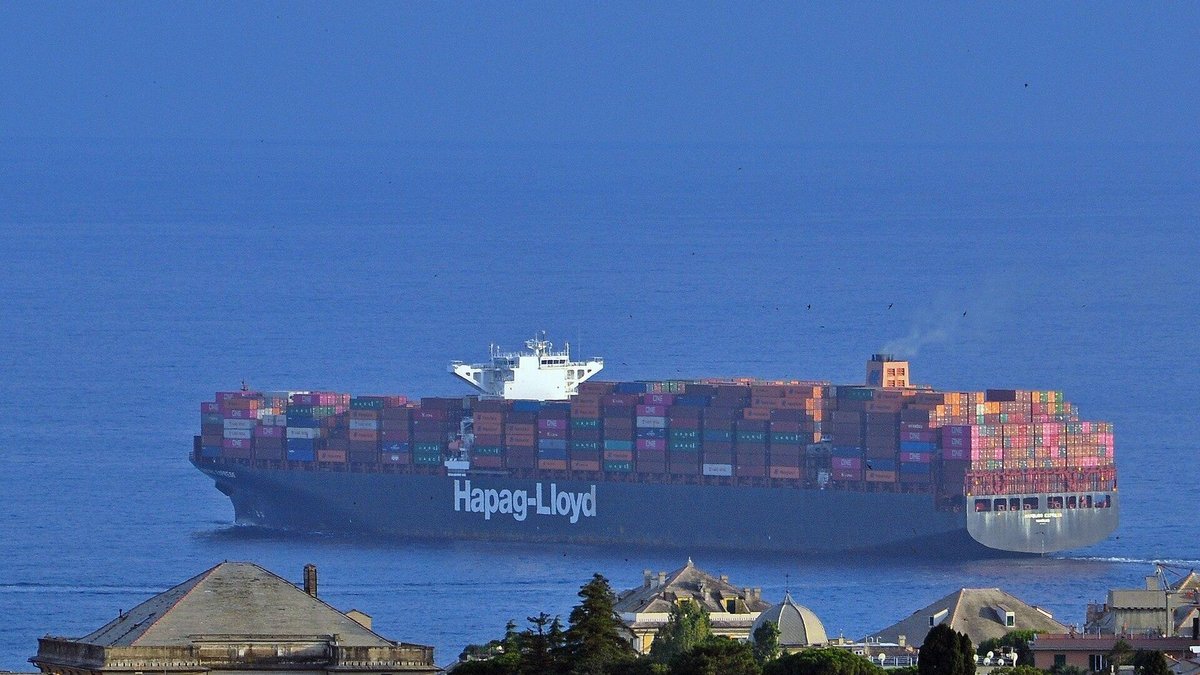
Hapag-Lloyd CEO Rolf Haben Jansen is dismissing fears of a 2027 market collapse, claiming that a return to the Suez Canal will free up just 10 ships from the carrier’s 300-vessel fleet while global demand remains remarkably strong. Despite a massive industry order book, the German line expects a balanced market next year as it reports a 482% surge in third-quarter profit to $999 million.
The carrier achieved its Q3 2026 results on flat volumes of 3.4 million TEU, with earnings driven by higher spot rates and bunker surcharges. Revenue rose 26% to $6.8 billion, while EBIT climbed 376% to $1.08 billion. Haben Jansen noted that while global demand is growing at 5%, volume growth on Hapag-Lloyd’s dominant legs has reached 7% this year, leaving vessels sailing at 98% capacity.
Hapag-Lloyd expects all services previously using the Suez Canal to return to that routing during the first quarter of 2027. While some analysts warn this shift will create overcapacity, Haben Jansen argues that a combination of demand growth, port congestion, and slower steaming will keep the market balanced through 2027 and likely 2028.
The company is also adjusting its long-term footprint. Its Hanseatic Global Terminal (HGT) business saw volumes rise 10.5% to 11.4 million TEU following the consolidation of J M Baxi’s Indian operations. Meanwhile, the acquisition of Zim Integrated Shipping Services has been delayed to the second half of the first quarter of 2027 as the carrier awaits Israeli government approval to transfer a required golden share.
Why it matters
The 98% utilization rate reported by Hapag-Lloyd suggests the market is tighter than the massive order book implies. If demand on major trade lanes continues to grow at 7%, the capacity freed by the return to the Suez Canal—which Haben Jansen estimates at only 3.3% of his fleet—will be absorbed almost immediately. This leaves little room for the freight rate collapse that many charterers have been banking on for 2027.
Cargo owners should prepare for a fundamental change in how they pay for space. Haben Jansen is signaling the end of the traditional fixed-rate annual contract, calling it a model that has not performed well recently. The push for index-linked surcharges and provisions for market swings means shippers will likely face more volatile, market-responsive pricing even in long-term agreements.
Hapag-Lloyd’s terminal strategy is shifting from pure volume growth to securing operational control. By targeting controlled access to capacity through its 27-terminal portfolio, the carrier is insulating itself against the port congestion it predicts will help balance the market. This vertical integration provides a buffer that pure-play liners will lack if port efficiency drops in 2027.
The delay of the Zim acquisition into 2027 creates a period of strategic limbo. Until the Israeli government approves the golden share transfer to FIMI, Hapag-Lloyd cannot fully integrate Zim’s assets or realize the expected synergies. This pushes the full impact of the merger into the second half of 2027, making that year a transition period rather than a clean start for the expanded entity.
What to watch
The resubmission of the Zim golden share approval to the Israeli government and the subsequent regulatory clearances in other markets will determine if the deal closes by the new late-Q1 2027 deadline. Any further delays would signal continued friction in Hapag-Lloyd’s inorganic growth plans.
Source: World Cargo News