Fugro Powers UK Carbon Capture Infrastructure Development | Mariner News
Fugro is making a significant contribution to the UK carbon capture infrastructure landscape. They’ve secured a crucial contract with Saipem for the Northern Endurance Partnership (NEP), a groundbreaking initiative focused on CO₂ transportation and storage. This project represents a vital step in the UK’s commitment to decarbonisation and achieving its net-zero targets. Fugro’s expertise in integrated marine survey and inspection services is essential for developing this critical offshore pipeline infrastructure beneath the North Sea, setting a new benchmark for environmental responsibility.
Fugro’s Pivotal Role in UK Carbon Capture Infrastructure
Fugro’s recent contract award by Saipem solidifies its integral involvement in developing UK carbon capture infrastructure for the Northern Endurance Partnership. As a global leader in integrated geospatial solutions, Fugro is tasked with delivering comprehensive marine survey and inspection services. This engagement is fundamental to ensuring the safe and efficient installation of the offshore pipeline, which is central to the UK’s first large-scale CO₂ transportation and storage project.
Their specialized services cover everything from detailed seabed mapping to real-time monitoring, providing crucial data for informed decision-making throughout the project lifecycle. Fugro’s deep understanding of complex marine environments and advanced technological capabilities position it uniquely to tackle the challenges associated with robust carbon capture infrastructure. Their integrated approach minimizes risks and optimizes project timelines.
This collaboration sets a benchmark for future decarbonisation efforts, demonstrating how expert marine support underpins major environmental initiatives. Fugro’s commitment extends beyond mere data collection, providing actionable insights crucial for the long-term success and integrity of CO₂ storage solutions.
The Northern Endurance Partnership: A Landmark Decarbonisation Initiative
The Northern Endurance Partnership (NEP) stands as a monumental undertaking, spearheading the UK’s drive towards a low-carbon future. This incorporated joint venture, comprising industry giants bp, Equinor, and TotalEnergies, is at the forefront of establishing scalable CO₂ transportation and storage infrastructure. Its primary objective is to facilitate the capture and secure geological storage of carbon dioxide from industrial emitters located in the Teesside and Humber regions, two of the UK’s most carbon-intensive industrial clusters.
Central to the NEP’s strategy is leveraging the vast CO₂ storage capacity beneath the North Sea, an area identified as ideal for geological sequestration due to its stable formations. With access to potentially up to one billion tonnes of storage capacity, the project offers a credible and significant pathway to drastically reduce the UK’s industrial carbon footprint. This pioneering initiative provides a future-proof solution for sustainable industrial growth, aligning with the UK’s net-zero ambitions.
The development of this carbon capture infrastructure represents a critical component of the UK’s broader climate change mitigation strategy. By providing a secure and reliable means of transporting and permanently storing CO₂, the NEP helps bridge the gap between industrial activity and environmental responsibility, showcasing the practical application of advanced carbon capture and storage (CCS) technologies.
Strategic Importance of Offshore CO₂ Transport and Storage
The successful implementation of offshore CO₂ transport and storage is paramount for countries aiming to significantly reduce their greenhouse gas emissions. The NEP’s focus on developing a robust offshore pipeline system for CO₂ is a strategic move, utilizing existing maritime expertise and infrastructure in the North Sea. This method of transportation is considered highly efficient and secure for large volumes of captured carbon, minimizing surface footprint and maximizing safety protocols for CO₂ storage.
This infrastructure is not merely about environmental compliance; it’s about sustaining economic vitality. By offering a viable solution for decarbonising industrial regions, the carbon capture infrastructure enables heavy industries, which are crucial for jobs and economic output, to continue operating while dramatically lowering their environmental impact. This balance is critical for ensuring regional energy security and fostering continued industrial activity without compromising climate goals, supported by effective emissions reduction technologies.
Furthermore, investing in offshore CO₂ transport and storage positions the UK as a global leader in carbon capture and storage (CCS) technology and implementation. This expertise can be exported, creating new economic opportunities and solidifying the UK’s reputation as an innovator in green technologies. The long-term benefits extend to reduced air pollution, improved public health, and a more resilient energy system less reliant on fossil fuels.
Advanced Marine Survey and Inspection Techniques
Fugro’s role involves deploying cutting-edge marine survey and inspection services tailored for the complex demands of offshore pipeline installation. For the Northern Endurance Partnership, their work encompasses detailed pre-lay surveys, which are essential for mapping the seabed topography, identifying potential geological hazards, and ensuring an optimal route for the CO₂ pipeline. These surveys provide critical baseline data, allowing for precise engineering and minimizing environmental disturbance during construction. Their proficiency in subsea geodata acquisition is vital for project integrity.
The installation process itself requires continuous monitoring and verification, an area where Fugro’s expertise shines. They will conduct installation monitoring as the pipeline is pulled out to sea from the tunnel exit, extending several kilometers offshore. This real-time oversight confirms the pipeline is being laid according to specifications, maintaining its structural integrity and intended alignment. Such meticulous attention to detail is crucial for the long-term operational safety and efficiency of the CO₂ transportation infrastructure.
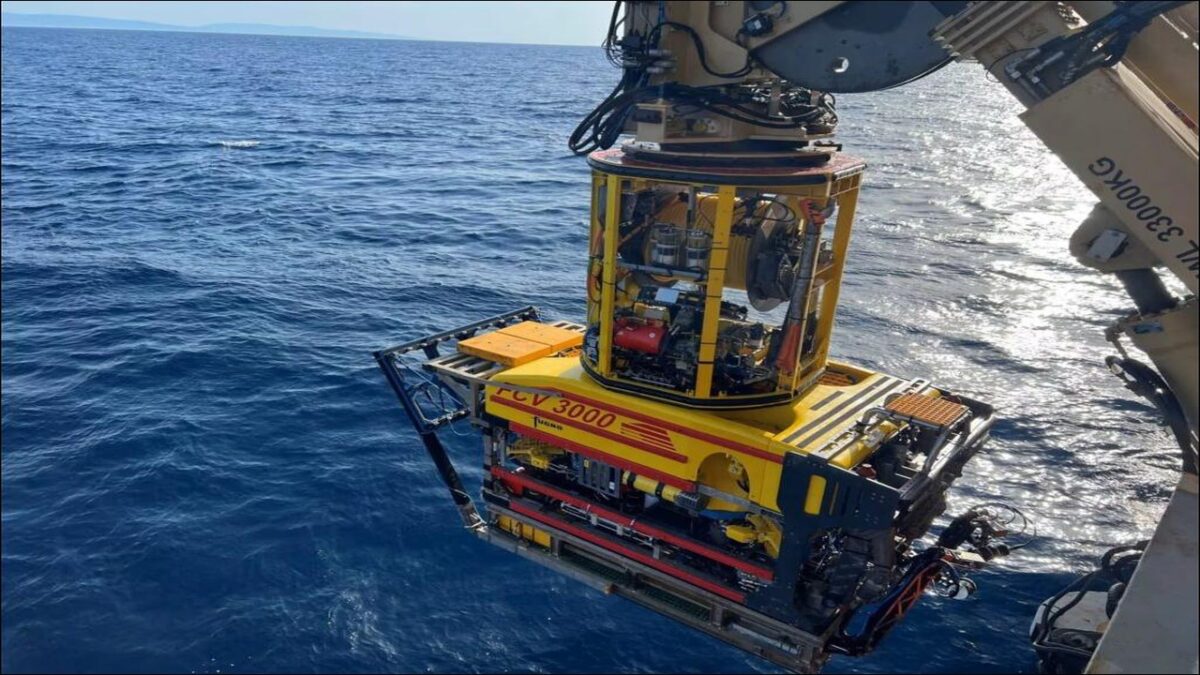
Utilizing state-of-the-art autonomous underwater vehicles (AUVs), remotely operated vehicles (ROVs), and advanced acoustic and geophysical sensors, Fugro gathers highly accurate data across vast marine areas. Their specialized vessels and experienced personnel ensure all data acquisition and analysis meet the highest industry standards. These integrated marine geospatial solutions are vital for de-risking the project and providing Saipem with the confidence required to execute such a large-scale offshore construction safely, bolstering the integrity of the carbon capture infrastructure.
Shaping the Future of Sustainable Energy in the UK
The successful deployment of the Northern Endurance Partnership’s carbon capture infrastructure marks a significant milestone in the UK’s journey towards a sustainable energy future. This project is more than just an offshore pipeline; it represents a foundational element in the UK’s strategy to achieve net-zero emissions by 2050. By providing a scalable and secure method for CO₂ transportation and storage, the NEP directly addresses the challenge of industrial emissions, paving the way for a greener economy without sacrificing industrial competitiveness.
Fugro’s active participation in this pioneering venture highlights the critical role that specialized service providers play in realizing ambitious environmental goals. Their contributions ensure that the offshore CO₂ storage capacity can be utilized safely and effectively, transforming what was once a liability (industrial emissions) into a managed resource. This proactive approach to decarbonisation will inspire similar projects globally, setting a precedent for how nations can transition to cleaner energy systems and develop effective environmental solutions.
Ultimately, this collaboration between Fugro, Saipem, and the NEP partners is a testament to collective expertise in tackling complex environmental challenges. The operationalization of this carbon capture infrastructure will lead to tangible reductions in atmospheric CO₂, contributing directly to global climate action efforts. It underscores the UK’s leadership in developing and implementing advanced carbon capture technologies, securing a more sustainable and prosperous future for its industries and citizens.
Collaboration and Expertise: Driving Project Success
The intricate nature of the Northern Endurance Partnership necessitates a high degree of collaboration among all stakeholders, from the project proponents to specialized contractors like Fugro and Saipem. This synergy of expertise is fundamental to navigating the technical, logistical, and environmental complexities inherent in developing large-scale offshore carbon capture infrastructure. Each partner brings unique capabilities, and their combined efforts create a robust framework for project delivery, minimizing risks and maximizing efficiency in CO₂ storage initiatives.
Fugro’s provision of integrated marine survey and inspection services is a prime example of specialized expertise supporting a broader environmental objective. Their precise data collection and analysis enable Saipem to execute the offshore pipeline installation with unparalleled accuracy and safety. This collaborative model demonstrates how different industry sectors can converge to deliver innovative environmental solutions that have a transformative impact on national energy strategies and global climate goals.
The successful development of this vital UK carbon capture infrastructure will stand as a beacon of what can be achieved through strategic partnerships and a shared vision for sustainability. It reinforces the notion that tackling climate change requires not only advanced technology but also a commitment to cooperative working across the value chain. As the project moves towards its operational phase, the lessons learned will be invaluable for future decarbonisation initiatives, ensuring a more sustainable and secure energy future for the UK.