FMJ & Neste Charter Two Wind-Assisted Tankers | Mariner News
Fairfield Maritime Japan (FMJ) and Finnish renewable fuels producer Neste have inked a groundbreaking long-term charter deal for two new wind-assisted medium-range (MR) tankers, marking a significant stride towards sustainable shipping. This landmark agreement underscores both companies’ commitment to reducing carbon emissions within the maritime industry and embracing innovative, eco-friendly technologies. The charter deal for these two pioneering vessels, set to be delivered in 2029, is poised to reshape conventional tanker operations, offering a glimpse into the future of greener sea transport. The collaboration highlights a growing trend within the global maritime sector to invest in solutions that enhance environmental performance while maintaining operational efficiency and reliability.
THE LANDMARK CHARTER AGREEMENT: PIONEERING SUSTAINABLE SHIPPING
This pivotal charter agreement sees FMJ funding and managing the construction of two 50,000 DWT MR tankers, which will be built by the renowned HD Hyundai in South Korea. The selection of a prominent shipyard ensures state-of-the-art construction and adherence to the highest industry standards. The vessels are specifically designed as ice class ships, enabling them to operate year-round in challenging conditions, including the Baltic Sea, where they will primarily serve Neste’s vital Porvoo refinery. This strategic deployment guarantees consistent and reliable cargo transport for Neste, even during harsh winter months requiring icebreaker assistance. The long-term nature of this charter deal reflects a shared vision for enduring partnerships focused on maritime decarbonization and future-proof logistics.
Significantly, while the tankers will initially run on conventional marine fuels, they are built with the flexibility to be retrofitted for methanol propulsion in the future. This forward-thinking design choice provides a clear pathway for these vessels to transition to lower-emission fuels as infrastructure and supply chains evolve. This dual-fuel readiness is a critical feature that positions these tankers at the forefront of sustainable shipping, allowing for adaptability in a rapidly changing regulatory and technological landscape. The investment in such adaptable assets demonstrates a proactive approach to meeting increasingly stringent environmental targets and reducing the overall carbon footprint of maritime operations.
INNOVATIVE DESIGN FOR REDUCED ENVIRONMENTAL IMPACT
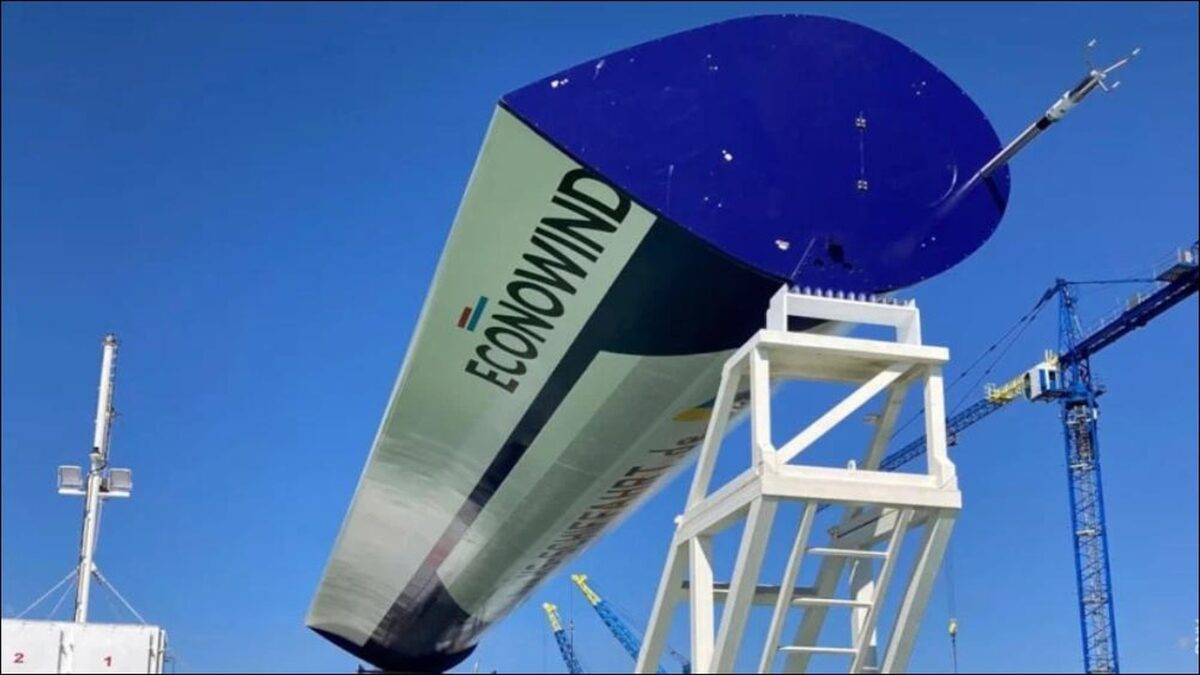
Central to the sustainable credentials of these new tankers are their advanced environmental features. Each vessel will incorporate cutting-edge wind-assisted propulsion systems. These innovative systems harness wind energy to supplement the main engine, significantly reducing fuel consumption and, consequently, greenhouse gas emissions. The integration of wind power represents a tangible step towards energy efficiency, optimizing vessel performance while minimizing environmental impact. This technology is not merely an auxiliary feature but a core component of the ships’ design philosophy, aiming for substantial operational savings and a greener profile.
In addition to wind assistance, the tankers will be equipped with shore power connectivity. This allows the vessels to plug into onshore electricity grids when docked, eliminating the need to run auxiliary engines for power generation in port. This feature drastically reduces local air pollution and noise levels in harbor areas, contributing to cleaner port environments and improved air quality for coastal communities. Shore power is increasingly recognized as a vital tool in minimizing the environmental footprint of port calls, aligning with global efforts to create more sustainable urban and maritime infrastructures. These combined technologies demonstrate a holistic approach to ship design, targeting emissions reductions across all operational phases.
STRATEGIC OPERATIONS IN THE BALTIC SEA
The choice of the Baltic Sea for the primary operational route for these tankers is strategically important. The Baltic Sea is an environmentally sensitive area, and stricter regulations are continuously being implemented to protect its fragile ecosystem. Operating ice class vessels capable of year-round service to Neste’s Porvoo refinery ensures critical supply chain continuity for Neste, a leading producer of renewable fuels. This capability is vital for Neste’s production and distribution network, reinforcing its commitment to reliable and sustainable logistics for its customers. The vessels’ robust design will allow them to navigate the region’s challenging icy waters, underscoring their operational resilience and strategic value.
Neste’s reliance on these tankers for transporting its renewable products to and from its refinery means that the vessels themselves must embody the company’s sustainability ethos. The ability to service the Porvoo refinery efficiently, even in adverse weather, further strengthens Neste’s position as a reliable supplier in the renewable energy market. The long-term charter provides stability for Neste’s logistics operations, ensuring that the supply chain for its advanced biofuels and other products is as environmentally conscious as the products themselves. This integration of sustainable shipping into the supply chain lifecycle is a testament to Neste’s comprehensive approach to sustainability.
NESTE’S VISION FOR DECARBONIZED LOGISTICS
Sander Wilgenhof, head of chartering at Neste, articulated the company’s vision, stating, “With these new state-of-the-art vessels, we are continuing our efforts to deliver safe and efficient sea transport to and from our Porvoo refinery.” This statement highlights Neste’s ongoing dedication to enhancing its logistics network not just for efficiency and safety, but critically, for environmental performance. As a producer of sustainable fuels, Neste is acutely aware of the need to decarbonize its entire value chain, including the transportation of its raw materials and finished products. The charter deal with FMJ represents a tangible step in realizing this broader strategic objective.
The agreement will support cargo transport vital to Neste’s refinery operations while adding vessels equipped with the latest fuel-saving technologies. The inherent option to switch to methanol propulsion in the future provides a robust framework for Neste to adapt to evolving environmental mandates and fuel technologies. This adaptability is key for companies like Neste that operate at the forefront of the renewable energy sector, where innovation and flexibility are paramount. By securing advanced, low-emission tankers, Neste is actively investing in a future where its logistical operations align seamlessly with its overarching sustainability goals, reinforcing its leadership in the renewable fuels market.
FMJ’S INVESTMENT IN FUTURE-PROOF MARITIME ASSETS
For Fairfield Maritime Japan, this agreement signifies a strategic investment in the next generation of maritime assets. By funding and overseeing the construction of these advanced tankers, FMJ is positioning itself as a forward-thinking shipowner committed to providing innovative, environmentally responsible solutions to its clients. This proactive approach not only caters to the immediate needs of a major renewable fuels producer like Neste but also enhances FMJ’s portfolio with high-value, future-proof vessels. Such investments are critical for shipowners looking to navigate the complex landscape of maritime decarbonization regulations and client demands for greener logistics chains.
FMJ’s decision to invest in vessels with methanol-ready capabilities and wind-assisted propulsion demonstrates a clear understanding of the evolving market dynamics. It’s a testament to their foresight in recognizing that operational longevity and commercial viability in the coming decades will increasingly depend on the environmental performance of vessels. This commitment to sustainable technology ensures that FMJ’s fleet remains competitive and attractive to charterers who prioritize both efficiency and ecological responsibility. The partnership thus serves as a model for how shipowners can collaborate with cargo owners to drive the maritime industry towards a more sustainable and resilient future.
METHANOL AS A BRIDGE TO CLEANER FUELS
The methanol propulsion readiness of these tankers is a particularly significant aspect of the deal. Methanol is gaining traction as a viable alternative marine fuel due to its lower carbon emissions, ease of storage, and established production methods. Compared to conventional heavy fuel oil, methanol offers a significant reduction in sulfur oxides (SOx), nitrogen oxides (NOx), and particulate matter, and can achieve substantial greenhouse gas reductions, especially when produced from renewable sources. The flexibility to convert to methanol propulsion means that these vessels are not just compliant with today’s regulations but are also future-proofed for the stricter environmental standards anticipated for 2030 and 2050.
This adaptability to methanol allows for a gradual transition away from fossil fuels, providing a practical pathway for maritime decarbonization without requiring immediate, radical changes to infrastructure. As green methanol production scales up, these tankers will be perfectly positioned to adopt this cleaner fuel, further enhancing their environmental credentials. The ability to retrofit rather than build entirely new ships for alternative fuels offers a cost-effective and efficient strategy for fleet modernization, minimizing disruption while maximizing environmental gains. This approach signifies an industry moving towards practical, scalable solutions for reducing its carbon footprint.
BROADER INDUSTRY IMPLICATIONS AND LEADERSHIP
This charter deal between FMJ and Neste extends beyond the two companies, setting a strong precedent for the entire global maritime industry. It serves as a powerful example of how collaboration between vessel owners, operators, and cargo owners can accelerate the adoption of sustainable shipping solutions. As international regulations, such as those from the International Maritime Organization (IMO), push for steeper emissions reductions, investments in technologies like wind assistance and methanol readiness become not just an option but a strategic imperative. This deal demonstrates that such investments are commercially viable and operationally sound.
By embracing innovative designs and flexible fuel options, FMJ and Neste are contributing to the industry’s collective journey towards decarbonization. Their proactive steps highlight that achieving climate goals for shipping requires a multi-faceted approach, combining immediate efficiency gains with long-term fuel transition strategies. This partnership can inspire other shipping companies and cargo owners to explore similar sustainable arrangements, fostering a wider adoption of green technologies across the maritime value chain. The ripple effect of such pioneering agreements is crucial for driving systemic change within one of the world’s most vital industries.
ENHANCING OPERATIONAL EFFICIENCY AND ECONOMIC VIABILITY
Beyond the environmental benefits, the incorporation of wind-assisted propulsion and shore power connectivity also offers substantial operational and economic advantages. Reduced fuel consumption directly translates into lower operating costs over the lifespan of the vessels, providing a strong financial incentive for their adoption. Fuel is typically one of the largest operational expenses for a shipping company, so any technology that can mitigate this cost offers a significant competitive edge. The efficiency gains from wind power are passive and constant, contributing to consistent savings throughout a voyage. Additionally, lower emissions can lead to reduced compliance costs in regions with carbon pricing mechanisms or emissions trading schemes.
The long-term charter structure provides stability and predictability for both FMJ and Neste. For FMJ, it secures a reliable revenue stream for its cutting-edge assets, while for Neste, it guarantees consistent and cost-effective transport solutions that align with its corporate sustainability objectives. The ability to connect to shore power further reduces energy costs in port, avoiding the use of more expensive and polluting auxiliary engines. These combined economic benefits underscore that sustainable shipping is not just an environmental imperative but also a sound business strategy, offering tangible returns on investment through enhanced efficiency and reduced expenditures.
A COLLABORATIVE STEP TOWARDS A SUSTAINABLE FUTURE
The charter deal between FMJ and Neste is more than just a commercial agreement; it is a collaborative declaration of intent to champion a more sustainable maritime future. It showcases the power of cross-sector partnerships in driving innovation and achieving ambitious environmental goals. Both companies are demonstrating leadership in a critical industry, illustrating that economic success and environmental responsibility can, and must, go hand in hand. Their shared commitment to investing in advanced, eco-friendly tanker technologies serves as an inspiring example for stakeholders across the entire global supply chain.
In conclusion, the charter deal for two wind-assisted, methanol-ready MR tankers between FMJ and Neste represents a monumental step forward in the journey towards maritime decarbonization. These state-of-the-art vessels, designed for efficient and low-emission operations in the Baltic Sea, embody the future of sustainable shipping. By integrating innovative propulsion technologies and future-proof fuel options, FMJ and Neste are not only optimizing their own operations but also setting a new benchmark for environmental stewardship within the tanker sector. This partnership is a beacon of progress, illuminating the path towards a greener, more sustainable shipping industry for generations to come.