

FMC Seeks Economic Framework to Quantify Demurrage and Detention Incentives
The FMC is seeking research to establish quantifiable economic frameworks for demurrage and detention charges to improve cargo fluidity.
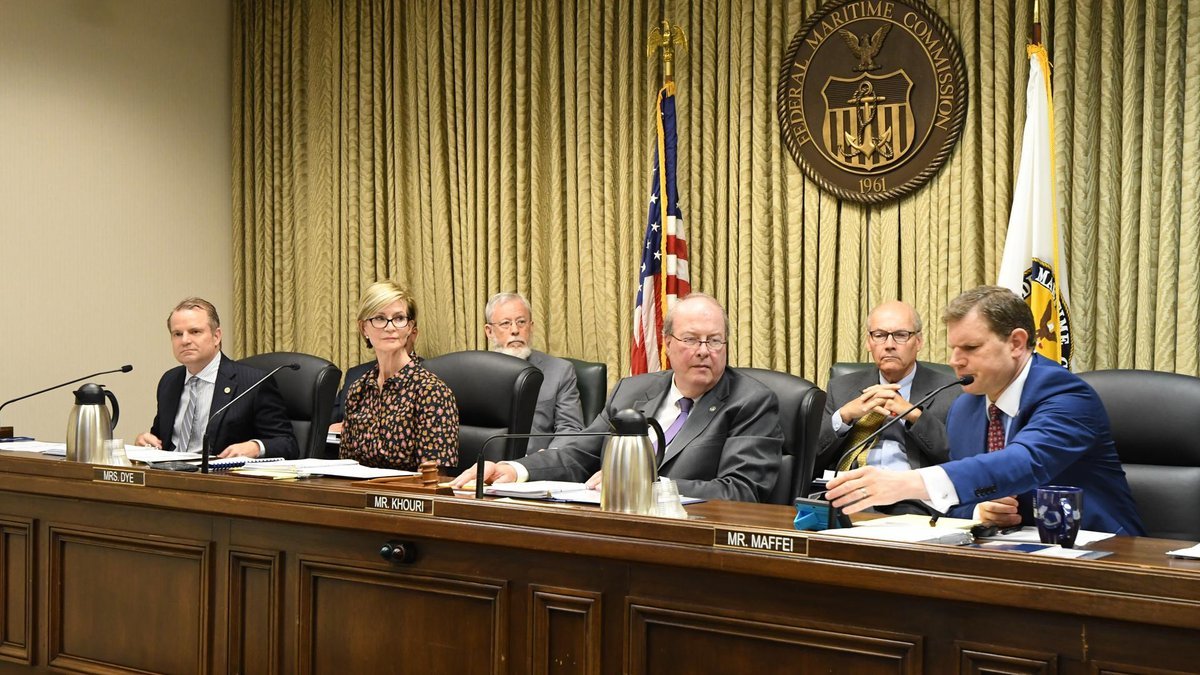
The Federal Maritime Commission (FMC) is moving to establish a data-driven economic foundation for its oversight of demurrage and detention (DnD) practices. The regulator has announced a research symposium for March 31, 2027, aimed at developing quantifiable frameworks to evaluate how these charges function as financial incentives for cargo fluidity.
By soliciting scholarly research, the FMC is looking beyond simple regulatory compliance to define the mathematical relationship between compensatory costs and the premium required to effectively influence merchant behavior. A central objective of the symposium is to determine how much DnD charges must exceed actual compensatory costs to maintain an effective incentive without becoming purely punitive.
Defining the Threshold of Diminishing Returns
The commission is specifically seeking methodologies to identify the point of diminishing returns for DnD charges. This suggests a regulatory interest in establishing a ceiling for fees where incremental increases in cost no longer result in faster cargo movement. Identifying this threshold could provide the FMC with a technical basis to challenge high fee structures that do not demonstrably improve port velocity.
The research will also examine the alignment of financial consequences with operational control. The FMC intends to investigate whether the parties bearing the financial burden of DnD charges are the same parties that control the operational behavior required to move the freight. This focus addresses a long-standing industry friction point where truckers or consignees may be billed for delays caused by factors outside their immediate control, such as government holds or terminal congestion.
Quantifying Compensatory vs. Incentive Costs
A key component of the symposium involves establishing a framework for identifying and measuring compensatory costs, including both actual expenses and opportunity costs. The commission is encouraging submissions that evaluate how controllable and uncontrollable factors influence these costs and the subsequent effectiveness of the incentive.
The symposium will also explore how contractual terms, Incoterms, and government interventions influence the structure of DnD rates. By analyzing these relationships, the FMC aims to better understand how negotiation power and regulatory environments impact the overall efficiency of the supply chain.
Industry experts and researchers have until February 15, 2027, to submit papers or abstracts to the commission. Accepted participants will be notified by March 1, 2027, coinciding with the opening of general registration for the event at the FMC headquarters in Washington, D.C.
Source: MarineLink