Exmar’s Second Ammonia Dual-Fuel Ship Joins Fleet | Mariner News
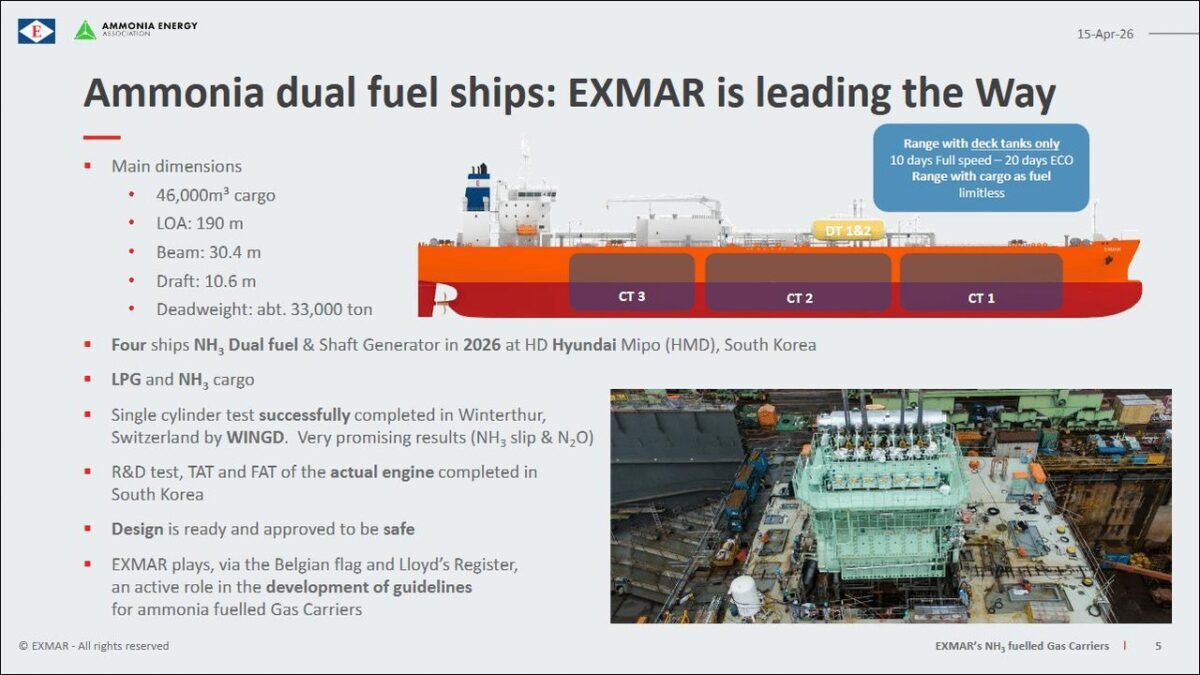
In a pivotal moment for sustainable maritime transport, Exmar, a renowned maritime firm, has welcomed the Arlon, its second ammonia dual-fuel ship, into its expanding fleet. This significant addition underscores the accelerating shift towards green fuels and represents a monumental stride in the decarbonization efforts of the global maritime industry. The delivery of the 46,000 m3 midsize gas carrier, constructed by HD Hyundai Heavy Industries in South Korea, reinforces Exmar’s pioneering role in adopting zero-carbon fuel solutions and setting new benchmarks for emissions reduction within shipping.
The Arlon’s integration is not merely an expansion of Exmar’s capabilities; it is a clear demonstration of practical steps being taken to achieve a more environmentally responsible shipping sector. As nations and industries worldwide grapple with the imperatives of climate change, the maritime sector faces immense pressure to curtail its carbon footprint. Vessels like the Arlon, designed to operate on cleaner alternatives such as ammonia, are at the forefront of this crucial transition, promising a future where global trade can continue with significantly less environmental impact. This move by Exmar is poised to inspire further investment and innovation across the industry, solidifying ammonia’s position as a viable and transformative marine fuel.
Arlon Joins Exmar’s Pioneering Green Fleet
The Arlon is the latest addition to Exmar’s rapidly growing green fleet, following closely in the wake of its sister ship, the Antwerpen. The Antwerpen garnered international attention earlier this year as the world’s first oceangoing vessel capable of running on ammonia. This pair of advanced ammonia-powered vessels symbolizes Exmar’s firm commitment to lead the way in sustainable maritime solutions. Owned by Exmar France, the Arlon is a 46,000 m3 gas carrier, meticulously engineered for efficiency and environmental performance. Its design and operational capabilities are a testament to the cutting-edge technology and forward-thinking vision of its builders and owners.
The delivery of the Arlon from HD Hyundai Heavy Industries in South Korea marks another milestone in a series of four ammonia-fueled ships commissioned by Exmar. The initial success of the Antwerpen, which completed its inaugural commercial voyage using ammonia fuel from China to India, provides compelling evidence of the operational viability and efficacy of this innovative fuel. This real-world application is crucial for building confidence across the maritime industry regarding the practical implementation of ammonia fuel technology. Such ventures are critical for gathering vital operational data, refining safety protocols, and showcasing the immense potential of these sustainable shipping solutions.
Ammonia: A Transformative Green Fuel for Shipping
Ammonia’s emergence as a leading candidate for green fuels in shipping is driven by its compelling environmental attributes. When produced using renewable energy sources (often termed green ammonia), it offers a near zero-carbon fuel solution at the point of combustion in a ship’s engine. This significantly reduces greenhouse gas (GHG) emissions, with Exmar reporting reductions of up to 90% compared to conventional marine fuels. This drastic decrease in harmful emissions positions ammonia as a powerful tool in combating climate change and achieving stringent environmental regulations.
The technological advancements in ammonia engines have made dual-fuel systems a reality, allowing vessels like the Arlon to switch between traditional fuels and ammonia, ensuring operational flexibility while the global bunkering infrastructure for ammonia matures. The relatively high energy density of liquefied ammonia also makes it an attractive option for long-haul voyages, where fuel capacity and range are critical considerations. As the demand for clean energy solutions intensifies, the role of ammonia as a marine fuel is expected to expand, driving further innovation in engine design and onboard fuel handling systems.
Navigating the Challenges: Ammonia Bunkering and Infrastructure
While the environmental benefits of ammonia fuel are undeniable, its widespread adoption presents a unique set of challenges, primarily centered around its handling and bunkering infrastructure. Ammonia is a toxic substance, necessitating strict safety precautions for storage, transfer, and use. This requires specialized training for crew members, advanced safety systems onboard vessels, and the development of robust, secure bunkering facilities at ports worldwide.
The current lack of a comprehensive global ammonia bunkering network is a significant hurdle. Establishing such an infrastructure requires substantial investment, regulatory clarity, and international collaboration. Industry stakeholders, including port authorities, fuel suppliers, and shipowners, are actively engaged in pilot projects and partnerships to develop safe and efficient bunkering solutions. Addressing these challenges is paramount to unlocking ammonia’s full potential as a mainstream sustainable shipping fuel, ensuring that the necessary logistics and safety protocols are in place to support its growing use.
Exmar’s Commitment to IMO Emissions Reduction Targets
Exmar’s investment in ammonia dual-fuel ships like the Arlon is a clear demonstration of its proactive approach to meeting and exceeding current IMO emissions reduction targets. The International Maritime Organization (IMO) has set ambitious goals for the decarbonization of shipping, including significant reductions in greenhouse gas emissions by 2030 and 2050. Vessels capable of running on green fuels are indispensable to achieving these global climate objectives.
By operating ships that can reduce greenhouse gases by up to 90%, Exmar is contributing substantially to the industry’s collective effort to mitigate climate change. This commitment positions Exmar not just as a compliance leader but as an innovator actively shaping the future of sustainable maritime transport. Their strategic vision aligns perfectly with the increasing global demand for environmentally responsible supply chains, showcasing how operational excellence and environmental stewardship can go hand-in-hand within the maritime industry.
The Broader Impact on Global Maritime Decarbonization
The successful deployment and operation of ammonia dual-fuel ships by pioneers like Exmar send a powerful signal across the entire maritime industry. It provides tangible proof that green vessel technology is not just conceptual but commercially viable and operational. This success story encourages other shipowners and operators to accelerate their own decarbonization journeys and explore investments in similar alternative fuels and technologies.
The transition towards a sustainable maritime transport ecosystem requires a concerted effort from all participants: shipbuilders must innovate, engine manufacturers must refine their designs, fuel suppliers must ramp up green ammonia production, and regulators must establish clear frameworks. Exmar’s leadership fosters a collaborative environment, driving shared learning and accelerating the pace of change necessary to achieve widespread clean maritime operations. This holistic approach is vital for transitioning the traditionally carbon-intensive shipping sector to a more environmentally benign future.
Economic Considerations and Future Prospects for Ammonia
Investing in ammonia-powered vessels involves significant upfront capital, yet the long-term economic benefits and sustainability advantages are compelling. As carbon pricing mechanisms become more prevalent and regulations tighten, the operational cost savings from reduced emissions and potential carbon credits will increasingly favor green fuels. Furthermore, early adopters gain a competitive advantage in a market increasingly valuing sustainable shipping solutions.
The future prospects for ammonia fuel are bright, particularly as green hydrogen production scales up, making green ammonia more readily available and cost-effective. Exmar’s plan for two more ammonia dual-fuel ships in this series highlights a sustained commitment and confidence in this fuel pathway. The development of robust ammonia bunkering hubs at strategic global ports will further streamline logistics and reduce operational complexities, making ammonia an even more attractive clean energy solution for the global fleet. The continued evolution of ammonia engines promises enhanced efficiency and performance, cementing ammonia’s crucial role in the future of maritime decarbonization.
Exmar’s successful integration of the Arlon into its fleet marks a profound moment for the global maritime industry. This second ammonia dual-fuel ship underscores the viability and growing adoption of green fuels in achieving ambitious emissions reduction targets. As the world pushes for a more sustainable shipping future, companies like Exmar are demonstrating that innovation, commitment, and strategic investment can transform challenges into opportunities. The journey towards complete decarbonization is long, but with pioneers leading the way, the vision of a truly clean maritime sector is steadily becoming a reality, paving the path for future generations of eco-conscious global trade.