Damen Installs Econowind Wind Propulsion on Cargo Ship | Mariner News
In a significant move toward greener maritime operations, leading shipyard Damen has successfully installed an innovative Econowind wind propulsion system on a hybrid cargo vessel. This project, involving Germany’s Reederei Bernd Sibum and their MV Baltic Timber, highlights a practical and impactful approach to reducing the environmental footprint of global trade. The implementation of this advanced wind-assisted technology signals a substantial step forward in sustainable shipping, offering shipowners a tangible solution for escalating fuel costs and stringent emission regulations.
This pioneering retrofit by Damen Shiprepair Harlingen not only showcases modern wind propulsion technologies but also demonstrates an innovative installation methodology. By completing the entire process quayside, without requiring the vessel to enter dry dock, Damen minimized operational disruption. This efficiency ensured the MV Baltic Timber remained on schedule, proving that significant sustainability upgrades can integrate seamlessly into existing maritime operations. This compelling case study demonstrates how strategic green technology investments yield both environmental and economic benefits for the shipping sector.
Econowind VentoFoils: A Leap in Wind Propulsion Technology
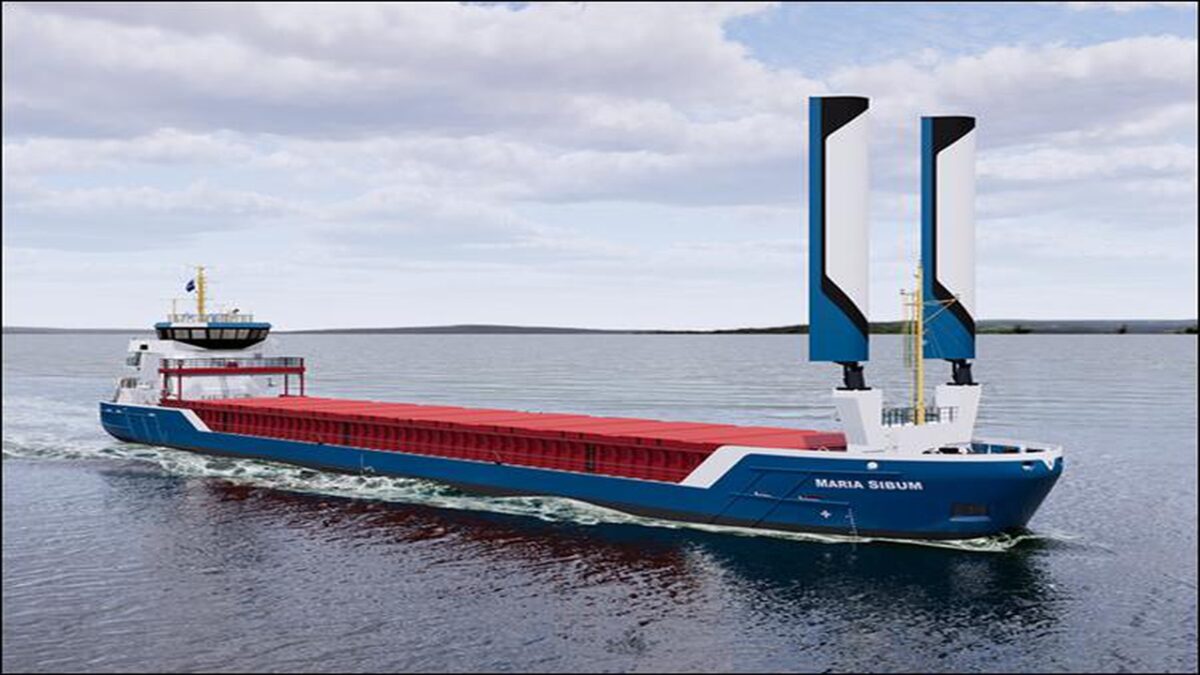
At the core of this project are the cutting-edge Econowind VentoFoils, a highly efficient wind propulsion system designed to harness the natural power of wind for supplementary thrust. Unlike traditional sails, these vertical, retractable wings utilize smart technology to generate propulsive force. Their unique aerofoil shape, combined with an intelligent suction system, maximizes lift and minimizes drag, transforming wind energy into direct forward motion for the vessel.
This sophisticated design allows the system to operate effectively across a wider range of wind conditions, providing consistent support to the main engines. The VentoFoils are a prime example of advanced maritime technology, specifically engineered to optimize fuel efficiency and significantly reduce greenhouse gas emissions. Their automated control system adjusts the wings’ orientation in real-time, adapting to changes in wind direction and strength, thereby ensuring optimal performance at all times.
Econowind’s proprietary technology is built on principles of aerodynamic efficiency, leveraging sophisticated fluid dynamics to create powerful thrust from natural wind forces. Each VentoFoil acts as a smart, adaptable sail, dynamically responding to environmental conditions to provide auxiliary power. This innovative approach moves beyond passive wind reliance, offering an active and intelligent system that contributes substantially to the vessel’s forward momentum, thereby lessening the burden on conventional engines and drastically improving overall vessel efficiency.
Revolutionizing Retrofits: Damen’s Quayside Approach
One of the most remarkable aspects of this installation was Damen’s innovative approach to retrofitting the MV Baltic Timber with the wind propulsion system. The entire process was conducted quayside at Damen Shiprepair Harlingen, a method that sets a new benchmark for efficiency in maritime upgrades. Traditionally, such significant installations often necessitate taking a vessel into dry dock, leading to considerable downtime, increased costs, and disruption to shipping schedules.
The preparation of the MV Baltic Timber for the VentoFoil installation during its initial construction was a crucial factor enabling this rapid turnaround. This foresight meant that the vessel was already equipped with the necessary foundations and connections, allowing the Damen Shiprepair Harlingen team to complete the full installation of the two Econowind VentoFoils in an astonishingly short period of just four days. Such swift execution is invaluable for cargo vessel operators, for whom every hour of off-hire time translates directly into lost revenue.
Damen’s robust network of 12 ship-repair yards worldwide positions them uniquely to replicate this efficient quayside installation model on a global scale. This extensive capability allows them to offer flexible and accessible solutions for shipowners seeking to integrate green technologies like wind-assisted propulsion. By providing options for installations at their own facilities or even at other berths, Damen is actively facilitating the broader adoption of sustainable maritime solutions, making it easier for shipping companies to embark on their decarbonization journeys without major logistical hurdles or prohibitive costs.
Driving Down Costs and Emissions: The MV Baltic Timber’s Impact
The primary benefit of integrating the Econowind wind propulsion system is the substantial reduction in fuel consumption. Damen projects that the VentoFoils installed on the MV Baltic Timber will cut the vessel’s fuel usage by up to 12%. This figure represents a significant operational saving for Reederei Bernd Sibum, directly impacting their bottom line in an industry constantly battling volatile bunker prices. Beyond the financial advantage, this reduction in fuel consumption inherently leads to a proportionate decrease in greenhouse gas emissions, addressing critical environmental concerns.
Lowering fuel consumption by such a margin translates directly into fewer carbon dioxide (CO2) emissions, sulfur oxides (SOx), and nitrogen oxides (NOx) released into the atmosphere. This alignment with stricter environmental regulations, such as those set by the International Maritime Organization (IMO), positions the MV Baltic Timber and its operator ahead of many industry peers. For shipping companies, achieving compliance while simultaneously enhancing economic viability is the ultimate goal, and wind-assisted propulsion offers a clear pathway to realize both objectives effectively.
Furthermore, this innovative technology provides a tangible advantage in corporate social responsibility and environmental, social, and governance (ESG) reporting. By actively investing in and implementing solutions like the Econowind VentoFoils, shipowners demonstrate a proactive commitment to sustainable practices. This commitment not only improves their environmental profile but also enhances their reputation among clients, investors, and regulatory bodies, increasingly important factors in today’s global market. The long-term operational savings combined with enhanced environmental stewardship create a compelling business case for similar retrofits across the commercial fleet.
Damen’s Commitment to Sustainable Maritime Solutions
Damen’s role in this project extends beyond mere installation; it embodies their strategic vision for a sustainable maritime future. As a globally recognized leader in shipbuilding and ship repair, Damen actively invests in and champions technologies that drive the industry towards greater environmental responsibility. Their collaborative approach with innovative companies like Econowind demonstrates a proactive stance in integrating cutting-edge solutions that promise tangible benefits for shipowners and the planet alike. This project reinforces Damen’s position at the forefront of green shipping initiatives.
The company’s extensive experience and vast network of ship-repair yards are critical assets in accelerating the adoption of sustainable technologies. By showcasing successful retrofits like that of the MV Baltic Timber, Damen provides practical proof-of-concept for the viability and efficiency of wind-assisted propulsion. They are not just building and repairing vessels; they are actively shaping the future of maritime operations by making advanced, eco-friendly solutions accessible and implementable for a diverse range of vessels and operational requirements, fostering a greener transition across the fleet.
Damen’s commitment to sustainability is reflected in their broader portfolio of services and innovations, which includes developing hybrid vessels, exploring alternative fuels, and optimizing hull designs for improved hydrodynamics. The successful deployment of the Econowind wind propulsion system on the cargo ship MV Baltic Timber is a testament to this holistic strategy. It illustrates how integrated solutions, combining design foresight with advanced retrofit capabilities, can deliver significant environmental gains while maintaining operational excellence, paving the way for a more sustainable maritime industry.
Charting a Greener Course: The Future of Wind Power in Shipping
The successful integration of the Econowind VentoFoils by Damen signifies a broader trend towards the re-emergence and modernization of wind power in shipping. As the industry faces increasing pressure to meet ambitious decarbonization targets, wind-assisted propulsion systems are gaining traction as a viable and increasingly sophisticated solution. This project highlights that such technologies are not futuristic concepts but proven, practical applications that can be efficiently integrated into existing fleets, offering immediate and measurable benefits. Continued innovation in sail and foil designs, coupled with advancements in automation, will likely see even wider adoption of these systems.
Regulatory frameworks, particularly those established by the IMO, are increasingly incentivizing and, in some cases, mandating, the adoption of energy-saving devices and cleaner propulsion methods. Wind propulsion systems directly address these mandates by significantly reducing the carbon intensity of shipping operations. As fuel prices continue to fluctuate and carbon pricing mechanisms become more prevalent, the economic argument for wind assistance will only strengthen, making it an attractive investment for forward-thinking shipowners globally. The ability to leverage a free and abundant energy source like wind offers a clear competitive advantage.
The collaborative spirit demonstrated by Damen and Econowind, alongside the willingness of shipowners like Reederei Bernd Sibum to embrace new technologies, is crucial for accelerating the maritime industry’s transition to a net-zero future. Projects like the MV Baltic Timber serve as powerful examples, inspiring other shipping companies to explore and adopt similar sustainable solutions. The future of global shipping will undoubtedly be greener, and wind-assisted propulsion is poised to play a critical, ever-expanding role in achieving that vision, charting a course towards genuinely sustainable sea transport.
Conclusion
Damen’s successful installation of the Econowind wind propulsion system on the MV Baltic Timber cargo ship represents a pivotal moment for sustainable shipping. This project not only showcases the effectiveness of modern wind-assisted propulsion in reducing fuel consumption and emissions but also demonstrates an innovative, minimal-disruption retrofit approach.
This initiative reinforces the economic and ecological imperative for adopting green solutions. As the maritime sector continues its journey towards decarbonization, the integration of smart wind power will undoubtedly become a cornerstone of sustainable operational strategies, proving that environmental stewardship and operational excellence can indeed go hand in hand.