Common Standards for Ammonia-Fuelled Ship Safe Havens | Mariner News
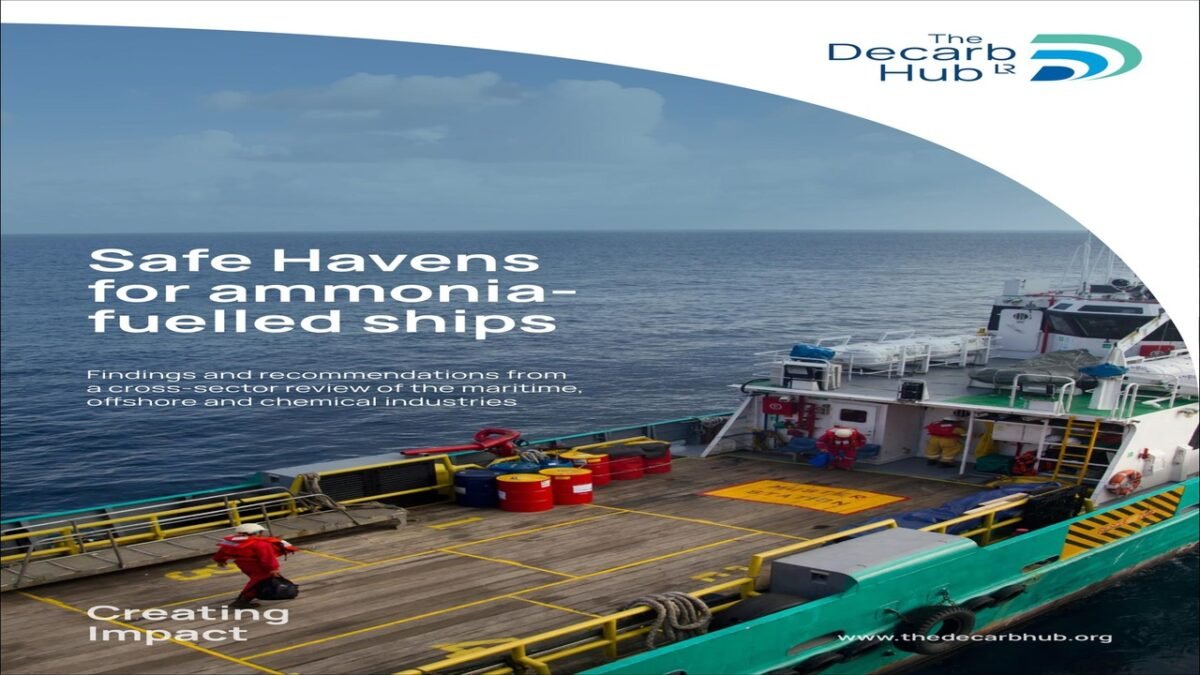
The maritime industry stands at a critical juncture, facing immense pressure to decarbonize its operations and adopt cleaner energy sources. Among the promising alternative fuels, ammonia has emerged as a frontrunner due to its zero-carbon potential. However, its inherent toxicity presents significant safety challenges, particularly concerning the protection of crew members. A recent groundbreaking report from the Lloyd’s Register Maritime Decarbonisation Hub highlights an urgent need for common standards for emergency safe havens in ammonia-fuelled ships, a crucial step towards ensuring robust maritime safety and fostering confidence in this evolving fuel technology.
While the International Maritime Organization (IMO) has issued interim guidelines for vessels utilizing ammonia as fuel, the report argues these guidelines offer only high-level requirements. This vagueness risks leading to diverse interpretations and varying levels of crew safety across the burgeoning ammonia-powered fleet. The absence of a unified approach could compromise the well-being of seafarers during potential ammonia leaks, an unacceptable outcome as the industry transitions towards sustainable shipping practices. The core recommendation is a standardized assessment framework to guide designers, classification societies, and flag administrations in adopting a more consistent methodology for the design, evaluation, and operational readiness of these vital safety zones. This proactive measure is essential to mitigate risks associated with toxic ammonia gas and to provide unequivocal protection for personnel onboard.
The Imperative for Safe Havens in Ammonia-Fuelled Vessels
Ammonia-fuelled ships represent a significant leap towards a greener future for global shipping, but the transition is not without its complexities. Ammonia, or NH3, is a potent compound that, in concentrated forms, poses severe health risks to humans, including respiratory damage, skin burns, and even fatality. In the event of an accidental leak or catastrophic failure within a ship’s fuel system, the rapid dispersion of toxic ammonia gas poses an immediate and life-threatening hazard to the crew. This reality underscores the absolute necessity of integrating meticulously designed and rigorously tested emergency safe havens into every ammonia-powered vessel.
These safe havens are not merely designated areas; they are engineered refuges, sealed environments where crew can shelter from external atmospheric contamination while maintaining essential command and control of the vessel. The goal is twofold: to provide immediate protection from the toxic plume and to offer a secure space for the crew to assess the situation, initiate emergency protocols, and prepare for further actions, including potential vessel abandonment, if necessary. The integrity and effectiveness of these safe havens are paramount to safeguarding human life at sea when dealing with new, potentially hazardous alternative fuels. Without robust, standardized safe havens, the promise of decarbonization through ammonia could be overshadowed by unacceptable safety risks, hindering widespread adoption and undermining the industry’s sustainability goals.
Current Gaps and the Need for Harmonized Standards
The IMO’s interim guidelines were a crucial first step in addressing the safety aspects of ammonia as fuel, but they intentionally left room for interpretation, anticipating further industry development. While this flexibility can foster innovation, in the context of critical safety infrastructure like safe havens, it can lead to inconsistencies. The report explicitly warns that varying interpretations could result in a patchwork of safety standards, potentially exposing seafarers on some vessels to greater risks than those on others. This lack of uniformity undermines the principle of equitable crew safety across the international fleet and complicates the regulatory and certification processes for ammonia-powered vessels.
Without a common assessment framework, naval architects, shipyards, and equipment manufacturers might develop solutions that meet the letter but not the spirit of the safety requirements. Classification societies, responsible for verifying compliance, and flag administrations, which grant operational licenses, could struggle with a lack of clear benchmarks against which to evaluate these diverse designs. This fragmentation could lead to delays in approvals, increased costs, and, most critically, a lingering uncertainty about the actual safety levels provided. A harmonized approach, as advocated by the Lloyd’s Register report, is therefore indispensable to ensure that every ammonia-fuelled ship is equipped with a safe haven that meets an unequivocally high, internationally recognized safety standard.
A Proposed Framework for Enhanced Maritime Safety
The proposed common assessment framework aims to bridge the current gaps by offering clear, prescriptive guidance for the design and evaluation of safe havens. Drawing valuable lessons from established practices in the offshore oil and gas and chemical industries, where managing hazardous substances is routine, the framework emphasizes treating safe havens as an integral component of a vessel’s broader emergency response system. This holistic view ensures that the safe haven is not an isolated feature but a fully integrated part of the ship’s operational safety strategy.
Specifically, the report identifies three core functions that safe havens must fulfill: protection, command and control, and accessibility. Protection encompasses ensuring a breathable atmosphere free from toxic ammonia gas, maintaining structural integrity against external hazards, and providing essential life support for the duration of an emergency. Command and control refers to the ability for crew inside the haven to monitor the vessel’s status, communicate with external emergency services, and potentially manage critical ship systems to mitigate the incident. Accessibility ensures that crew members can quickly and safely reach the haven from all operational areas of the ship, even under duress or in impaired conditions. Each of these functions requires detailed design considerations, from air filtration systems and independent power supplies to emergency communication networks and ergonomic layouts that support prolonged occupancy.
Standardized Testing and Industry Collaboration
Beyond design principles, the report stresses the importance of standardized testing against worst-case scenarios. Realistic simulations, including high-concentration ammonia leaks and failures of ventilation systems, are crucial to validate the performance of safe havens under extreme conditions. This rigorous testing regime, coupled with consistent reporting and evaluation methodologies, will build a robust evidence base for the effectiveness of different design solutions and further refine the maritime safety standards for ammonia-fuelled ships. Such standardization is vital not only for initial certification but also for ongoing maintenance, periodic drills, and continuous improvement.
The adoption of these common standards requires concerted effort and collaboration among all maritime stakeholders. Shipowners, operators, designers, equipment manufacturers, classification societies, flag administrations, and regulatory bodies must work together to integrate these recommendations into future ship designs and operational protocols. Industry forums, workshops, and joint development projects will be instrumental in facilitating knowledge transfer and ensuring a shared understanding of best practices. This collaborative approach will accelerate the development of a resilient and safe fleet of ammonia-powered vessels, paving the way for sustainable shipping without compromising crew safety.
The Path Forward for Sustainable and Safe Shipping
The journey towards a zero-emission future through ammonia as fuel is undeniably complex, but the insights provided by the Lloyd’s Register report offer a clear compass for navigating the safety challenges. By establishing common standards for safe havens, the industry can proactively address the inherent risks of toxic ammonia gas and provide unwavering protection for seafarers. This commitment to superior maritime safety standards will not only safeguard human lives but also instill greater confidence among investors, insurers, and the public in the viability and safety of ammonia-fuelled ships.
The widespread implementation of a harmonized assessment framework for safe havens will be a defining factor in the successful and sustainable adoption of ammonia as a marine fuel. It represents a fundamental investment in the future of the shipping industry, ensuring that the pursuit of decarbonisation goes hand-in-hand with an uncompromising dedication to the well-being of those who operate these innovative vessels. As the global fleet continues its green transformation, robust, standardized safety measures, particularly for critical components like safe havens, will underpin the industry’s success, drive technological advancements, and solidify its commitment to a future where environmental stewardship and crew safety are equally paramount.