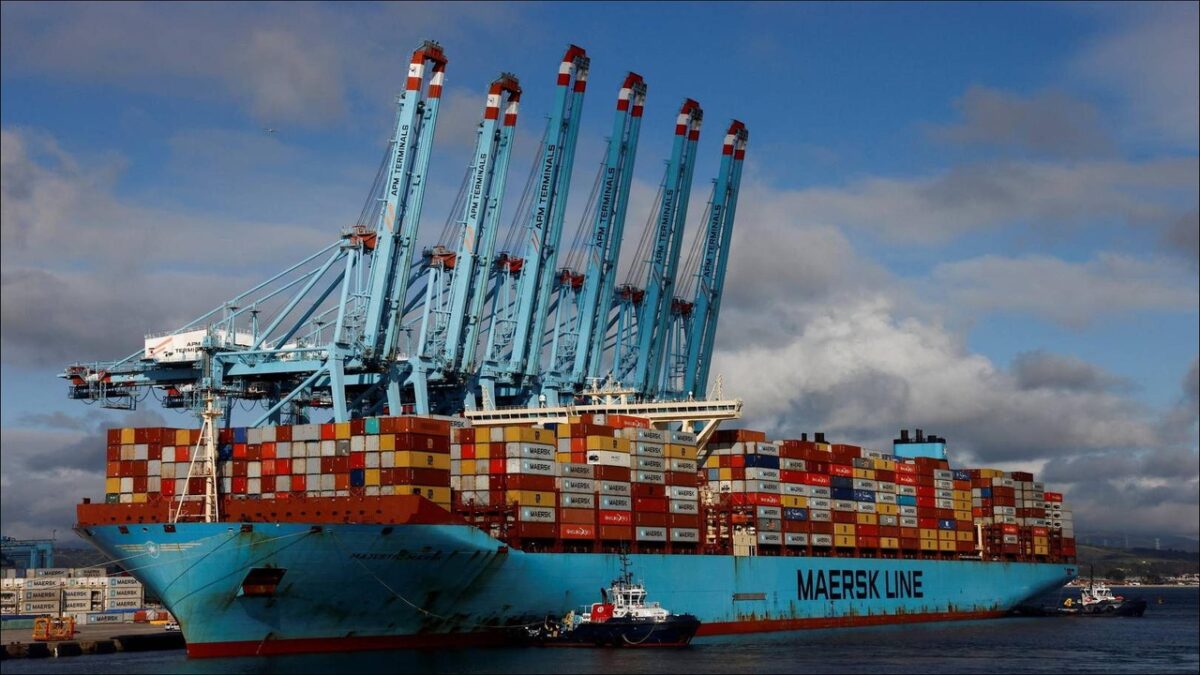
CMA CGM, Maersk: Full Coffers, Huge Investments | Mariner News
The global maritime industry is abuzz with news from leading financial institutions, spotlighting the robust financial health of two of the world’s largest container shipping lines: CMA CGM and Maersk. A recent assessment by Standard Chartered reveals that these shipping giants are currently enjoying exceptionally full coffers, a testament to their resilience and strategic acumen in navigating complex market dynamics. This strong financial position, as highlighted by Standard Chartered, provides a significant opportunity for CMA CGM and Maersk to embark on huge shipping investments, poised to reshape their operations and the broader maritime logistics landscape. Their financial robustness signals a period of strategic expansion and modernization, setting a new benchmark for capital allocation in the sector.
The Strong Financial Footing of Shipping Giants
The unprecedented surge in freight rates and consumer demand witnessed during the global pandemic significantly bolstered the balance sheets of major container shipping companies. CMA CGM and Maersk, in particular, capitalized on this period, accumulating substantial profits that have solidified their financial standing. This windfall wasn’t merely a temporary boon; it reflected an ability to adapt rapidly, optimize vessel deployment, and manage complex supply chains under immense pressure. The resulting liquidity has positioned both companies with considerable reserves, far exceeding pre-pandemic levels.
Standard Chartered’s analysis underscores this remarkable financial strength, noting the companies’ strong cash flow generation and improved debt profiles. This elevated financial capacity empowers them with unparalleled flexibility to pursue ambitious growth strategies and long-term strategic objectives. It moves them beyond just maintaining operational efficiency to actively driving innovation and setting new industry standards. For instance, the ability to fund significant capital expenditure without excessive external borrowing provides a substantial competitive advantage, allowing for more agile and impactful decision-making in a highly competitive global market.
Moreover, this period of financial plenty allows CMA CGM and Maersk to mitigate future market volatilities, ensuring stability and continued growth even as freight rates normalize from their historical peaks. Their solid financial foundation is not just about current profits; it is about building a sustainable platform for future leadership in global trade and maritime transport. This strategic advantage ensures that these shipping titans can invest confidently in next-generation technologies and infrastructure, strengthening their market dominance.
Strategic Investment Opportunities in Container Shipping
With their substantial financial reserves, CMA CGM and Maersk are uniquely positioned to funnel shipping investments into critical areas that will define the future of container shipping. One primary focus is fleet modernization and expansion. This includes ordering new, highly efficient, and larger vessels capable of handling the ever-increasing volume of global trade. These investments go beyond mere capacity; they target ships with advanced designs that improve fuel efficiency and reduce operational costs, ensuring a more sustainable and competitive fleet.
Beyond vessels, substantial capital is earmarked for enhancing port infrastructure and terminal operations. This involves upgrading existing facilities with state-of-the-art equipment, automating processes, and expanding capacity to handle mega-ships more effectively. Such investments improve turnaround times, reduce congestion, and enhance overall efficiency across the logistics chain. Furthermore, intermodal logistics will see significant funding, connecting sea freight more seamlessly with land-based transportation networks, including rail, road, and inland waterways. This holistic approach ensures end-to-end supply chain integration, a critical competitive differentiator.
These strategic capital expenditures are not just about maintaining market share but about expanding their influence and optimizing their global networks. By investing in these core operational components, CMA CGM and Maersk aim to enhance service reliability, reduce transit times, and offer more comprehensive logistics solutions to their diverse client base. The foresight in these investments will secure their long-term position at the forefront of the dynamic maritime sector.
Driving Sustainability and Decarbonization in Maritime Logistics
A significant portion of the anticipated shipping investments will undoubtedly be directed towards addressing the urgent imperative of decarbonization and environmental sustainability. As global leaders in maritime logistics, both CMA CGM and Maersk have ambitious targets to reduce their carbon footprint, aligning with international regulations and growing pressure from stakeholders and customers. This commitment translates into substantial funding for green technologies and alternative fuels.
Investing in new dual-fuel vessels capable of running on cleaner fuels such as LNG, methanol, or eventually ammonia and hydrogen, is a cornerstone of this strategy. These eco-friendly ships represent a major technological leap, reducing greenhouse gas emissions significantly compared to traditional bunker fuels. Beyond new builds, capital will also be allocated to retrofitting existing vessels with energy-saving devices, optimizing propulsion systems, and exploring innovative solutions like wind-assist technology to enhance fuel efficiency.
Furthermore, investments in sustainable port operations and landside electrification will contribute to a greener end-to-end supply chain. This proactive approach to environmental stewardship not only mitigates regulatory risks but also enhances brand reputation and attracts environmentally conscious clients. By leading the charge in sustainable shipping, CMA CGM and Maersk are not just complying with future standards; they are actively shaping the future of low-carbon maritime transport, demonstrating a commitment that extends far beyond immediate profitability.
Digital Transformation and Supply Chain Resilience
In an increasingly interconnected world, digital transformation stands as another critical pillar for CMA CGM and Maersk’s shipping investments. The pandemic exposed vulnerabilities in global supply chains, highlighting the urgent need for greater transparency, predictability, and resilience. Both companies are channeling significant resources into advanced digital solutions to meet these demands. This includes leveraging AI, machine learning, and big data analytics to optimize route planning, predict demand fluctuations, and enhance operational efficiency across their vast networks.
Investments in blockchain technology are also on the horizon, aiming to improve the security and traceability of cargo, simplifying documentation processes, and enhancing trust among supply chain participants. Internet of Things (IoT) devices will be deployed extensively for real-time tracking of containers, monitoring conditions, and providing customers with unprecedented visibility into their shipments. This shift towards data-driven decision-making will not only streamline operations but also create new value-added services for clients.
Moreover, automating various aspects of port and warehouse operations, from crane movements to inventory management, will further boost efficiency and reduce human error. By embracing these digital innovations, CMA CGM and Maersk are building resilient supply chains that can withstand future disruptions, ensuring continuity of service and maintaining their competitive edge. These strategic technology investments are foundational to providing a more agile, transparent, and responsive logistics experience for global trade.
Navigating Market Dynamics and Future Outlook
While the current financial strength of CMA CGM and Maersk provides a robust foundation for huge investments, the global maritime sector remains subject to evolving market dynamics, economic cycles, and geopolitical shifts. However, the strategic capital allocation outlined by Standard Chartered positions these container shipping leaders to navigate potential headwinds effectively. Their diversified investment strategies across fleet, infrastructure, sustainability, and digitalization will create a more robust and adaptable business model.
Ultimately, the decisions made today regarding these shipping investments will profoundly influence the trajectory of CMA CGM and Maersk for decades to come, shaping their capacity, their environmental footprint, and their technological prowess. As key players in global logistics, their forward-thinking approach will not only secure their own future but also significantly impact the efficiency, sustainability, and resilience of international trade for years to come.