CLPe Achieves First LNG Bunkering for Dry Bulker in Hong Kong | Mariner News
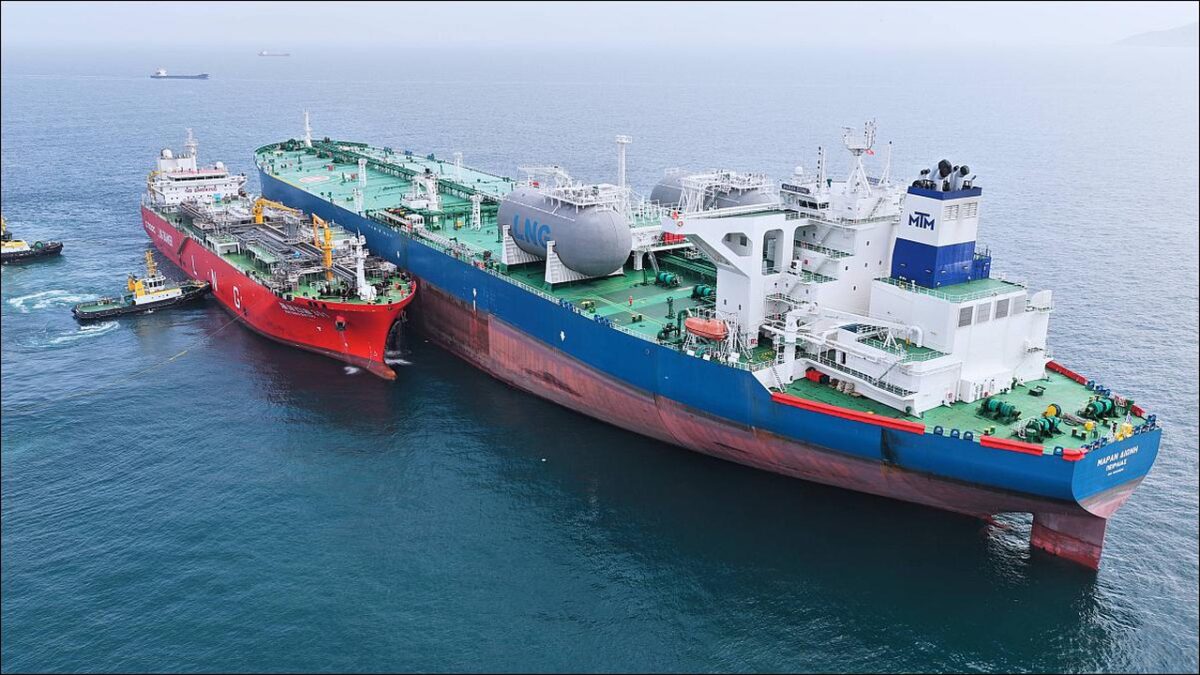
In a landmark achievement for maritime sustainability and clean energy adoption, CLPe, a prominent Hong Kong-based energy provider, has successfully completed the first-ever LNG bunkering operation for a dry bulker in Hong Kong waters. This pivotal event, which took place at the Hong Kong outer anchorage, signifies a major leap forward in the region’s commitment to reducing the carbon footprint of its bustling shipping industry and reinforces its ambition to become a leading international maritime center focused on environmental stewardship. The successful delivery of liquefied natural gas (LNG) as a marine fuel represents a critical step in the global transition towards cleaner energy sources for the shipping sector, demonstrating practical application and operational readiness for vessels opting for more eco-friendly propulsion.
The pioneering operation saw approximately 2,500 cubic meters of LNG supplied to a dry bulk carrier. This intricate process involved a meticulously planned cool-down operation, ensuring the safe and efficient transfer of the cryogenic fuel. The vessel, having just concluded its cargo operations at a nearby mainland Chinese port, positioned itself for this historic bunkering, underlining the growing interconnectedness of regional maritime logistics and the increasing demand for sustainable fuel options. Ringo Ng, managing director at CLPe, highlighted the significance of this accomplishment in a recent statement, emphasizing the company’s expanding capabilities and dedication to innovative energy solutions within the maritime domain.
This isn’t CLPe’s first foray into pioneering LNG fuel services; the company previously made headlines for delivering LNG bunkers to a Very Large Crude Carrier (VLCC) in Hong Kong, another first for the city. These successive milestones underscore CLPe’s strategic vision and operational prowess in handling complex LNG fuel supply logistics across diverse vessel types. The collaboration with Chinese state-owned energy giant CNOOC was also instrumental, illustrating the power of strategic partnerships in pushing the boundaries of sustainable maritime development. Such joint efforts are crucial in developing robust LNG supply infrastructure and refining operational procedures for wider adoption of alternative marine fuels.
Hong Kong’s Evolving Maritime Hub and Sustainable Future
Hong Kong’s aspiration to fortify its position as an international maritime centre hinges significantly on its ability to embrace and lead in sustainable shipping practices. The successful LNG bunkering of a dry bulker is a tangible demonstration of this commitment, showcasing the port’s evolving infrastructure and its capacity to support the new generation of LNG-powered vessels. By facilitating such operations, Hong Kong sends a clear signal to the global shipping community that it is a prepared and proactive partner in the journey towards a greener maritime future. This also enhances the city’s appeal as a preferred port of call for vessels seeking reliable and efficient clean fuel services, driving economic growth while championing environmental responsibility.
The city’s strategic geographical location, coupled with its robust maritime services, provides an ideal ecosystem for advancing clean marine fuel initiatives. Investments in state-of-the-art bunkering facilities, coupled with stringent safety protocols and skilled personnel, are transforming Hong Kong into a beacon for sustainable port operations. These advancements are not isolated; they are part of a broader regional and international effort to de-risk the transition to liquefied natural gas as a viable ship fuel. The continuous development of comprehensive service offerings, from fuel supply to technical support, is vital in supporting vessel owners and operators in their green maritime transition.
Furthermore, this achievement sets a precedent for cross-boundary LNG bunkering operations, indicating a growing network of support for sustainable shipping across the Asia-Pacific region. As more ports develop their capabilities, the feasibility and accessibility of LNG as a marine fuel will only increase, creating a positive feedback loop that accelerates the adoption of cleaner technologies. Hong Kong’s proactive stance in facilitating such operations contributes significantly to building confidence in the supply chain of alternative fuels, a critical factor for shipowners making long-term investment decisions in greener vessels. The port’s dedication to innovation ensures it remains at the forefront of global maritime developments.
Driving Global Shipping Decarbonization with LNG Fuel
The global maritime industry faces immense pressure to decarbonize, with international regulations such as the IMO 2020 sulfur cap and ambitious greenhouse gas reduction targets pushing for immediate action. LNG bunkering offers a compelling solution as a transitional marine fuel, providing significant environmental advantages over traditional heavy fuel oil. Vessels powered by LNG emit virtually no sulfur oxides (SOx) or particulate matter (PM), and significantly reduce nitrogen oxides (NOx) emissions, contributing to cleaner air quality in port cities and along shipping routes. Moreover, LNG combustion results in approximately 15-25% less carbon dioxide (CO2) emissions compared to conventional marine fuels, offering a tangible step towards climate change mitigation.
For dry bulk carriers, which constitute a substantial portion of the global shipping fleet, the adoption of LNG as a fuel source is particularly impactful. These vessels typically operate on long voyages and consume large volumes of fuel, making any reduction in emissions highly significant. The successful LNG bunkering in Hong Kong demonstrates that this cleaner fuel option is not limited to specialized vessels but is becoming increasingly viable for mainstream commercial shipping segments. This broadens the scope for maritime decarbonization efforts across diverse vessel types, accelerating the pace of environmental improvement within the industry.
While LNG is seen as a transitional fuel, its immediate benefits are undeniable, making it a crucial component of the industry’s energy transition strategy. It provides a pathway for shipowners to meet current and upcoming environmental regulations while research and development continue for zero-emission fuels like green ammonia and hydrogen. The operational experience gained from LNG bunkering operations today is invaluable, laying the groundwork for future advanced clean fuel infrastructure and supply chains. This gradual shift ensures that the industry can adapt without incurring prohibitive costs or operational disruptions, fostering a more sustainable future for global trade and transportation.
CLPe’s Pioneering Role and Future Outlook
CLPe’s commitment to expanding its LNG bunkering services beyond its initial VLCC operation to now include dry bulk carriers signifies a robust and adaptive business strategy aimed at meeting the evolving needs of the maritime sector. This proactive approach not only solidifies CLPe’s position as a leader in clean energy solutions but also demonstrates its capacity to facilitate the shipping industry’s broader decarbonization agenda. By offering versatile bunkering options, CLPe is directly contributing to the economic viability of adopting cleaner fuels for a wider array of vessel types, supporting shipowners in their environmental compliance efforts and operational efficiency goals.
The company’s collaboration with powerful industry players like CNOOC highlights the importance of strategic alliances in overcoming the logistical and technical challenges associated with scaling up LNG fuel supply. These partnerships are critical for sharing expertise, resources, and best practices, ensuring that LNG bunkering operations are not only efficient but also adhere to the highest safety and environmental standards. The knowledge transfer and operational synergies derived from such collaborations are instrumental in fostering innovation and accelerating the deployment of sustainable energy infrastructure across the region.
Looking ahead, CLPe is poised to continue its trajectory as a key enabler of sustainable shipping in Asia. Its demonstrated ability to conduct complex cross-boundary LNG bunkering operations positions it favorably to capitalize on the growing demand for cleaner marine fuels. As more shipowners invest in LNG-powered vessels, the need for reliable and extensive bunkering networks will intensify, and CLPe, with its pioneering spirit and proven capabilities, is well-equipped to meet this demand. The company’s vision extends beyond mere fuel supply; it encompasses a holistic approach to energy solutions, contributing to a more resilient and environmentally sound global maritime ecosystem.
The Broader Impact on Global Shipping and Policy
The successful LNG bunkering of a dry bulker in Hong Kong has reverberations far beyond regional waters, serving as a powerful example for other international ports and maritime hubs. Each successful operation contributes to building a global track record for LNG as a marine fuel, encouraging more shipowners to invest in LNG-ready vessels and accelerating the expansion of global bunkering networks. This ripple effect is crucial for achieving the scale necessary to make alternative fuels a standard, rather than an exception, in international shipping. The more widespread the adoption, the greater the collective impact on reducing the industry’s overall carbon footprint.
From a policy perspective, such landmark achievements provide tangible evidence of the feasibility and benefits of cleaner fuels, potentially influencing regulatory frameworks and incentives. Governments and international bodies can leverage these successes to design policies that further encourage the transition, such as tax breaks for LNG-fueled vessels, subsidies for bunkering infrastructure development, or stricter emission standards that favor cleaner alternatives. The practical demonstration of LNG fuel viability helps to bridge the gap between ambitious climate goals and their real-world implementation, fostering a more supportive regulatory environment for sustainable maritime practices.
Furthermore, the event underscores the importance of a multi-stakeholder approach to maritime decarbonization. It involves not only energy providers and shipowners but also port authorities, classification societies, technology developers, and financial institutions. The successful execution of this dry bulker LNG bunkering highlights how coordinated efforts across these diverse stakeholders can drive significant progress. This collaborative spirit is essential for navigating the complexities of energy transition, ensuring that technological advancements are matched by robust infrastructure, supportive policies, and widespread industry adoption.
Conclusion: Charting a Course for Greener Maritime Operations
CLPe’s completion of the first LNG bunkering for a dry bulker in Hong Kong is a pivotal moment, signaling a new era of sustainable maritime operations for the region and beyond. This achievement not only demonstrates CLPe’s leadership in providing clean marine fuel solutions but also reinforces Hong Kong’s strategic commitment to becoming a greener, more advanced international maritime hub. The shift towards liquefied natural gas as a viable and environmentally superior marine fuel is an indispensable step in the shipping industry’s urgent journey towards decarbonization.
As the maritime sector continues to navigate the complexities of environmental regulations and the imperative for sustainable practices, landmark operations such as this serve as critical proof points, inspiring confidence and encouraging broader adoption of cleaner energy technologies. The collaborative spirit, technological expertise, and forward-thinking vision showcased by CLPe and its partners are charting a definitive course towards a more sustainable and resilient future for global shipping. This event marks not just a completion, but a beginning—a beacon guiding the industry towards innovative, environmentally responsible solutions for generations to come.