Anemoi Rotor Sail Designs Get Bureau Veritas Approval | Mariner News
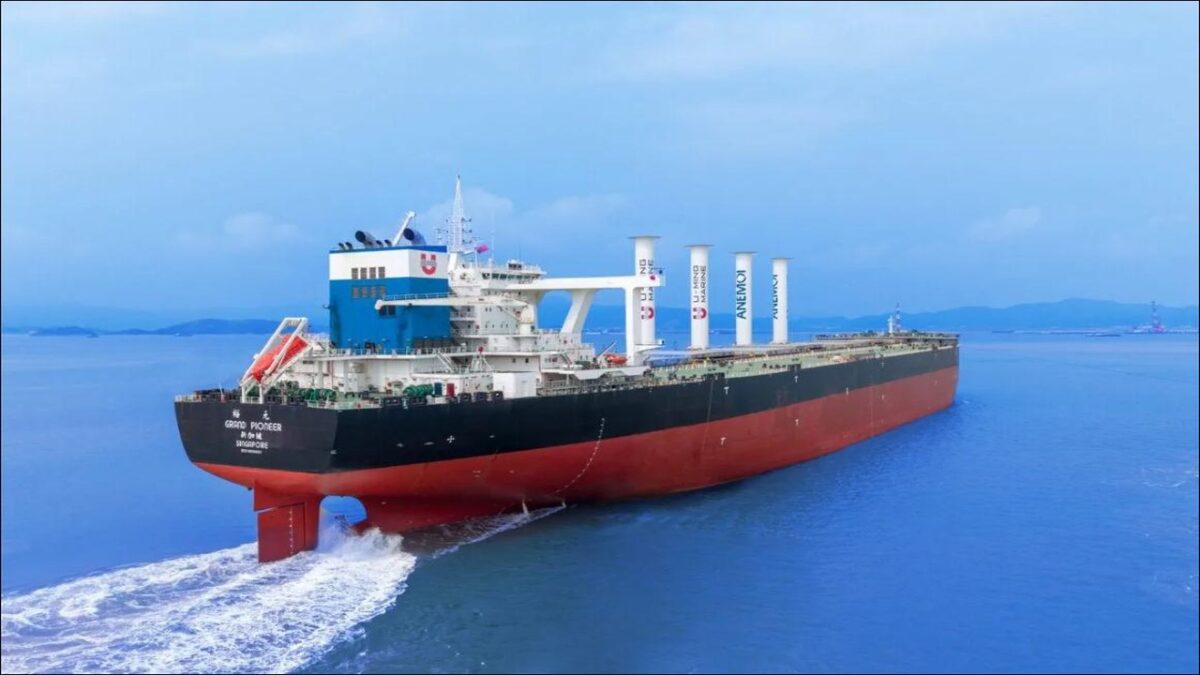
In a pivotal development for the future of sustainable shipping, Anemoi Marine Technologies has proudly announced that its innovative Anemoi Rotor Sail designs have received design assessment certificates from the prestigious classification society, Bureau Veritas. This significant milestone underscores the growing maturity and widespread industry acceptance of wind-assisted propulsion systems as a viable solution for decarbonizing the global maritime sector. The formal approvals confirm that Anemoi’s cutting-edge technology meets the stringent safety, quality, and performance standards required for both newbuild and retrofit vessels, paving the way for broader adoption and substantial environmental benefits. This validation from Bureau Veritas is not merely a formality; it represents a crucial endorsement that will empower shipowners and operators to confidently invest in wind propulsion, accelerating their journey towards more fuel-efficient and greener operations.
The Significance of Bureau Veritas Approval for Anemoi Rotor Sails
Bureau Veritas, a world leader in testing, inspection, and certification services, is a name synonymous with trust and technical excellence in the maritime industry. Their approval for Anemoi’s rotor sail designs carries immense weight, signaling to the entire shipping community that this technology is not only innovative but also robust, safe, and ready for commercial deployment. The rigorous assessment process undertaken by Bureau Veritas ensures that all aspects of the rotor sails—from their structural integrity to operational procedures—comply with recognized international standards. This comprehensive certification significantly reduces project risk for shipowners considering the integration of wind propulsion systems, simplifying the path from concept to operational reality. By verifying that Anemoi’s solutions meet the highest safety and performance criteria, Bureau Veritas plays a vital role in building confidence and facilitating the transition to more sustainable shipping practices. This stamp of approval is particularly important in an industry where safety and regulatory compliance are paramount, directly influencing insurance costs, financing options, and overall project viability.
The approvals specifically cover Anemoi’s various rotor sail configurations, including both fixed and rail-deployed models of 3.5m x 24.5m dimensions. Importantly, it also extends to EX-rated models, designed for vessels operating in hazardous environments, and shorter variants tailored for ships with specific air draft restrictions, such as those navigating under bridges or within certain port limits. This broad coverage demonstrates Anemoi’s commitment to providing versatile solutions that can be adapted to a wide array of vessel types and operational profiles. Furthermore, Anemoi has confirmed that applications are well underway for approvals covering even larger 5m x 35m fixed and folding Rotor Sails, indicating a future-forward approach to scaling their technology. With these latest certifications, Anemoi’s entire Rotor Sail portfolio is now comprehensively covered by approvals from major classification societies globally, including Lloyd’s Register, DNV, and ClassNK. This multi-society endorsement is a testament to the engineering excellence and reliability of Anemoi’s wind propulsion technology, solidifying its position as a leading provider of sustainable maritime solutions.
Advancing Wind Propulsion Technology in the Shipping Industry
Wind propulsion technology, particularly rotor sails, harnesses the natural power of wind to assist in propelling vessels, significantly reducing reliance on fossil fuels. The principle behind rotor sails is the Magnus effect, where a spinning cylinder in a moving airstream generates lift, which translates into thrust for a ship. This elegant yet powerful mechanism offers a tangible pathway to achieving significant fuel efficiency gains and dramatically cutting greenhouse gas emissions. As the shipping industry faces increasing pressure to decarbonize and meet ambitious environmental targets set by the International Maritime Organization (IMO), innovative solutions like Anemoi’s rotor sail designs are becoming indispensable. The industry’s push towards sustainability is not just about compliance; it’s about operational cost savings and future-proofing fleets against evolving regulations and fluctuating fuel prices. Wind-assisted propulsion systems, therefore, represent a strategic investment for shipowners committed to long-term profitability and environmental stewardship.
The adoption of wind propulsion technology is a critical component in the broader strategy for decarbonization in shipping. Beyond rotor sails, other wind-assist technologies, such as kites and rigid wings, are also being explored. However, rotor sails offer unique advantages in terms of their compact footprint, ease of automation, and predictable performance. The integration of such technologies marks a paradigm shift in maritime technology, moving towards a more holistic approach to vessel design and operation. This era calls for hybrid propulsion systems, combining traditional engines with renewable energy sources like wind and potentially future alternative fuels. Anemoi’s continuous innovation in developing varied rotor sail sizes and deployment methods, like their rail-deployed systems that can be stowed to clear cargo operations or air draft restrictions, exemplifies the practical considerations being addressed to ensure seamless integration into existing maritime logistics. This adaptability is key to overcoming initial adoption barriers and accelerating the industry’s green transition.
Anemoi’s Comprehensive Rotor Sail Portfolio and Global Reach
Anemoi Marine Technologies has distinguished itself by developing a comprehensive suite of rotor sail designs tailored to diverse vessel requirements. The approvals from Bureau Veritas, covering their 3.5m x 24.5m fixed and rail-deployed rotor sails, alongside EX-rated and shorter variants, highlight this versatility. The fixed rotor sails offer robust, continuous wind assistance, ideal for vessels with regular routes and fewer air draft challenges. In contrast, the rail-deployed systems provide unparalleled flexibility, allowing the sails to be moved along the deck, enhancing cargo loading efficiency and enabling passage under low bridges or through restricted waterways. This adaptability is a significant advantage for container ships, bulk carriers, and tankers that frequently encounter varied port infrastructures and operational demands. The EX-rated models further expand Anemoi’s market reach into sectors requiring specialized equipment for potentially explosive atmospheres, showcasing their commitment to safety across all maritime operations.
The anticipation of approvals for larger 5m x 35m fixed and folding Rotor Sails further underscores Anemoi’s strategic vision for scaling their technology to larger vessels and optimizing performance. These larger sails will be capable of generating even greater thrust, offering substantial fuel savings for ultra-large container vessels, very large crude carriers (VLCCs), and other segments of the global merchant fleet. The folding variant, in particular, addresses common concerns about air draft and port accessibility for vessels operating on routes with diverse navigational challenges. Having secured approvals from four leading classification societies—Bureau Veritas, Lloyd’s Register, DNV, and ClassNK—Anemoi has created a robust regulatory framework that significantly de-risks deployment for shipowners worldwide. This global recognition is instrumental in fostering market confidence and facilitating the widespread adoption of their wind propulsion technology on a global scale. It also streamlines the administrative burden for shipowners, as these approvals are recognized internationally, simplifying the process of retrofitting existing vessels or specifying rotor sails for newbuild projects.
Easing Implementation and Driving Adoption for Shipowners
One of Anemoi’s core missions is to ease the implementation process for shipowners looking to embrace wind-assisted propulsion systems. Clare Urmston, CEO of Anemoi Marine Technologies, succinctly articulated this focus, stating, “These latest approvals highlight how Anemoi is advancing in both technical maturity and scale of deployment, while continuing to focus on easing implementation for shipowners.” This ethos is crucial in an industry often hesitant to adopt new technologies due to perceived complexities and financial risks. Classification approvals, such as those from Bureau Veritas, play a critical role in alleviating these concerns. They confirm that the technology meets recognized industry standards for safe manufacture, installation, and operation, which in turn helps simplify the adoption process and reduces associated insurance premiums.
For newbuild vessels, integrating rotor sails from the design stage becomes a more straightforward process with these approvals, allowing shipyards and designers to confidently incorporate Anemoi’s systems into their blueprints. For retrofit vessels, the certification provides a clear pathway for modifications, ensuring that installations comply with all necessary regulations without extensive bespoke approvals. The economic benefits for shipowners are substantial: reduced operational expenditure (OPEX) through lower fuel consumption directly impacts the bottom line, offering a compelling return on investment. Furthermore, by investing in proven, certified wind propulsion technologies, shipowners enhance their environmental credentials, fulfilling stakeholder expectations and positioning their businesses as leaders in sustainable maritime transport. The ability to demonstrate a tangible commitment to reducing carbon footprint also strengthens market position in a world increasingly valuing green supply chains. This comprehensive approach to certification and implementation support significantly lowers the barrier to entry for what remains a revolutionary step in maritime energy efficiency.
The Future of Sustainable Maritime Operations with Rotor Sails
The future of the shipping industry is undeniably linked to sustainability. With ever-tightening environmental regulations and a global push for net-zero emissions, technologies like Anemoi’s rotor sail designs are not just supplementary but foundational to achieving these ambitious goals. The widespread adoption of wind-assisted propulsion systems offers a scalable and immediately implementable solution for significant reductions in greenhouse gas emissions and fuel consumption. As the maritime sector continues its journey towards full decarbonization, hybrid propulsion systems, combining wind power with other low-carbon fuels and energy efficiency measures, will become the norm. Rotor sails are perfectly positioned to be a key component of these integrated solutions, providing consistent, clean power across diverse operating conditions.
Anemoi Marine Technologies, with its comprehensive portfolio and robust classification approvals, is at the forefront of this green revolution. Their commitment to continuous innovation, addressing practical operational challenges, and fostering regulatory confidence ensures that their wind propulsion technology will play a crucial role in shaping the future of global shipping. As demand for sustainable shipping solutions intensifies, the collaboration between technology developers like Anemoi and classification societies like Bureau Veritas becomes even more critical. These partnerships accelerate the industry’s capacity to innovate responsibly, ensuring that new technologies are not only effective but also safe and compliant. Ultimately, the successful deployment of Anemoi Rotor Sail designs will contribute significantly to a cleaner, more efficient, and more sustainable maritime future for all.