ABS Validates Bound4blue Wind Propulsion Compliance | Mariner News
In a significant development for the maritime industry’s journey towards decarbonization, ABS (American Bureau of Shipping) has independently reviewed and backed Bound4blue’s innovative methodology for calculating Pwind values, crucial for wind propulsion compliance. This endorsement provides shipowners with unprecedented certainty regarding the performance data of Bound4blue’s eSAIL suction sail wind propulsion systems, directly impacting their ability to meet stringent maritime regulations like EEDI, EEXI, and FuelEU Maritime.
This crucial validation by a leading classification society underscores the growing confidence in wind-assisted propulsion technologies as viable solutions for shipping decarbonization. As the global shipping sector faces increasing pressure to reduce its carbon footprint, reliable and verifiable data on the efficiency of green technologies is paramount. The collaboration between ABS and Bound4blue marks a pivotal moment, offering a clear pathway for shipowners seeking to integrate sustainable shipping practices without regulatory uncertainty.
The Imperative of Wind Propulsion in Maritime Decarbonization
The global maritime industry stands at a crossroads, grappling with the urgent need to mitigate its environmental impact. Shipping, an essential backbone of international trade, accounts for approximately 3% of global greenhouse gas emissions. International regulatory bodies, most notably the IMO (International Maritime Organization), have set ambitious targets, including a 50% reduction in greenhouse gas emissions by 2050 compared to 2008 levels, with even more aggressive targets under discussion.
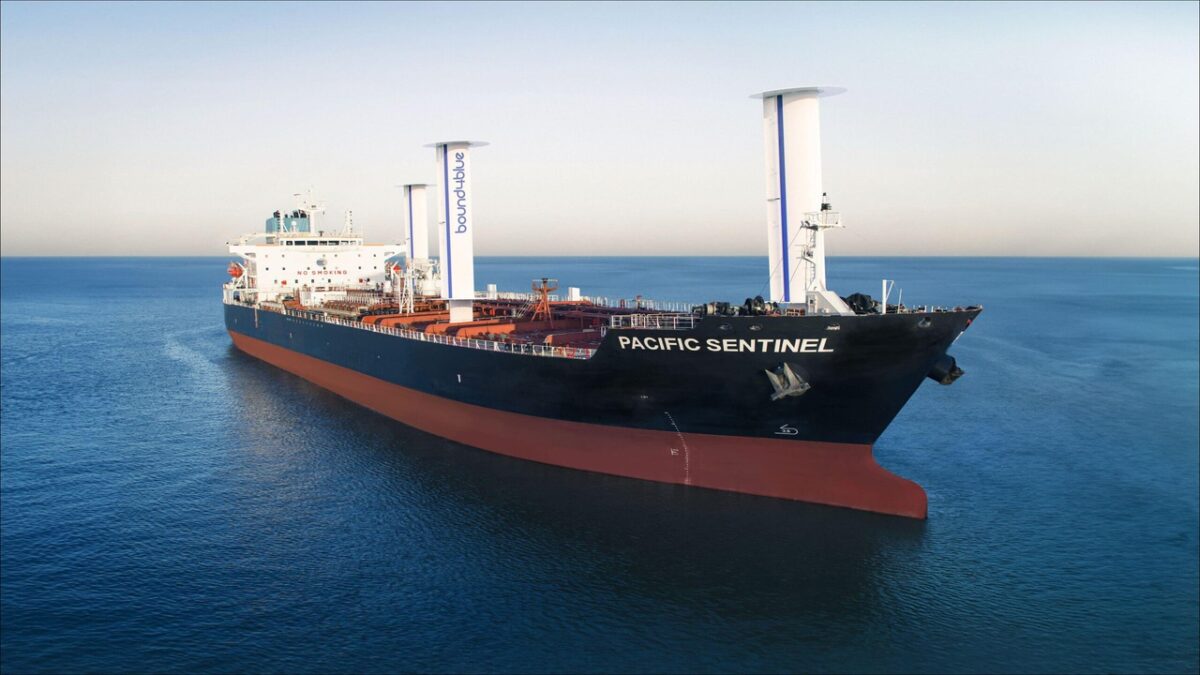
Achieving these goals necessitates a fundamental shift in how vessels are powered and operated. While alternative fuels like ammonia and hydrogen hold long-term promise, wind propulsion technology offers an immediate and highly effective solution to improve fuel efficiency and reduce emissions. Modern wind-assisted propulsion systems, such as Bound4blue’s eSAILs, are far removed from traditional sails, integrating seamlessly with existing vessel designs and operations to harness a free, abundant, and renewable energy source.
Bound4blue’s eSAIL Technology: A Leap Forward in Suction Sails
At the heart of this ABS validation lies Bound4blue’s cutting-edge eSAIL technology. These innovative systems are not conventional sails but rather smart, automated, and retractable suction sails designed to optimize aerodynamic efficiency. Operating on the principle of the Coandă effect, the eSAILs generate exceptional lift, providing substantial propulsive power to supplement a vessel’s main engine.
The eSAIL system is fully automated, adapting to varying wind conditions to maximize thrust and minimize fuel consumption. Their retractable nature allows for ease of operation and flexibility, enabling vessels to navigate confined spaces or adverse weather without hindrance. This technological advancement positions Bound4blue as a frontrunner in providing practical and highly effective wind propulsion solutions for a diverse range of vessel types.
ABS Validation: Ensuring Robust Compliance Calculations
ABS’s independent review of Bound4blue’s methodology for calculating Pwind values is a critical stamp of approval. As one of the world’s leading classification societies, ABS is renowned for its rigorous standards in safety, environmental protection, and performance. Their backing signals to the entire industry that Bound4blue’s data, particularly regarding the calculated propulsive power available from their wind-assisted propulsion system (Pwind), is accurate, reliable, and suitable for regulatory purposes.
This validation significantly de-risks investment in wind propulsion technology for shipowners. Historically, quantifying the exact fuel savings and emissions reductions from novel technologies could be challenging, leading to hesitation. With ABS’s seal of approval, shipowners can now invest with greater confidence, knowing that the performance metrics used for compliance reporting are based on a thoroughly vetted and approved methodology. This accelerates the adoption of sustainable shipping solutions across the global fleet.
Navigating Regulatory Seas: EEDI, EEXI, and FuelEU Maritime
The maritime industry is currently navigating a complex landscape of environmental regulations, with EEDI, EEXI, and FuelEU Maritime being central pillars. The Energy Efficiency Design Index (EEDI) applies to newbuild vessels, setting a minimum energy efficiency level per capacity unit. The Energy Efficiency Existing Ship Index (EEXI) extends similar efficiency requirements to existing ships, mandating technical improvements to reduce their carbon intensity.
FuelEU Maritime, a European Union initiative, introduces even more stringent requirements by setting annual targets for the greenhouse gas intensity of energy used on board ships. Crucially, it includes a ‘Wind Reward Factor’ that grants significant benefits to vessels employing wind-assisted propulsion. For shipowners to fully leverage these regulatory mechanisms and demonstrate wind propulsion compliance, accurate and verified Pwind values are indispensable. Bound4blue’s validated calculations provide precisely this, enabling vessels to demonstrate lower EEDI/EEXI scores and maximize their Wind Reward Factor, leading to substantial operational savings and environmental dividends.
The Rigorous Methodology Behind Pwind Values
Bound4blue’s commitment to scientific rigor is evident in its advanced methodology for generating vessel-specific force matrices and Pwind values. The company’s approach ingeniously combines several sophisticated analytical techniques, ensuring both precision and applicability without necessarily requiring expensive and time-consuming full-scale sea trials for initial validation. This multi-faceted methodology includes:
Firstly, Computational Fluid Dynamics (CFD) modeling. CFD simulations create virtual environments to predict how wind interacts with the eSAILs and the ship’s hull. This allows for detailed analysis of airflow, pressure distributions, and resulting forces, offering profound insights into the system’s performance across various operational conditions. Secondly, wind tunnel validation. Physical models of the eSAILs are tested in controlled wind tunnel environments, providing empirical data to verify and fine-tune the CFD models. This step is crucial for bridging the gap between theoretical simulations and real-world performance. Thirdly, aerodynamic analysis. Experts meticulously analyze the data from both CFD and wind tunnel tests, along with meteorological data, to accurately quantify the propulsive power generated by the eSAILs. This holistic approach ensures that the calculated Pwind values are robust and reflective of actual operational gains.
By integrating these advanced techniques, Bound4blue can generate highly accurate and reliable Pwind values tailored to specific vessel designs. This meticulous process provides shipowners with confidence in the reported benefits, enabling them to make informed decisions regarding their investments in wind-assisted propulsion systems and confidently address maritime regulations.
Empowering Shipowners for a Greener Future
The ABS endorsement of Bound4blue’s wind propulsion compliance calculations is a game-changer for shipowners globally. It provides the certainty and transparency needed to confidently invest in and deploy wind-assisted propulsion technology, knowing that the associated fuel savings and emissions reductions are verifiable and recognized by a leading classification society. This certainty translates directly into tangible benefits for the fleet, from enhanced operational efficiency to reduced environmental impact.
Beyond regulatory compliance, adopting such sustainable shipping solutions can offer significant economic advantages. Lower fuel consumption directly reduces operating costs, providing a competitive edge in a volatile energy market. Furthermore, vessels demonstrating superior environmental performance may benefit from preferential port fees, access to green financing, and an improved corporate image, appealing to environmentally conscious consumers and stakeholders. This strategic advantage in shipping decarbonization enables early adopters to position themselves as leaders in the transition to a greener maritime future.
The Horizon: Widespread Adoption of Wind Propulsion Technology
The collaboration between ABS and Bound4blue is more than just a technical validation; it represents a significant stride towards the widespread adoption of wind propulsion technology as a mainstream solution for shipping decarbonization. As the industry continues to innovate and integrate advanced systems like eSAILs, the path to a cleaner, more sustainable maritime future becomes clearer and more attainable. This critical step provides the clarity and data integrity necessary for shipowners to confidently embrace wind-assisted propulsion, propelling the entire sector towards its ambitious environmental targets. The future of shipping is undeniably green, and wind power is set to play a pivotal role in charting that course, ensuring a more sustainable and efficient global fleet for generations to come.