Worker Missing After Submarine Fire at Hyundai Ulsan | Mariner News
A diligent search for a missing maintenance worker is intensely underway after a significant submarine fire erupted at the HD Hyundai Heavy Industries (HHI) shipyard in Ulsan, South Korea. The incident, which has gripped the maritime community, involved the ‘Hong Beom-do,’ a Type 214 submarine undergoing routine maintenance. This tragic event highlights the inherent risks associated with complex naval vessel repair and the paramount importance of stringent safety protocols within busy shipbuilding facilities like the Ulsan shipyard. Rescue teams are facing immense challenges in their efforts to locate and recover the unaccounted worker, compounding the distress caused by this serious maritime incident.
Details of the Submarine Fire Incident at Ulsan Shipyard
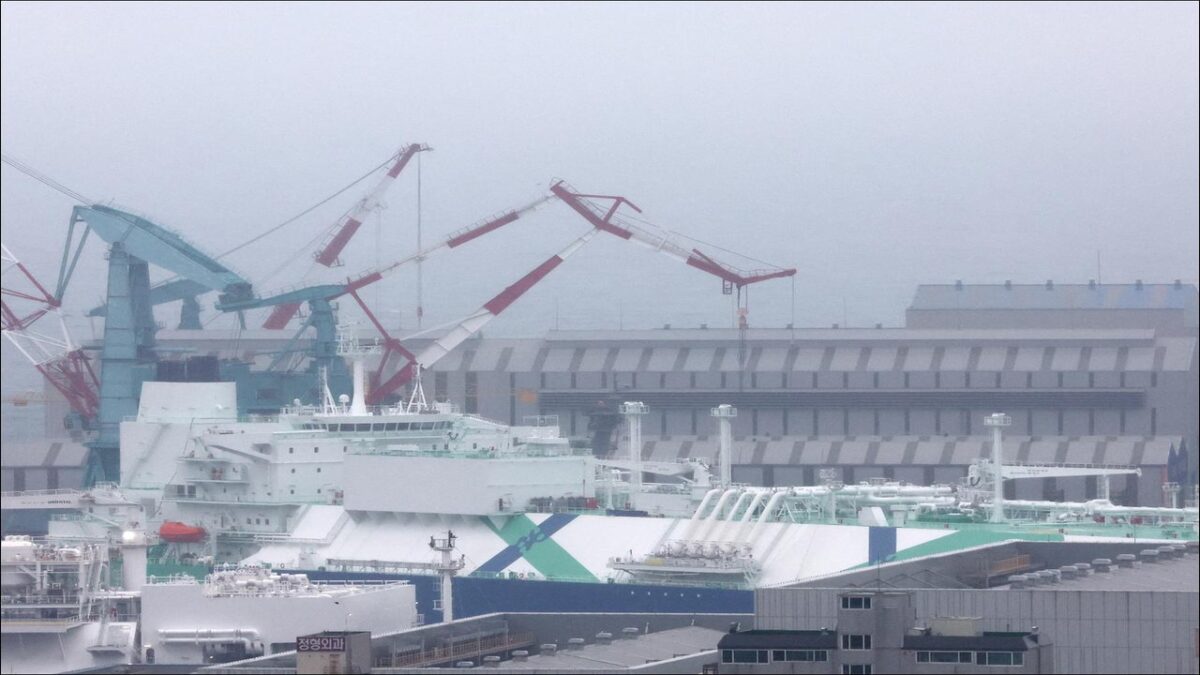
The alarming fire on the ‘Hong Beom-do’ submarine commenced midday on Thursday, April 9, at the sprawling HD Hyundai Heavy Industries complex in Ulsan. The naval vessel, a 65-meter Type 214 submarine, was reportedly docked for essential maintenance work when the blaze suddenly broke out. At the time of the incident, approximately 47 workers were aboard the submarine, all of whom were immediately ordered to evacuate. Initial reports suggest the submarine fire originated in the vessel’s battery room, a critical area known for its potential hazards due to stored energy and complex electrical systems. Investigations into the precise cause are ongoing, with melted electrical switches observed, indicating a severe electrical issue likely contributed to the inferno.
Upon notification, a swift and robust emergency response was initiated by the shipyard and local authorities. More than 50 firefighters, supported by 31 pieces of specialized firefighting equipment, were rapidly deployed to the scene. Their coordinated efforts were instrumental in bringing the submarine blaze under control within approximately an hour, with the fire being fully extinguished roughly 30 minutes later. However, the initial victory over the flames soon gave way to the grim realization that a maintenance worker remained unaccounted for. The sheer scale and intensity of the fire, coupled with the intricate structure of a submarine, presented formidable challenges for the first responders, particularly in managing the thick smoke that billowed from the vessel.
Intensifying Search and Rescue Efforts for the Missing Worker
The aftermath of the submarine fire shifted focus entirely to the urgent search for the missing maintenance worker. Initial reports, tragically, indicated the body of a woman in her 60s, working as a cleaner for a subcontractor, had been located. However, the subsequent challenge proved to be its inaccessibility. The location, identified as below the first-floor living quarters, is described as an extremely narrow space within the complex internal structure of the submarine. Rescue teams have stated that the confined nature of the area barely allows for a single person to enter, severely complicating recovery efforts.
Officials on site at the HD Hyundai Heavy Industries shipyard have cautioned that reaching the missing worker’s body is expected to be a considerably time-consuming and arduous task due to these extreme spatial constraints. The threat of short circuits and additional, secondary fires lingered, with lingering smoke briefly interrupting the delicate search operation. This precarious environment necessitates meticulous planning and execution by the rescue personnel, who are working tirelessly and cautiously to navigate the damaged interior of the submarine. The emotional toll on the teams and the missing worker’s family is immense, underscoring the profound human impact of this unfortunate maritime accident.
Shipyard Safety and Naval Vessel Maintenance Protocols
This devastating submarine fire at the Ulsan facility casts a critical spotlight on shipyard safety protocols and the specific challenges involved in maintaining naval vessels. Shipyards like HD Hyundai Heavy Industries are hubs of intense activity, where complex engineering, heavy machinery, and hazardous materials converge daily. The incident serves as a stark reminder of the inherent dangers that workers face in such environments, particularly when dealing with specialized tasks like submarine repair and maintenance. These operations often involve working in confined spaces, with intricate electrical systems, and under significant time pressures, all of which can heighten risks.
Ensuring the highest standards of worker safety is paramount, and incidents like this prompt immediate internal reviews and potentially broader industry discussions on best practices. Training for emergency response, regular safety drills, and strict adherence to maintenance procedures for naval vessels are non-negotiable elements in preventing such tragedies. Furthermore, the involvement of subcontractors, as in this case, often adds layers of complexity to safety management, requiring robust coordination and oversight to ensure all personnel adhere to uniform safety standards across the shipyard. The maritime industry, globally, continuously strives to enhance safety measures, but this event underscores the need for constant vigilance and adaptation to evolving operational complexities.
Broader Implications for the Maritime Industry and HD Hyundai
The submarine fire at the HD Hyundai Heavy Industries shipyard carries significant implications beyond the immediate tragedy. For HD Hyundai Heavy Industries, a global leader in shipbuilding, such an incident can lead to intensive investigations by governmental and regulatory bodies, potentially resulting in operational delays, financial penalties, and a re-evaluation of their safety management systems. The reputation of a shipyard is inextricably linked to its safety record and operational reliability, making transparent communication and decisive action crucial in the aftermath of such a serious event.
More broadly, the incident resonates throughout the maritime industry, particularly among shipbuilders specializing in naval construction and maintenance. It reinforces the need for continuous innovation in safety technologies, improved hazard detection systems, and enhanced personal protective equipment for workers in high-risk environments. The ‘Hong Beom-do’ incident will undoubtedly contribute to the ongoing discourse on preventing industrial accidents in the shipbuilding sector, pushing for even more rigorous safety audits and preventive measures. The welfare of maritime workers remains a central concern, and every incident serves as a painful lesson to reinforce collective commitments to a safer working environment across all maritime operations.
In conclusion, the search for the missing maintenance worker following the submarine fire at HD Hyundai Heavy Industries in Ulsan continues to be a poignant and challenging endeavor. This incident underscores the critical importance of robust safety protocols, rapid emergency response capabilities, and continuous vigilance within the complex and demanding environment of large shipyards. The maritime community mourns this tragic event and remains hopeful for the successful recovery of the worker, while also advocating for enhanced safety measures to prevent such heartbreaking occurrences in the future. The lessons learned from the ‘Hong Beom-do’ fire will undoubtedly contribute to safer practices across the global shipbuilding industry.