WinGD Ammonia Engine Powers CMB.TECH Bulker | Mariner News
The global maritime industry has taken a significant leap towards decarbonization with WinGD’s successful completion of factory acceptance testing for its groundbreaking ammonia-fuelled engine. This monumental achievement marks a pivotal moment, as the engine is slated for installation on a 210,000-dwt dry bulk carrier being constructed for CMB.TECH, heralding a new era for sustainable shipping. The successful trials not only validate WinGD’s advanced dual-fuel technology but also reinforce the growing viability of ammonia as a crucial alternative marine fuel, propelling the sector closer to its ambitious environmental targets. This development underscores the urgent need for innovative propulsion systems capable of drastically reducing greenhouse gas emissions across global fleets.
A Milestone in Sustainable Shipping: WinGD’s Ammonia Engine Technology
The rigorous factory acceptance testing (FAT) of WinGD’s ammonia dual-fuel engine was meticulously carried out at CSSC Engine Co. in China, with leading classification societies Lloyd’s Register, American Bureau of Shipping (ABS), and China Classification Society providing oversight and verification. This multi-party collaboration ensured the engine met stringent performance, safety, and operational standards, solidifying its readiness for commercial deployment. The successful testing process is a testament to years of dedicated research and development, showcasing WinGD’s commitment to pushing the boundaries of marine propulsion innovation.
At the core of this advanced system is WinGD’s high-pressure ammonia injection technology. This method allows the engine to operate predominantly on ammonia, using only a small amount of pilot fuel for ignition. Critically, WinGD reports that the engine delivers performance comparable to conventional diesel engines, ensuring that the transition to cleaner fuels does not compromise operational efficiency or power output. This parity in performance is a key factor for shipowners and operators considering the switch to alternative fuels, as it minimizes the need for significant operational adjustments or performance trade-offs.
The environmental benefits of this ammonia-fuelled engine are profound. When operating on ammonia, the engine is capable of achieving more than a 90% reduction in greenhouse gas emissions compared to traditional diesel mode. This substantial cut in harmful pollutants, including carbon dioxide, nitrogen oxides, and sulfur oxides, positions WinGD’s technology as a powerful tool in the fight against climate change and air pollution from shipping. The potential for near-zero emissions during operation makes ammonia an increasingly attractive option for achieving future regulatory compliance and contributing to a healthier planet.
CMB.TECH and the Future of Ammonia-Powered Bulk Carriers
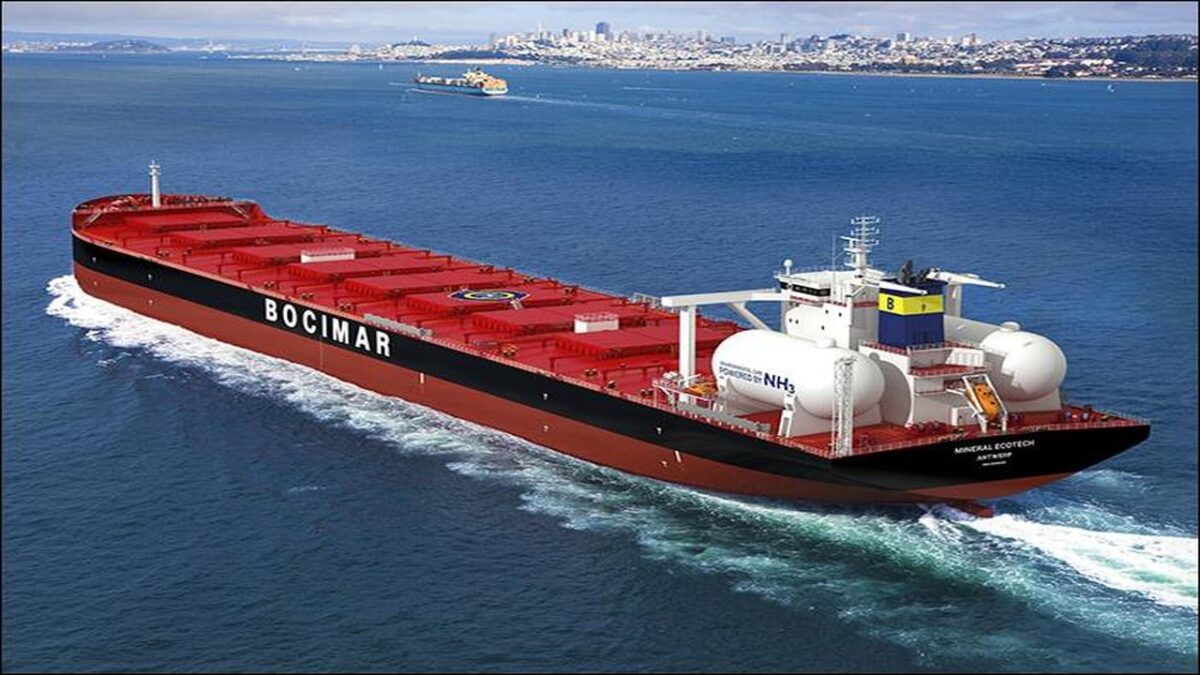
CMB.TECH, a forward-thinking maritime technology firm, is at the forefront of adopting this revolutionary technology. The 210,000-dwt dry bulk carrier, which will house WinGD’s pioneering engine, is the first in a series of ten such bulk carriers ordered by the company. This significant investment by CMB.TECH in ammonia-powered bulkers signals a strong strategic commitment to sustainable shipping and reflects a growing industry trend towards embracing clean energy solutions for large cargo vessels. The dry bulk sector, responsible for transporting vast quantities of raw materials globally, presents immense potential for emissions reduction through the adoption of such innovative propulsion systems.
CMB.TECH’s decision to integrate ammonia dual-fuel engines across a fleet of dry bulk carriers underscores the commercial viability and operational readiness of this technology. By leading with early adoption, CMB.TECH is not only enhancing its own environmental credentials but also paving the way for wider acceptance and implementation of ammonia propulsion within the bulk segment. This initiative serves as a powerful demonstration project for the broader maritime community, offering valuable insights into the performance, challenges, and benefits of operating ammonia-powered vessels in real-world conditions. The company’s vision aligns perfectly with global sustainability mandates, setting a new benchmark for environmentally responsible bulk cargo transportation.
The strategic implications for the global shipping industry are immense. As regulatory pressures intensify and demand for greener supply chains grows, shipowners are actively seeking proven, scalable solutions for decarbonization. The partnership between WinGD and CMB.TECH provides a tangible blueprint for how established maritime players can collaborate to bring cutting-edge clean marine fuel technologies from the testing phase to practical application. This collaborative spirit is essential for accelerating the industry’s transition away from fossil fuels and towards a future powered by clean, alternative energy sources.
Growing Momentum: Industry Adoption of Ammonia-Fuelled Marine Engines
The successful testing for CMB.TECH is not an isolated incident but rather part of a broader trend demonstrating rapid industry acceptance of ammonia as a marine fuel. WinGD has already secured orders for an impressive 40 dual-fuel ammonia engines across a diverse range of vessel types, including container ships, tankers, and now bulk carriers. This robust order book highlights the widespread confidence in WinGD’s technology and the increasing desire among shipowners to invest in future-proof, low-emission propulsion systems. The variety of vessel types opting for ammonia engines signifies its versatility and applicability across different segments of the maritime industry.
Adding to this momentum, the first vessel fitted with a WinGD ammonia-fuelled engine was recently delivered to maritime transportation firm Exmar. This delivery represents another critical step in the commercialization of ammonia propulsion, moving beyond factory testing into actual sea trials and operational service. These early adopters play a vital role in demonstrating the practical feasibility and performance of these new engines, providing invaluable real-world data and building confidence across the entire maritime value chain. Such deliveries are crucial for proving the reliability and safety of ammonia as a viable marine fuel on a larger scale.
The rapid uptake of ammonia dual-fuel engines reflects a significant shift in the maritime industry’s approach to decarbonization. What was once considered a distant possibility is now becoming a tangible reality, with concrete orders and vessel deliveries marking tangible progress. This growing industry interest is driven by a combination of factors, including increasingly stringent environmental regulations, growing societal pressure for cleaner shipping, and the competitive advantage offered by vessels with lower carbon footprints. The momentum behind ammonia-powered vessels is building, suggesting a future where clean fuels are standard rather than exceptional.
Decarbonizing Shipping: Challenges and Opportunities with Ammonia
Ammonia presents a compelling case as a future marine fuel due to its zero-carbon properties when produced sustainably. Unlike some other alternative fuels, ammonia contains no carbon, meaning its combustion does not release CO2. However, its widespread adoption is not without challenges. Safety considerations related to its toxicity and handling requirements are paramount, necessitating robust regulatory frameworks, crew training, and specialized bunkering infrastructure. The industry is actively working to address these concerns, with significant investments in research and development focused on safe storage, handling, and operational protocols for ammonia aboard vessels and at ports.
Developing a comprehensive global bunkering infrastructure for ammonia is another critical opportunity. This involves establishing supply chains for green ammonia (produced using renewable energy), developing efficient bunkering processes, and ensuring availability at major ports worldwide. Collaboration between energy providers, port authorities, and shipping companies will be essential to build this infrastructure and facilitate the seamless transition to ammonia-powered fleets. The scale of this undertaking requires coordinated efforts and substantial investment, but the long-term benefits for environmental sustainability and fuel security are undeniable.
Despite these challenges, the opportunities presented by ammonia as a marine fuel are immense. Its high energy density, ease of liquefaction, and established production methods (albeit mostly grey ammonia currently) make it an attractive option for long-haul shipping. As the production of green ammonia scales up, its environmental benefits will be fully realized, providing a truly zero-emission pathway for global maritime transport. Furthermore, the development of these advanced ammonia-fuelled engine technologies stimulates innovation across the entire maritime ecosystem, from ship design to fuel logistics, creating new jobs and economic opportunities.
WinGD’s Vision for a Greener Maritime Future
WinGD’s leadership in marine engine development is clearly demonstrated through its pioneering work on ammonia propulsion. The company’s strategic vision extends beyond merely manufacturing engines; it aims to provide holistic, sustainable propulsion solutions that empower the shipping industry to meet its decarbonization goals. This involves continuous investment in research and development, exploring a range of alternative fuels, and designing integrated systems that optimize efficiency and reduce environmental impact across the entire vessel lifecycle. WinGD is not just reacting to industry demands but actively shaping the future of marine propulsion.
The successful testing and commercialization of the ammonia-fuelled engine for CMB.TECH bulkers represents a significant stride towards WinGD’s broader commitment to a greener maritime future. By developing engines that can effectively utilize carbon-neutral fuels, WinGD is providing shipowners with the tools necessary to comply with upcoming regulations and to contribute positively to global climate action. Their focus on reliability, performance, and environmental stewardship positions them as a key enabler for the industry’s transition towards a zero-emission future, ensuring that global trade can continue to thrive sustainably.
Looking ahead, WinGD’s ongoing efforts include optimizing engine performance for various alternative fuels, enhancing digital solutions for vessel operations, and fostering collaborations across the maritime ecosystem. The development of advanced dual-fuel technologies like the ammonia engine is a testament to WinGD’s dedication to innovation and its pivotal role in transforming the shipping landscape. Their relentless pursuit of sustainable propulsion ensures that the maritime sector has viable, high-performance options to reduce its environmental footprint and embark on a cleaner, more responsible trajectory for decades to come.
In conclusion, WinGD’s completion of testing for its ammonia-fuelled engine for the CMB.TECH bulker is a landmark achievement, signaling a powerful acceleration in the maritime industry’s decarbonization journey. This development not only validates ammonia as a viable and highly effective marine fuel but also sets a new precedent for sustainable bulk shipping. With increasing orders and successful vessel deliveries, the future of ammonia-powered shipping looks brighter than ever, promising a cleaner, greener global trade network. This represents a monumental step toward achieving true zero-emission shipping.