WinGD Ammonia Engine Approvals Boost Green Shipping | Mariner News
In a landmark achievement for the maritime industry, WinGD has successfully completed key testing approvals for its groundbreaking ammonia-fuelled marine engine. This pivotal development signifies a major stride forward in the global journey towards sustainable shipping and comprehensive maritime decarbonization. The successful completion of both Type Approval Testing (TAT) and Factory Acceptance Testing (FAT) confirms the engine’s readiness for commercial deployment, setting a new benchmark for alternative marine fuels. This innovation, meticulously tested and verified, promises to reshape the landscape of future maritime operations, pushing the industry closer to its ambitious net-zero emissions targets. The rigorous approval process ensures the reliability and safety of this revolutionary ammonia engine for widespread adoption.
WinGD’s Groundbreaking Step Towards Maritime Decarbonization
WinGD’s validation of its ammonia-fuelled marine engine marks an indispensable milestone for the global shipping sector, which is under increasing pressure to drastically reduce its environmental footprint. With international regulations from the IMO driving targets for 2030 and 2050, the need for viable green fuel solutions has never been more urgent. Ammonia, as a carbon-free energy carrier when produced from renewable sources, stands out as a leading candidate to replace conventional fossil fuels.
This achievement by WinGD transcends theoretical discussions, offering tangible proof of concept and commercial viability for large-scale ammonia propulsion systems. It solidifies ammonia’s position as a practical and powerful option for ocean-going vessels. The successful testing not only validates WinGD’s advanced engine technology but also signals a promising future for the entire supply chain, encouraging further investment in green ammonia production and bunkering infrastructure, essential for scaling sustainable shipping solutions globally.
Rigorous Certification: Type Approval and Factory Acceptance
The journey to commercial readiness involved stringent Type Approval Testing (TAT) and Factory Acceptance Testing (FAT), both critical phases for any new marine engine technology. These comprehensive tests verify the design integrity, operational performance, safety features, and compliance with the most demanding international maritime regulations. Held in January at HD Hyundai Heavy Industries’ state-of-the-art engine facility in South Korea, these evaluations were thorough and multi-faceted.
Expert representatives from leading class societies, including Lloyd’s Register and others, meticulously witnessed the tests, providing independent verification of the engine’s capabilities. Additionally, supervision from the shipowner, Exmar, underscored the collaborative effort and shared commitment to adopting new marine fuels. This multi-party endorsement is crucial for building industry confidence in the reliable and safe operation of an ammonia engine in real-world commercial service. The extensive trials cover everything from combustion efficiency to emission profiles and safety protocols, ensuring the engine meets the highest standards.
The Innovative WinGD X-DF-A Engine: Technology & Application
The approved engine, a 52-bore unit, is part of WinGD’s advanced X-DF-A series, specifically engineered for ammonia operation. This powerful ammonia-powered engine is slated for installation on a 46,000 m3 LPG/ammonia carrier, ordered by the prominent shipping company Exmar. This particular vessel choice highlights the strategic application of this innovative technology within the gas shipping segment, where handling of energy-intensive cargoes demands robust and reliable propulsion.
Understanding the unique properties of ammonia is key to appreciating WinGD’s engineering solution. Ammonia possesses a higher ignition temperature and lower flammability compared to traditional marine fuels, making direct ignition challenging. To overcome this, the WinGD dual-fuel ammonia engine utilizes a small amount of conventional pilot fuel, approximately 5% at full load, to initiate combustion. This ingenious dual-fuel mechanism ensures stable and efficient engine operation, combining the benefits of ammonia with established combustion principles. This approach represents a significant technological leap in making ammonia a practical and safe marine fuel alternative.
Pioneering Green Gas Carriers and Emission Reductions
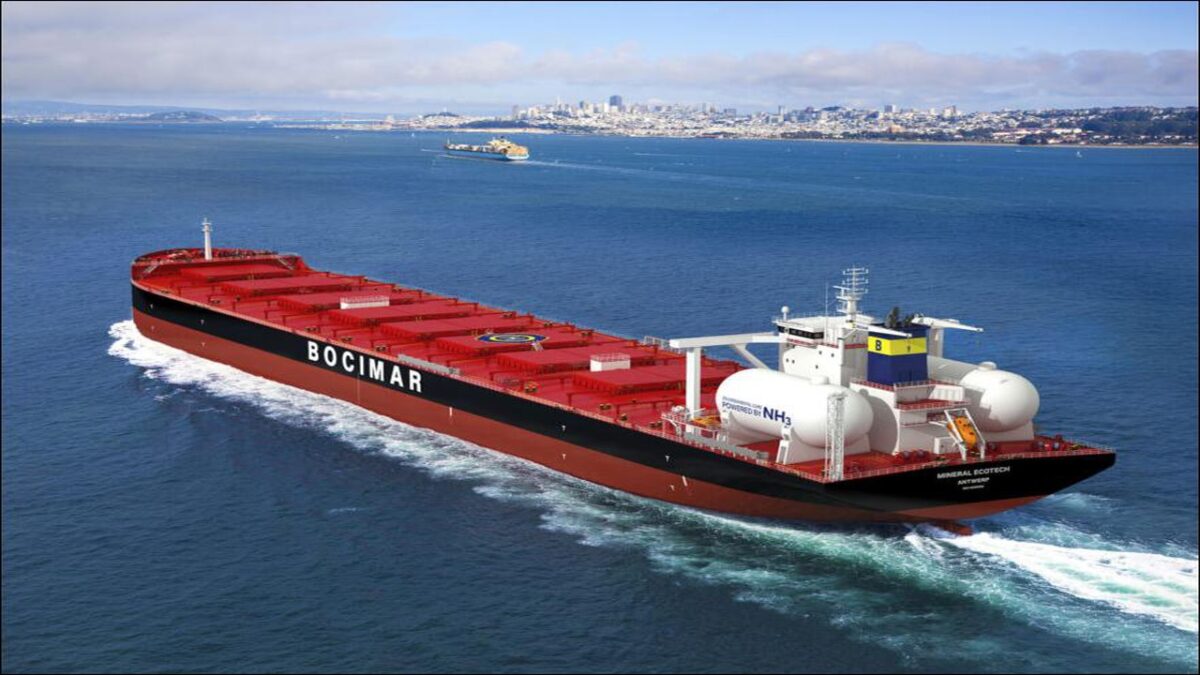
These pioneering vessels, equipped with WinGD’s ammonia-fuelled marine engine, are poised to be among the first ammonia-fuelled gas carriers to enter commercial service globally. This development holds immense strategic importance for the gas shipping segment, demonstrating a clear pathway for reducing its environmental impact while maintaining operational efficiency. The successful integration of an ammonia engine onto an LPG/ammonia carrier paves the way for a new generation of green gas carriers, leading the charge in sustainable energy transport.
Crucially, WinGD’s testing revealed impressive environmental performance. Emissions during ammonia operation were significantly lower for NOx (nitrogen oxides) compared to diesel mode, with minimal N2O (nitrous oxide) impact. This reduction in harmful atmospheric pollutants is vital for complying with stringent environmental regulations and mitigating the shipping industry’s contribution to climate change. The deployment of these ammonia-powered vessels will provide invaluable real-world data and operational experience, crucial for refining future designs and accelerating the widespread adoption of sustainable marine propulsion systems across the maritime sector.
The Road Ahead: Sea Trials and Future of Ammonia Propulsion
With type approval and factory acceptance successfully concluded, the next critical phase for WinGD’s ammonia engine will be the upcoming sea trials. These trials will put the engine to the ultimate test, evaluating its full-scale operational performance, safety protocols, bunkering procedures, and overall seamless integration within the vessel’s systems in real maritime conditions. The insights gained from these trials will be instrumental in optimizing the technology and preparing for broader commercial rollout.
WinGD’s long-term vision extends beyond this single engine, aiming to develop a comprehensive portfolio of future-fuel engines to support the diverse needs of the maritime energy transition. The success of this ammonia-fuelled marine engine underscores the potential for ammonia to become a mainstream marine fuel, especially for long-haul routes where its energy density and carbon-free characteristics are highly advantageous. Further research and development, coupled with essential port infrastructure upgrades and robust regulatory frameworks, will be crucial to support the widespread adoption of green ammonia and realize truly sustainable shipping solutions globally. This milestone positions WinGD at the forefront of maritime innovation, driving the industry towards a cleaner, more efficient, and sustainable future.
WinGD’s successful testing of its ammonia-fuelled engine represents a watershed moment, propelling the industry into a new era of sustainable maritime transport. With these critical approvals, the path is cleared for the commercial deployment of a viable green fuel solution, offering a tangible route for shipping companies to meet stringent environmental targets. This advancement not only showcases technological innovation but also strengthens the collaborative efforts across the maritime ecosystem towards a cleaner, more sustainable future for global trade. The focus now shifts to real-world performance and scaling up this transformative technology.