Wattlab Solar Cuts Auxiliary Fuel Use 2-5% for Ships | Mariner News
The maritime industry is undergoing a significant transformation, driven by the imperative to reduce its environmental footprint and comply with increasingly stringent regulations. In a groundbreaking development, Wattlab, a Dutch pioneer in sustainable energy solutions, has unveiled its advanced solar power system, proving its capability to cut auxiliary fuel use by a remarkable 2-5% for vessels. This innovation marks a pivotal moment, transitioning solar power at sea from a speculative concept to a tangible, working solution for shipping decarbonization. With successful pilot projects and a full-scale installation validating its effectiveness, Wattlab’s Solar Flatrack technology is set to redefine operational efficiency and environmental performance across global fleets. This system directly addresses the industry’s critical need for cleaner, more sustainable energy sources, promising not only significant fuel savings but also a substantial reduction in carbon emissions, thereby propelling the sector towards a greener future. The impact of such a system extends beyond mere cost savings, embedding sustainability into the very core of maritime operations and setting a new benchmark for vessel efficiency and ecological responsibility.
Revolutionizing Maritime Efficiency with Solar Power
Auxiliary fuel consumption on vessels, used to power onboard systems such as lighting, navigation, and crew amenities, represents a substantial portion of a ship’s operational costs and carbon emissions. Addressing this challenge head-on, the Wattlab solar power system offers a sophisticated and practical solution. By harnessing the abundant energy of the sun, vessels can generate their own electricity while at sea, thereby lessening their reliance on conventional diesel generators. This direct reduction in auxiliary fuel burn translates immediately into lower operating expenses and a significantly diminished environmental impact. The system’s design prioritizes seamless integration, ensuring that the installation and operation of the solar panels do not interfere with critical cargo operations, a crucial consideration for any shipping company looking to adopt new technologies. The inherent modularity and robust construction of the Solar Flatrack technology mean it is built to withstand the harsh marine environment, ensuring reliable performance and longevity, which are key factors in calculating the long-term return on investment for shipowners.
Moreover, the development of this cutting-edge maritime solar technology was a collaborative effort, involving strategic partnerships with key industry players. Wattlab worked closely with the Dutch research organization TNO, renowned for its expertise in technological innovation, and shipping company Vertom, which provided invaluable real-world operational insights and served as a testing ground for the initial deployments. This collaborative approach ensured that the system was not only technologically sound but also practical, scalable, and tailored to the specific demands of the shipping sector. The collective intelligence and resources brought together by these partners have culminated in a solution that is robust, efficient, and ready for widespread adoption, promising to deliver tangible benefits across a diverse range of vessel types and operational profiles. This synergy underscores a commitment to fostering sustainable shipping practices through collective innovation and practical application.
The Ingenious Wattlab Solar Flatrack Technology
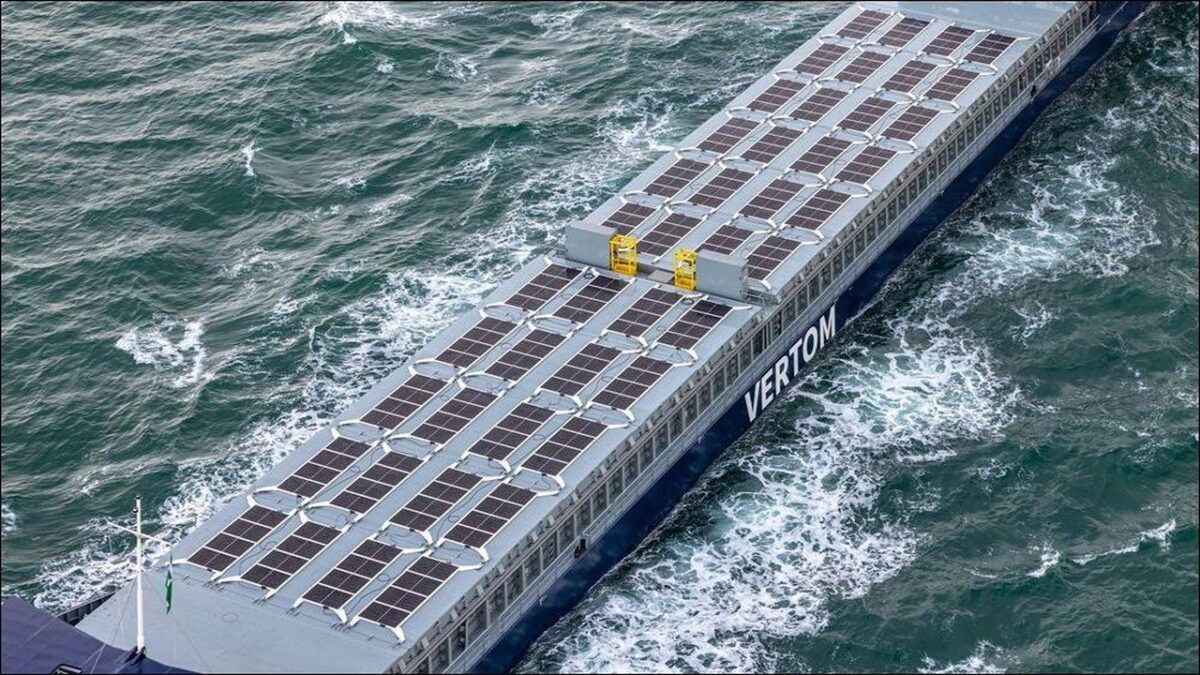
The cornerstone of Wattlab’s groundbreaking offering is its innovative Solar Flatrack technology. This system is engineered for maximum flexibility and efficiency, designed as self-contained units that can be easily integrated onto various types of vessels. Unlike traditional fixed solar installations that might pose challenges for cargo handling, Wattlab’s panels are designed to operate without affecting the crucial logistics of cargo operations. They can either remain securely in place during loading and unloading procedures or, if circumstances require, be conveniently stored away, ensuring uninterrupted workflow and operational continuity. This adaptability is paramount for commercial shipping, where efficiency and turnaround times are critical determinants of profitability and competitiveness.
Each Solar Flatrack unit is meticulously engineered to withstand the rigorous marine environment, providing a durable and reliable source of clean energy. The panels are optimized for power generation at sea, converting sunlight directly into electricity that can then be fed into the ship’s electrical grid, thereby supplementing or even replacing power drawn from auxiliary generators. This ingenious design not only streamlines the integration process but also maximizes the energy harvesting potential, making solar power a viable and attractive option for even the most demanding maritime operations. The technology’s simplicity of deployment, coupled with its robust performance, positions it as a highly effective tool for shipowners eager to embrace sustainable practices without compromising operational integrity.
Proven Success: The Vertom Tula Case Study
To demonstrate the practical efficacy of its solar power system, Wattlab undertook successful pilot projects, with one of the most compelling examples being its installation on the vessel Vertom Tula. This full-scale implementation served as a powerful testament to the system’s capabilities in a real-world maritime setting. On the Vertom Tula, 44 advanced solar panels were strategically deployed, meticulously integrated to harness solar energy efficiently. The results from this pilot were highly encouraging, showcasing a significant reduction in the ship’s onboard hotel load – the electrical demand for non-propulsion related services – by approximately 20%. This substantial decrease directly translates into a considerable saving in auxiliary fuel consumption, thereby validating Wattlab’s claims and demonstrating the tangible benefits for vessel operators.
Bo Salet, CEO and co-founder of Wattlab, underscored the significance of these achievements, stating, “With this step, we show that solar power at sea is no longer an experiment, but a working solution.” This declaration marks a pivotal moment for the maritime industry, signaling a shift from tentative exploration to confident adoption of renewable energy technologies. The success of the Vertom Tula project provides undeniable evidence that solar power can reliably contribute to a vessel’s energy needs, enhancing its operational efficiency and reducing its environmental footprint. The data and insights gathered from this and other pilot projects are crucial for refining the technology and building confidence among potential adopters, paving the way for broader implementation across various types of maritime vessels. This real-world validation is essential for convincing a conservative industry of the viability and value of such an innovative energy solution.
Driving Environmental Compliance and Emissions Reduction
The benefits of Wattlab’s solar power system extend far beyond immediate fuel savings and operational efficiencies; they play a critical role in addressing the maritime industry’s most pressing environmental challenges. The direct reduction in auxiliary fuel consumption inherently leads to a corresponding decrease in greenhouse gas emissions, particularly carbon dioxide (CO2). This aspect is incredibly significant in the context of global efforts to combat climate change and align with international climate targets. For shipping companies, achieving lower CO2 emissions is not merely an environmental goal; it is an economic and regulatory imperative.
Moreover, the Wattlab system offers a strategic advantage in complying with increasingly stringent maritime regulations. Key among these are the FuelEU Maritime initiative and the EU Emissions Trading System (EU ETS). FuelEU Maritime sets ambitious targets for reducing the greenhouse gas intensity of energy used on board ships, while the EU ETS introduces a market-based mechanism for pricing carbon emissions. By actively reducing their auxiliary fuel use through solar power, shipowners can significantly improve their vessels’ FuelEU Maritime compliance scores and lower their overall carbon liabilities under the EU ETS. This proactive approach not only mitigates regulatory risks but also positions companies as leaders in sustainable shipping, enhancing their reputation and potentially attracting environmentally conscious clients and investors. The ability to demonstrate a tangible commitment to decarbonization through proven technologies like Wattlab’s is becoming an indispensable component of successful maritime business strategies, providing a clear competitive edge in a rapidly evolving regulatory landscape.
Economic Advantages for Shipowners: Beyond Fuel Savings
While the environmental benefits are substantial, the economic advantages of adopting Wattlab’s solar power system are equally compelling for shipowners. The primary draw is, of course, the direct reduction in operational costs stemming from decreased auxiliary fuel consumption. Fuel is one of the largest variable expenses for any shipping company, and even a 2-5% reduction can translate into significant annual savings, especially for large fleets operating globally. These savings provide a clear and quantifiable return on investment (ROI) for the initial capital outlay of installing the solar system. Beyond the immediate fuel cost reduction, there are numerous other financial upsides.
Firstly, reduced fuel consumption means lower bunkering costs and potentially fewer bunkering stops, which can optimize vessel routes and improve overall logistical efficiency. Secondly, by enhancing environmental performance, shipowners can avoid potential penalties and fines associated with non-compliance with regulations like FuelEU Maritime and the EU ETS. In fact, improved compliance can even lead to financial incentives or preferential treatment from ports and charterers who prioritize green shipping. Thirdly, the adoption of sustainable technologies enhances a company’s brand image and market appeal. In an era where corporate social responsibility (CSR) and environmental, social, and governance (ESG) factors are increasingly influential, being recognized as an environmentally conscious operator can attract more business and secure long-term contracts with sustainability-focused clients. This competitive advantage translates into increased revenue opportunities and enhanced market position, making the investment in Wattlab’s solar solution a strategic financial decision that delivers multifaceted returns, fostering both profitability and environmental stewardship.
Scaling Up: Expanding Solar Power Across Diverse Fleets
Wattlab’s ambition extends far beyond the initial pilot projects and installations on vessels like the Vertom Tula. The company is actively working to scale its innovative solar power technology to encompass a broader range of vessel types and sizes. Initially proven effective on Supramax vessels, Wattlab is now diligently developing solutions tailored for larger bulk carriers, including Panamax and Capesize classes. This expansion demonstrates a clear commitment to making solar power accessible and beneficial across a significant portion of the global shipping fleet, addressing a wider array of operational needs and vessel specifications. The engineering challenges involved in adapting the Solar Flatrack technology for these larger ships are considerable, but Wattlab’s ongoing research and development efforts are focused on ensuring seamless integration and optimal performance, maintaining the core benefits of flexibility and efficiency.
The market’s response to Wattlab’s pioneering efforts has been overwhelmingly positive. Bo Salet confirmed, “Market interest is growing rapidly,” highlighting the urgent demand for viable decarbonization technologies within the maritime sector. He further added, “We have already engaged with more than 200 international parties interested in applying Solar Flatracks across their fleets.” This remarkable level of engagement from shipping companies worldwide underscores the industry’s readiness to adopt innovative green solutions. The interest spans various segments of the shipping market, indicating a widespread recognition of the economic and environmental advantages offered by Wattlab’s system. This burgeoning demand not only validates Wattlab’s technological approach but also signals a significant paradigm shift within the industry towards embracing renewable energy sources as a fundamental component of future maritime operations, charting a course towards a more sustainable and economically robust shipping future.
The Broader Impact of Sustainable Shipping Innovations
Wattlab’s solar power system is more than just an energy-saving device; it represents a significant leap forward in the broader landscape of sustainable shipping innovations. Its successful deployment and proven efficacy provide tangible proof that integrating renewable energy sources into vessel operations is not only feasible but also highly beneficial. This innovation contributes directly to the maritime industry’s overarching goal of achieving net-zero emissions, aligning with international climate agreements and the ambitious targets set by organizations like the International Maritime Organization (IMO). By demonstrating that solar energy can effectively reduce reliance on fossil fuels for auxiliary power, Wattlab is inspiring further research and development into other sustainable technologies, fostering a culture of innovation across the sector.
Furthermore, the collaboration between technology developers, research institutions, and shipping companies, as exemplified by Wattlab, TNO, and Vertom, sets a powerful precedent for future partnerships. Addressing complex challenges like maritime decarbonization requires a concerted effort from all stakeholders. Such collaborations accelerate the development and adoption of new solutions, ensuring that innovations are both technically sound and commercially viable. The growing market interest and the tangible results achieved by Wattlab signify a turning point, indicating a widespread industry acceptance of renewables as a core component of future vessel design and operation. This paradigm shift will undoubtedly pave the way for a more integrated approach to energy management on ships, where solar power works in conjunction with other green technologies, such as battery storage and alternative fuels, to create truly sustainable and resilient maritime ecosystems.
Conclusion: Charting a Course for Cleaner Seas
Wattlab’s solar power system stands as a beacon of innovation in the maritime industry, offering a proven, practical, and potent solution for cutting auxiliary fuel use by 2-5% on vessels. This technological breakthrough not only promises substantial economic benefits for shipowners through reduced operational costs but also delivers crucial environmental advantages by significantly lowering CO2 emissions. As the shipping sector navigates an increasingly complex regulatory landscape, Wattlab’s Solar Flatrack technology provides a vital tool for achieving compliance with initiatives like FuelEU Maritime and the EU ETS, transforming environmental obligations into opportunities for efficiency and leadership. With its demonstrated success on the Vertom Tula and ambitious plans for expansion across diverse fleets, Wattlab is not just providing a product; it’s delivering a pathway towards a more sustainable, energy-independent future for global shipping. The transition from experimental concept to a validated, working solution marks a pivotal moment, urging the industry to embrace these clean energy solutions and collectively chart a course for cleaner, greener seas. Wattlab’s commitment to advancing maritime solar power exemplifies the innovation needed to drive the industry towards its crucial decarbonization goals.