Vinssen & MANA Retrofit Feeder Vessels with Hydrogen Fuel Cells | Mariner News
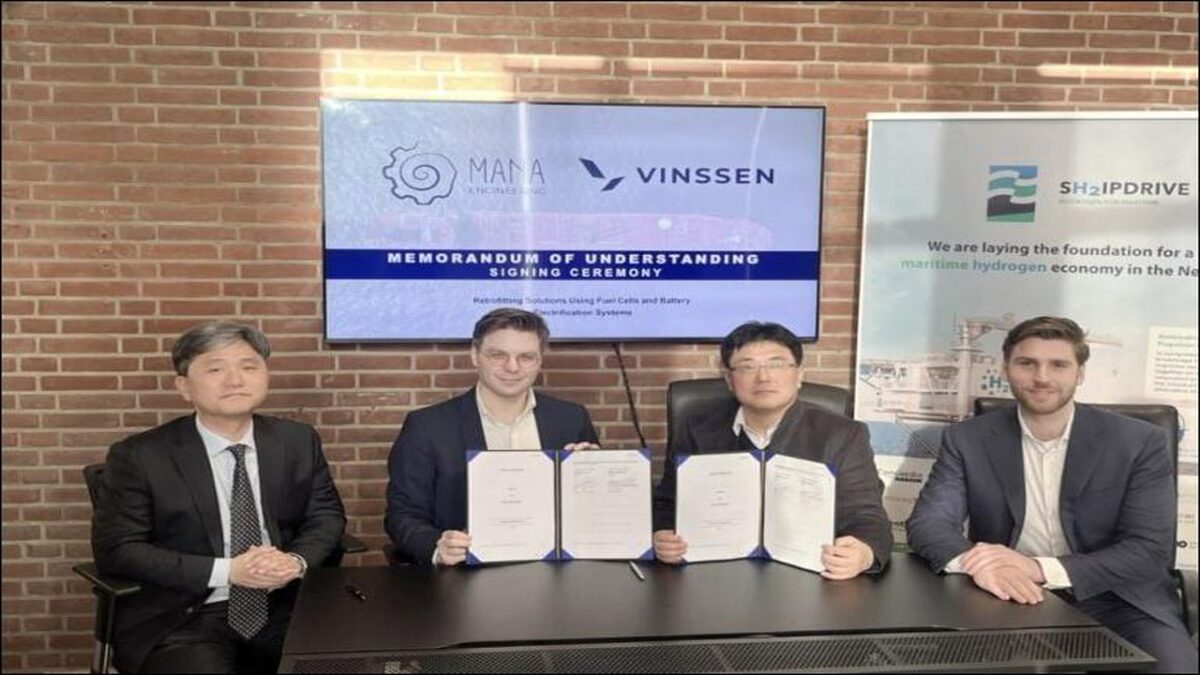
The global maritime industry stands at a pivotal juncture, facing increasing pressure to drastically reduce its environmental footprint and transition towards sustainable operations. In a significant move set to accelerate this green transformation, Vinssen, a leading South Korean clean energy solutions provider, has officially partnered with MANA Engineering, an esteemed engineering firm known for its expertise in ship design and integration. This strategic alliance aims to develop a groundbreaking hydrogen fuel cell retrofit solution specifically tailored for feeder vessels, heralding a new era of clean shipping, particularly for crucial short-sea routes in Northern Europe.
This innovative collaboration between Vinssen and MANA Engineering is poised to address one of the industry’s most persistent challenges: the decarbonization of existing fleets. By focusing on an advanced hydrogen fuel cell retrofit technology, the partners are not just envisioning a cleaner future; they are actively engineering it. The project underscores a shared commitment to environmental stewardship and technological innovation, providing a tangible pathway to significantly reduce greenhouse gas emissions and enhance the operational efficiency of current maritime assets, driving the industry closer to its net-zero ambitions.
A Pioneering Partnership for Green Shipping
The alliance between Vinssen and MANA Engineering represents a powerful synergy of specialized expertise and forward-thinking innovation. Vinssen brings its cutting-edge knowledge in hydrogen fuel cell development and integration for marine applications, a critical component for achieving zero-emission shipping. MANA Engineering complements this with extensive experience in ship engineering, naval architecture, and the complex process of retrofitting existing vessels, ensuring that the proposed solutions are both technically sound and practically implementable.
Their initial focus centers on an 800 TEU feeder container vessel currently operating in the busy Northern Europe and Baltic Sea routes. This specific vessel type and operational area highlight the immediate relevance and profound impact of the project. Feeder vessels, though smaller in scale compared to transcontinental giants, play an indispensable role in connecting major global shipping hubs with regional terminals, making their decarbonization an essential step towards comprehensive green logistics chains. The initiative will commence with a rigorous technical feasibility study, a vital preliminary phase designed to thoroughly assess the viability, safety, and performance parameters of integrating advanced hydrogen fuel cell systems into the vessel’s existing infrastructure.
Crucially, a key objective of this early stage is to secure Approval in Principle (AiP) from the esteemed classification society Lloyd’s Register. This certification is paramount, as it will validate the design’s adherence to stringent international maritime safety standards, operational reliability, and environmental compliance. The involvement of such a reputable classification body underscores the partners’ dedication to robust engineering practices and regulatory conformity, establishing a solid foundation for future deployments of green maritime technology. This collaborative approach by Vinssen and MANA Engineering exemplifies the proactive measures necessary to transition the global fleet towards sustainable operational paradigms, concentrating on practical and scalable applications of clean maritime technology to ensure long-term viability and success.
Unpacking the Hydrogen Fuel Cell Retrofit Solution
The core of this transformative project lies in its sophisticated technical design. Unlike solutions that propose entirely new vessel builds, this hydrogen fuel cell retrofit focuses on enhancing the operational efficiency and environmental performance of existing ships. The plan involves retaining the vessel’s main propulsion system while strategically replacing hotel loads and auxiliary power systems with state-of-the-art hydrogen fuel cells. This targeted approach allows for significant emissions reductions without requiring a complete overhaul of the ship’s primary machinery, making it a more economically viable and time-efficient decarbonization strategy for shipowners.
Supporting the hydrogen fuel cells will be an advanced battery energy storage system. This integrated system will optimize power management, providing peak shaving capabilities, ensuring stable power delivery, and enhancing overall energy efficiency. The inclusion of a battery bank also adds an important layer of operational flexibility and redundancy, crucial for marine applications where reliability is paramount. This hybrid power configuration represents a forward-thinking design, combining the continuous power generation of fuel cells with the dynamic response of batteries, a hallmark of sustainable shipping solutions.
An innovative feature of the design is the incorporation of swappable hydrogen storage modules. This modular approach addresses a critical challenge in hydrogen bunkering and infrastructure, allowing for quicker refueling times and greater operational flexibility. By enabling the rapid exchange of hydrogen tanks, vessels can minimize port stay durations and maintain their operational schedules more effectively, facilitating a seamless transition to alternative marine fuels. Furthermore, an integrated control system will manage all power sources, ensuring optimal performance, safety, and efficiency across the hybrid power plant, setting a new standard for clean energy integration in maritime transport.
Driving Decarbonization and Regulatory Compliance
The environmental benefits of Vinssen and MANA Engineering’s hydrogen fuel cell retrofit are substantial and far-reaching. The primary objective is a significant reduction in CO2 emissions, contributing directly to global climate goals and mitigating the shipping industry’s impact on air quality. Beyond carbon dioxide, hydrogen fuel cell technology produces zero harmful emissions at the point of use, effectively eliminating nitrogen oxides (NOx) and sulfur oxides (SOx), which are major contributors to air pollution and acid rain.
This initiative will also dramatically improve the vessel’s Carbon Intensity Indicator (CII) rating. The CII, a critical metric introduced by the International Maritime Organization (IMO), measures a ship’s operational carbon efficiency. By adopting a hydrogen fuel cell retrofit, the feeder vessel will achieve a much-improved CII score, enhancing its environmental profile and future marketability. This improved rating is not merely a label; it translates into tangible benefits for ship operators, including potential access to green financing and a stronger competitive edge in an increasingly environmentally conscious market.
Furthermore, the project is designed to ensure robust compliance with evolving regulatory frameworks such as FuelEU Maritime and the EU Emissions Trading System (ETS). These regulations, part of Europe’s ambitious ‘Fit for 55’ package, impose increasingly stringent requirements on shipping emissions within EU waters. By proactively adopting zero-emission technologies like hydrogen fuel cells, Vinssen and MANA Engineering are offering shipowners a scalable and reliable pathway to meet these mandates, avoid costly penalties, and future-proof their operations in an era of stringent environmental governance. This strategic foresight ensures that the green shipping technologies developed today will remain relevant and compliant for years to come, securing the long-term viability of sustainable maritime transport.
The Future of Short-Sea Shipping: Scalable & Sustainable
The implications of this pioneering project extend far beyond a single feeder vessel. The successful development and deployment of this hydrogen fuel cell retrofit solution hold immense potential as a scalable pathway for the widespread decarbonization of existing short-sea vessels across Europe and globally. The modular nature of the hydrogen storage and the adaptable design mean that similar retrofits could be applied to a diverse range of vessel types within the short-sea shipping segment, from ferries to offshore support vessels.
This scalability is crucial for achieving rapid and impactful emissions reductions across the entire maritime supply chain. Rather than waiting for the gradual replacement of the entire global fleet with newbuild zero-emission vessels, retrofitting offers a faster route to environmental compliance and sustainable operations for a significant portion of the active fleet. Such advancements are vital for creating resilient and environmentally responsible trade routes, supporting a greener European economy and setting a precedent for other regions worldwide. The focus on a pragmatic, implementable solution for current ships underscores a commitment to practical progress over aspirational targets.
Moreover, this initiative significantly contributes to broader maritime sustainability goals. It fosters innovation in the development of hydrogen infrastructure, encourages further investment in clean marine technologies, and demonstrates the commercial viability of alternative fuels. The successful implementation of such a project will serve as a powerful proof of concept, inspiring other shipowners and operators to explore similar decarbonization pathways, thereby accelerating the transition to a truly green and sustainable shipping industry. Vinssen and MANA Engineering are not just developing a product; they are contributing to the blueprint for a future-proof maritime sector that balances economic growth with environmental responsibility, fostering a robust ecosystem for clean shipping technologies.
Overcoming Challenges and Looking Ahead
While the promise of hydrogen fuel cell technology for maritime applications is immense, the journey towards widespread adoption is not without its challenges. Key hurdles include the development of a robust hydrogen bunkering infrastructure at ports, the economics of hydrogen production and distribution, and the continued evolution of regulatory frameworks to support these novel technologies. Partnerships like that between Vinssen and MANA Engineering are vital in addressing these complexities, pooling resources and expertise to innovate solutions that overcome technical and logistical barriers.
Their collaborative effort extends beyond engineering; it involves active engagement with regulatory bodies, supply chain partners, and industry stakeholders to create an enabling environment for green shipping. By demonstrating technical feasibility and economic viability, they pave the way for broader acceptance and investment in hydrogen-powered maritime transport. The long-term vision encompasses not only the retrofitting of existing vessels but also influencing the design of newbuilds, ensuring that future ships are inherently designed for zero-emission operations from inception.
Looking ahead, the success of this feeder vessel hydrogen fuel cell retrofit project will serve as a powerful testament to the industry’s capacity for innovation and its unwavering commitment to environmental responsibility. It provides a blueprint for how existing vessels can be transformed into clean, efficient assets, contributing significantly to global decarbonization efforts. The strategic alliance between Vinssen and MANA Engineering is a shining example of how collaboration, driven by a shared vision, can unlock the potential of clean energy to redefine the future of maritime transport, making sustainable shipping a reality rather than a distant aspiration.
In conclusion, the partnership between Vinssen and MANA Engineering is a monumental step forward for the global maritime sector. By focusing on a practical, scalable hydrogen fuel cell retrofit for feeder vessels, they are not only addressing immediate environmental concerns but also laying the groundwork for a more sustainable and resilient shipping industry. This initiative promises to significantly reduce CO2 emissions, improve environmental compliance, and provide a viable pathway for the decarbonization of countless existing vessels, solidifying their position at the forefront of the green shipping revolution.