UK Naval Shrinkage Mars London Defence Conference | Mariner News
The annual London Defence Conference, an event aspiring to rival the prestigious Munich Security Conference as a premier geopolitical forum, finds its lofty ambitions significantly undermined by a stark reality: the persistent and alarming UK naval shrinkage. As discussions commence, the pervasive narrative of dwindling UK defense capabilities and an embattled Royal Navy strength casts a long, unavoidable shadow over the proceedings. Despite recent attempts by the British Prime Minister and Defence Secretary to reassure allies and the public, their efforts have paradoxically served only to highlight the profound weaknesses in the nation’s British defense posture, revealing cracks that can no longer be papered over. This critical juncture demands an honest appraisal of the UK defense budget and its direct implications for Britain’s global influence and maritime security commitments.
London Defence Conference: Ambition Versus Reality
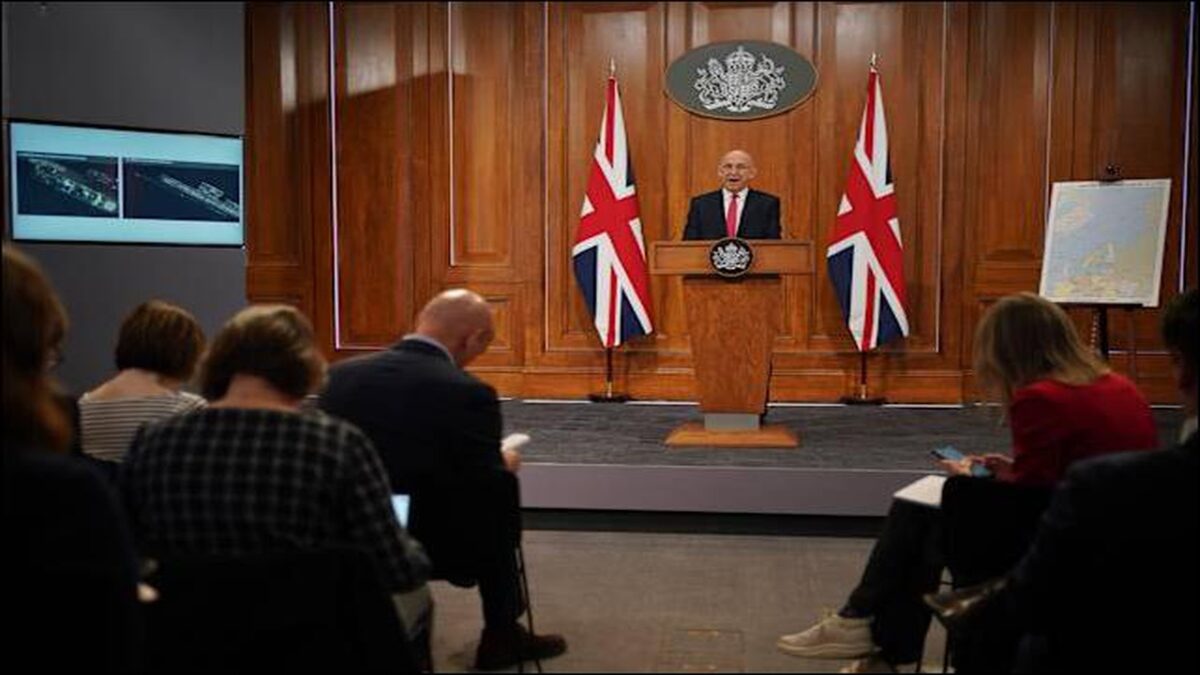
The aspiration for the London Defence Conference to ascend to the echelons of global security dialogues like the Munich Security Conference is a commendable one. However, the current state of UK defense spending and the ongoing UK naval shrinkage fundamentally challenge this ambition. How can Britain effectively lead discussions on international security when its own military, particularly its vital maritime assets, faces such significant real-term erosion? The Prime Minister’s recent tour of Gulf States, intended to project strength and commitment in a volatile region, instead became an unwitting showcase for the very vulnerabilities it sought to conceal. Emphasizing the seriousness of the Gulf crisis and the imperative to “step up” defense capabilities, the Prime Minister’s rhetoric lacked the substantive backing of new expenditure, leaving a chasm between strategic aspiration and operational reality. This stark contrast underscores the struggle to maintain a credible British defense posture on the global stage, impacting the very gravitas of the conference itself.
The Illusion of Increased UK Defense Spending
A deeper dive into the UK defense budget reveals a concerning pattern of budgetary gymnastics rather than genuine investment. While nominal increases were announced, moving defense expenditure from 2.3 to 2.6 percent of GDP between 2024 and 2027, this seemingly positive trajectory is largely an illusion. The increase has been achieved by reclassifying allocations for the naval nuclear deterrent and the intelligence and security services under the defense budget. This accounting shift, while technically boosting the headline percentage, masks a troubling truth. According to the authoritative Institute for Fiscal Studies, spending on the conventional armed forces in real terms has actually decreased this year. This subtle but significant manipulation of figures means that the true operational capacity and Royal Navy strength are not keeping pace with evolving global threats or the nation’s international responsibilities. Such fiscal machinations directly contribute to the UK naval shrinkage and undermine confidence in Britain’s long-term strategic commitments.
Erosion of Royal Navy Strength and Maritime Power
The consequences of this budgetary sleight of hand are most acutely felt by the Royal Navy, which is experiencing significant UK naval shrinkage. A reduced fleet size, constrained by both fewer ships and limitations in personnel and maintenance, severely impacts Britain’s maritime power and its ability to project influence. The original description alludes to the Royal Navy tracking Russian ships in the English Channel, a routine but critical task that requires robust and readily available naval assets. Yet, sustained underfunding compromises the fleet’s capacity for such continuous surveillance, as well as its ability to conduct prolonged deployments, participate in international exercises, and respond effectively to emerging threats. The lack of funding for the Defence Investment Plan, designed to implement the recently completed fundamental defense review, further exacerbates the problem. This leaves critical strategic objectives unfunded, hindering the development and modernization necessary for the Royal Navy to maintain its historic role as a credible global force. The operational readiness of the fleet, vital for national security and international stability, is undeniably jeopardized by these persistent resource shortfalls.
Geopolitical Ramifications of a Shrinking Fleet
The UK naval shrinkage extends beyond mere numbers of ships; it has profound geopolitical ramifications for Britain’s international standing and its ability to act as a significant player in global security. A weakened British defense posture impacts alliances, particularly within NATO, where burden-sharing expectations are high. The capacity to contribute meaningfully to multilateral operations, whether humanitarian or combat-oriented, is diminished, potentially eroding trust and influence among allies. In regions like the Gulf, where the British Prime Minister recently toured, a visible and capable naval presence is crucial for stability, deterrence, and safeguarding economic interests. The inability to consistently maintain such a presence due to UK naval shrinkage sends a worrying signal about Britain’s commitment and capability, inviting scrutiny from both partners and adversaries. The disconnect between the rhetoric of a ‘Global Britain’ and the realities of its defense spending creates a strategic void, limiting London’s diplomatic leverage and its capacity to respond to crises effectively.
Unfunded Ambitions and the Future of UK Defense
Looking to the future, the Prime Minister has acknowledged the necessity for the UK defense budget to reach 3.5 percent of GDP by 2035. While this long-term aspiration is laudable, it currently lacks any concrete program commitment to begin the necessary additional funding. Furthermore, defense spending is explicitly programmed not to rise between 2027 and 2029, creating a strategic pause that could further entrench the problems caused by UK naval shrinkage. This lack of immediate and sustained investment risks turning ambitious future targets into mere aspirations, with little practical hope of achievement. The current trajectory suggests a continued erosion of UK defense capabilities, forcing increasingly difficult choices between maintaining existing assets and investing in future technologies. Without a clear, funded roadmap, the Royal Navy’s strength and the broader British defense posture will likely continue to face an uphill battle, diminishing Britain’s role as a reliable security partner and its overall geopolitical influence in an increasingly uncertain world. The London Defence Conference serves as a poignant reminder that genuine strategic leadership must be underpinned by tangible military strength, a strength currently undermined by critical funding gaps and an ongoing UK naval shrinkage.