Tsuneishi Delivers Methanol Dual-Fuel Bulk Carrier | Mariner News
Tsuneishi’s Groundbreaking Methanol Dual-Fuel Bulk Carrier Joins Global Fleet
The global maritime industry is undergoing a profound transformation, driven by an urgent need for decarbonization and sustainable practices. At the forefront of this green revolution, Japanese shipbuilder Tsuneishi Shipbuilding has once again demonstrated its commitment to environmental innovation with the delivery of its latest methanol dual-fuel bulk carrier. This advanced vessel represents a crucial step towards cleaner shipping, offering a tangible solution for reducing emissions and setting new benchmarks for ecological responsibility in the bulk sector. The significance of this delivery cannot be overstated, as it reinforces the industry’s shift towards alternative fuels and more sustainable operations.
This momentous occasion underlines Tsuneishi’s role as a pioneer in developing cutting-edge maritime technology designed to meet stringent environmental regulations and the growing demand for eco-friendly transport solutions. The successful integration of methanol as a viable marine fuel not only showcases engineering prowess but also offers a beacon of hope for achieving a truly sustainable future for global trade. As governments and international bodies push for stricter emission targets, ships like this methanol dual-fuel bulk carrier will be instrumental in reshaping the energy landscape of the high seas, proving that economic efficiency and environmental stewardship can indeed go hand in hand.
Introducing the Brave Quest: A New Era for Kamsarmax Vessels
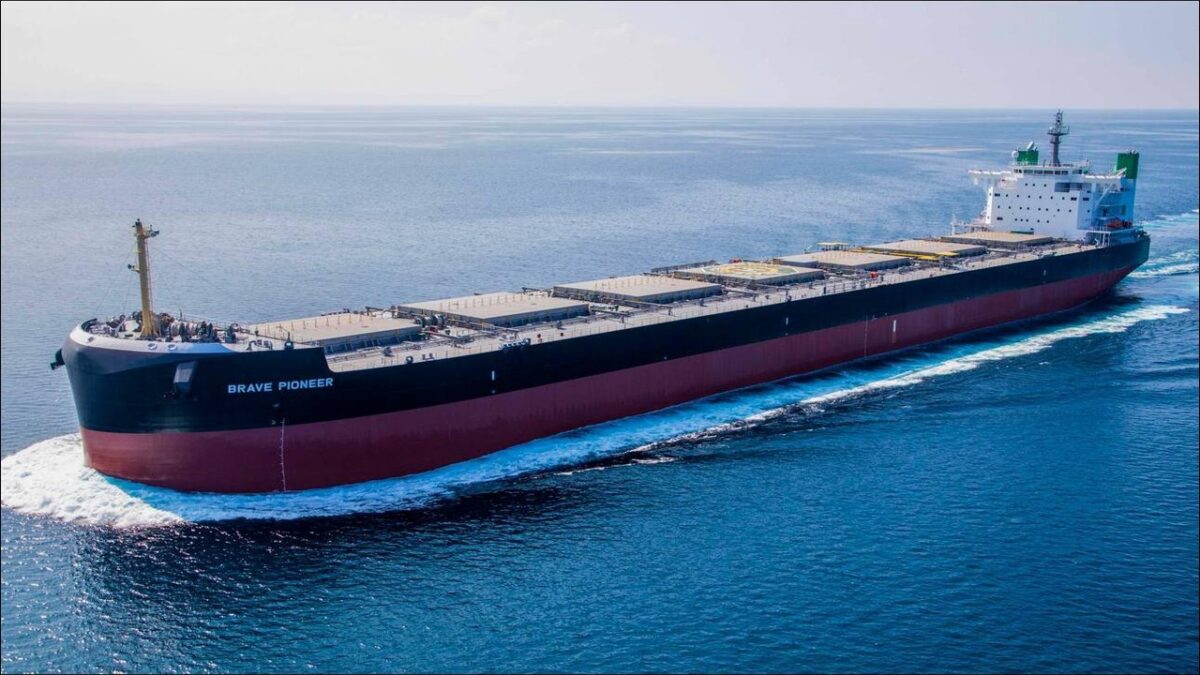
Named the ‘Brave Quest’, this state-of-the-art Kamsarmax vessel was meticulously crafted and delivered by Tsuneishi Heavy Industries (CEBU), the shipbuilder’s Philippines-based yard. Measuring an impressive 229 meters in length and boasting a substantial 45,500 gross tonnage (GT), the Brave Quest is not just another ship; it is a testament to advanced maritime engineering. Its dual-fuel engines are designed with remarkable flexibility, capable of operating efficiently on both methanol and conventional marine fuels. This inherent fuel flexibility offers significant operational advantages, allowing the vessel to adapt to varying fuel availability and cost structures globally, while always prioritizing environmental performance.
This vessel’s capabilities extend beyond mere cargo transport; it embodies a commitment to environmental protection. The Kamsarmax class is renowned for its optimal balance of cargo capacity and operational efficiency, making it a workhorse for carrying dry bulk commodities such as grain, coal, and iron ore. By integrating a methanol dual-fuel system into such a critical vessel type, Tsuneishi is not only enhancing its own fleet but also providing a powerful demonstration of how mainstream shipping segments can embrace clean energy. The Brave Quest truly represents a new era for bulk carriers, signaling a departure from traditional fossil fuel dependency towards a more diversified and sustainable energy mix.
Methanol: A Transformative Green Fuel for Shipping
The adoption of methanol as a marine fuel is a game-changer for reducing the environmental footprint of the shipping industry. Tsuneishi’s statements highlight the impressive ecological benefits: “The use of methanol as a fuel can reduce nitrogen oxides (NOx) by up to 80%, sulfur oxides (SOx) by 99%, and carbon dioxide (CO₂) by approximately 10% compared to conventional fuel oil.” These figures are compelling, illustrating methanol’s potential to significantly mitigate air pollution from ships, addressing critical concerns related to climate change and public health.
Beyond these immediate emission reductions, methanol offers several other advantages that make it an attractive alternative fuel. It is a liquid at ambient temperature and pressure, making its storage and handling relatively straightforward and comparable to traditional fuels, simplifying bunkering operations. Furthermore, methanol can be produced from a variety of feedstocks, including natural gas, coal, biomass, and even captured CO2, providing a pathway to renewable ‘green methanol’ that could achieve even greater CO2 reductions, potentially reaching net-zero emissions over its lifecycle. This versatility ensures a robust supply chain and future-proofs vessels designed to run on it, aligning perfectly with long-term decarbonization strategies.
Tsuneishi’s Leadership in Sustainable Shipbuilding
Tsuneishi Shipbuilding has consistently positioned itself as a frontrunner in the development and delivery of eco-friendly vessels. The Brave Quest is not an isolated achievement but rather a continuation of their pioneering efforts in green maritime solutions. Earlier this year, Tsuneishi garnered international attention when it delivered the world’s first dual-fuel methanol Kamsarmax bulk carrier, which was subsequently chartered to the prominent commodities firm Cargill. This earlier milestone, alongside the latest Brave Quest delivery, establishes a clear pattern of innovation and a steadfast commitment to advancing sustainable shipping practices within the bulk carrier segment.
This consistent delivery of next-generation vessels underscores Tsuneishi’s strategic vision: to lead the maritime industry towards a cleaner, more sustainable future. Their proactive investment in research and development, coupled with practical implementation in their shipyards, demonstrates a deep understanding of both the environmental imperatives and the technological capabilities required to meet them. By continuously pushing the boundaries of what is possible in shipbuilding, Tsuneishi is not only enhancing its own reputation but also inspiring other industry players to accelerate their transition to greener technologies. Their work paves the way for wider adoption of alternative fuels and more efficient vessel designs, fostering a competitive environment where sustainability is a core value.
Operational Advantages and Industry-Wide Impact
The operational advantages of vessels like the Brave Quest extend far beyond environmental compliance. For shipowners and operators, the ability to switch between methanol and conventional fuels provides unparalleled flexibility, mitigating risks associated with fuel price volatility and supply chain disruptions. This dual-fuel capability ensures operational resilience and allows vessels to maintain global trading routes without being exclusively dependent on a single fuel type, which is particularly crucial during the nascent stages of alternative fuel infrastructure development.
Furthermore, investing in methanol dual-fuel bulk carriers offers a long-term strategic advantage. As regulatory pressures intensify globally—with the IMO’s ambitious targets for greenhouse gas reduction looming—ships equipped with such advanced propulsion systems will be in higher demand and likely command premium rates. They also contribute to a company’s environmental, social, and governance (ESG) profile, which is increasingly important for investors and stakeholders. The wider industry impact is profound; each new delivery of an alternative-fuel vessel sends a strong signal to ports, fuel suppliers, and technology providers to accelerate the development of necessary bunkering infrastructure and support services. This collaborative ecosystem development is essential for the widespread adoption of methanol and other clean fuels.
The Global Push for Sustainable Maritime Transport
The efforts by Tsuneishi and other forward-thinking shipbuilders are integral to the global push for sustainable maritime transport. International bodies like the International Maritime Organization (IMO) have set ambitious goals to reduce greenhouse gas emissions from shipping, with targets including a 20% reduction by 2030 (striving for 30%) and a 70% reduction by 2040 (striving for 80%), leading to net-zero emissions by or around 2050. Achieving these targets will require a combination of energy efficiency measures, innovative propulsion systems, and a rapid transition to low- and zero-carbon fuels.
Methanol stands out among the various alternative fuels being explored—such as ammonia, hydrogen, and biofuels—due to its relative ease of handling, proven combustion technology, and potential for green production. While each alternative fuel has its unique challenges and benefits, methanol is proving to be a practical and immediately available solution for significant emissions reductions in the short to medium term. The success stories emerging from companies like Tsuneishi provide crucial real-world data and confidence for other shipping lines to invest in similar technologies, accelerating the collective journey towards a truly sustainable and environmentally responsible global shipping fleet.
Challenges and Future Outlook for Methanol in Shipping
Despite the significant advancements, the widespread adoption of methanol as a marine fuel still faces certain challenges. Key among these is the development of a robust global bunkering infrastructure to ensure consistent supply across major shipping routes. While progress is being made in port cities worldwide, scaling up infrastructure to meet future demand requires substantial investment and coordinated efforts between governments, port authorities, and private enterprises. Another consideration is the current cost of green methanol production, which tends to be higher than conventional fuels, though this is expected to decrease with increased production scale and technological advancements.
Looking ahead, the future of methanol in shipping appears promising. Continuous research and development are focused on improving engine efficiency, optimizing fuel systems, and exploring even cleaner methods for methanol production. The collaborative spirit within the maritime ecosystem, involving shipbuilders, engine manufacturers, fuel suppliers, and regulatory bodies, is crucial for overcoming these hurdles. As more vessels like Tsuneishi’s Brave Quest enter service, they will not only gather vital operational data but also inspire confidence and drive further innovation. This collective momentum is essential to realize the full potential of methanol as a cornerstone of the shipping industry’s decarbonization strategy, propelling us towards a cleaner and more sustainable maritime future.