Trident Sues Tacoma Fire Dept. Over Kodiak Enterprise Loss | Mariner News
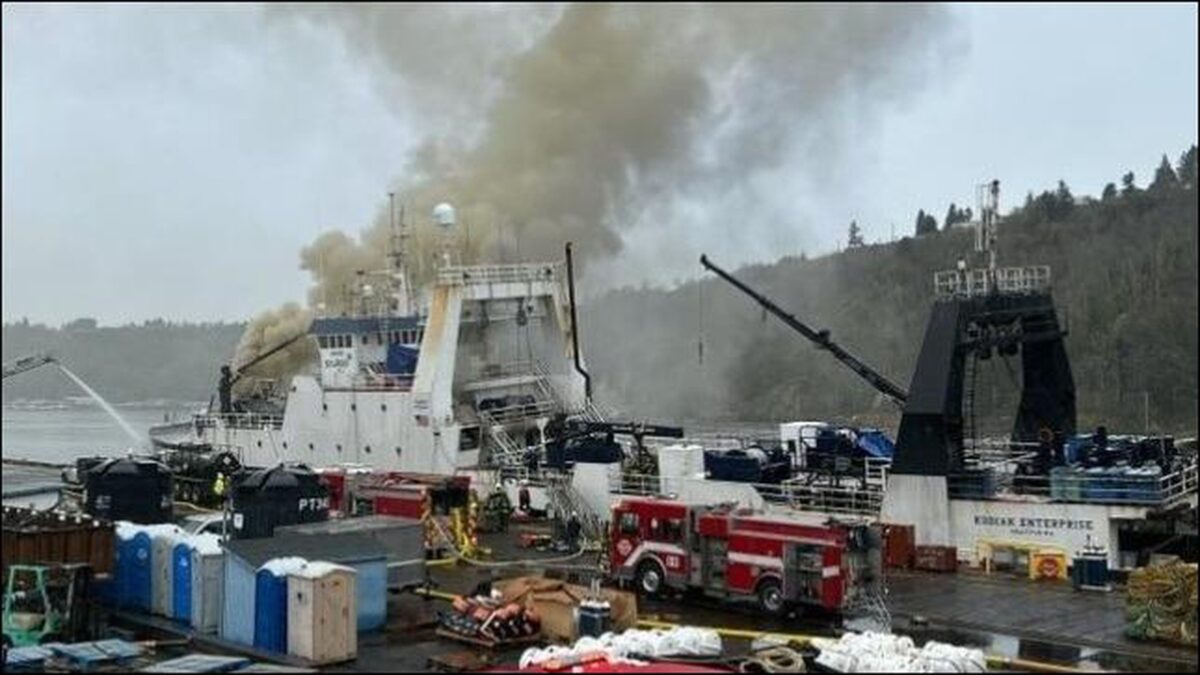
The maritime sector is currently witnessing a groundbreaking legal challenge as U.S. fishing giant Trident Seafoods has filed a rare and significant Trident Seafoods lawsuit against the City of Tacoma, Washington, specifically targeting its Fire Department. This unprecedented legal action follows the devastating loss of the fishing vessel Kodiak Enterprise in a massive blaze three years ago. While lawsuits against emergency response agencies for marine casualties are virtually unheard-of, Trident Seafoods alleges gross negligence by the Tacoma Fire Department, claiming their mishandling of the Kodiak Enterprise fire led to the vessel’s complete destruction. This case highlights not only a tragic incident but also could establish a crucial precedent for accountability in marine emergency responses, scrutinizing standard operating procedures and inter-agency cooperation during critical maritime incidents.
The Kodiak Enterprise Fire Incident
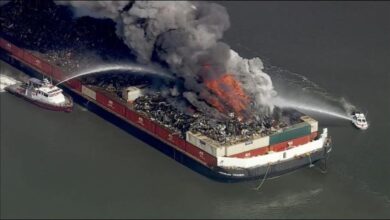
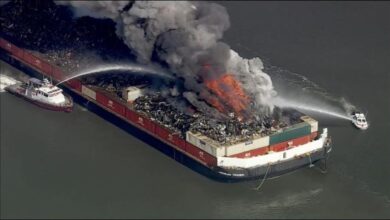
The tragic events unfolded in the early hours of April 8, 2023, when a fire erupted aboard the Kodiak Enterprise. The vessel, a vital asset in Trident Seafoods’ extensive fishing fleet, was moored at the Port of Tacoma. Trident’s initial assessments suggest the fire originated in a dry stores compartment towards the bow. The crew, recognizing the immediate danger, promptly and safely evacuated onto shore, preventing any direct casualties.
Upon receiving the distress call, the Tacoma Fire Department responded, arriving at the scene by approximately 03:30 AM. They immediately assumed command of the response, commencing their efforts to combat the escalating fire. The early stages of a marine fire response are critical, demanding swift assessment and strategic intervention to contain the damage and protect maritime assets. The Kodiak Enterprise, an industrial fishing vessel, represented a substantial investment for Trident Seafoods, making its loss a significant setback for the company’s operations.
Disputed Firefighting Strategy and Command
Recognizing the unique challenges of a vessel fire, Trident Seafoods proactively contracted with Resolve Marine, an experienced marine salvaging and firefighting firm. Resolve Marine, with a strong presence in the Seattle-Tacoma area, quickly mobilized a specialized team, arriving by approximately 06:00 AM. Their expertise in complex maritime emergencies is well-established.
However, Trident’s lawsuit alleges that the Tacoma Fire Department retained formal command, relegating Resolve’s personnel to an advisory capacity. A critical disagreement over firefighting strategy reportedly arose. Resolve’s marine experts strongly advocated for boundary cooling and isolation – shutting down ventilation to starve the fire of oxygen within the forward compartments, thereby controlling risk and allowing it to burn out.
Trident’s lawsuit asserts that the Tacoma Fire battalion chief, acting as incident commander, insisted upon a fundamentally opposite strategy. Despite explicit objections from Resolve’s advisors, the fire department allegedly proceeded with methods that Trident claims exacerbated the situation, leading to the vessel’s complete loss. This alleged disregard for specialized marine firefighting protocols forms the core of Trident’s gross negligence claim.
Allegations of Gross Negligence and Economic Impact
The concept of “gross negligence” in this context is significant, implying a conscious disregard for reasonable care, likely to cause foreseeable harm. Trident must demonstrate not just a mistake in judgment but a fundamental failure to adhere to recognized emergency response standards, especially when specialized expertise was available and actively offering a different, arguably more appropriate, course of action for a marine vessel fire.
The total loss of the Kodiak Enterprise represents a monumental blow to Trident Seafoods, one of the largest seafood companies in the U.S. Beyond the vessel’s substantial value, the loss encompasses disruption to fishing seasons, potential contracts, and the livelihoods of its crew. The Kodiak Enterprise was a vital component of a complex supply chain, integral to harvesting and processing operations in the Alaskan fisheries.
This incident has forced Trident Seafoods to reallocate resources and adjust operational schedules, incurring substantial costs and logistical challenges. The company’s decision to pursue legal action against a city fire department underscores the profound economic and operational impact the loss of the Kodiak Enterprise has had, reinforcing their conviction that the loss was preventable.
Legal Precedent and Future Implications for Marine Response
The Trident Seafoods lawsuit against the Tacoma Fire Department is a rarity in maritime law. Typically, legal actions focus on ship owners or operators. Suing an emergency response agency for actions during an incident breaks new ground, potentially establishing significant legal precedents. Winning such a case is exceptionally difficult due to doctrines like governmental immunity, which often shield public entities. Trident’s claim of “gross negligence” aims to overcome these protections, requiring compelling evidence of reckless disregard.
The outcome of this landmark case could profoundly impact how emergency services interact with private maritime contractors during incidents. It may force a reevaluation of command structures, protocols for incorporating expert advice, and liability frameworks in complex marine emergencies. For the maritime industry, it could offer a new avenue for recourse in cases where response actions are deemed negligent, potentially leading to improved standards and accountability for fire departments responding to vessel fires.
Beyond the courtroom, this incident prompts critical examination of training, coordination, and resource allocation for land-based fire departments handling marine casualties. Vessel fires present unique challenges that demand specialized knowledge. This case could lead to enhanced joint training and clearer protocols between municipal fire departments and specialized marine firefighting firms, ensuring expertise is effectively utilized to enhance safety and protect maritime assets.
Conclusion
The Trident Seafoods lawsuit against the Tacoma Fire Department marks a pivotal moment in maritime legal history and emergency response protocols. Alleging gross negligence in the handling of the Kodiak Enterprise fire, Trident challenges long-standing assumptions about the immunity of public service agencies. This case is more than a dispute; it’s a critical examination of how land-based emergency services integrate with specialized marine expertise. The outcome will shape future interactions, potentially setting new benchmarks for accountability and cooperation in maritime casualty response. The maritime world will be watching, hoping this tragic loss ultimately leads to improved safety and more effective strategies for protecting vessels from devastating fires.