Swedish Coast Guard Detains Stateless Cargo Ship in Baltic | Mariner News
In a significant demonstration of robust maritime law enforcement, the Swedish Coast Guard recently executed a dramatic boarding and detention of a suspected stateless cargo ship in the Baltic Sea. This decisive action underscores the critical importance of proper vessel registration and adherence to international maritime regulations, sending a clear message to operators attempting to circumvent established protocols. The incident, involving the cargo ship Caffa, highlights the challenges and inherent dangers posed by vessels operating without a legitimate flag state and the relentless efforts by authorities like the Swedish Coast Guard to maintain maritime security.
The Incident: A Bold Maritime Intervention in the Baltic
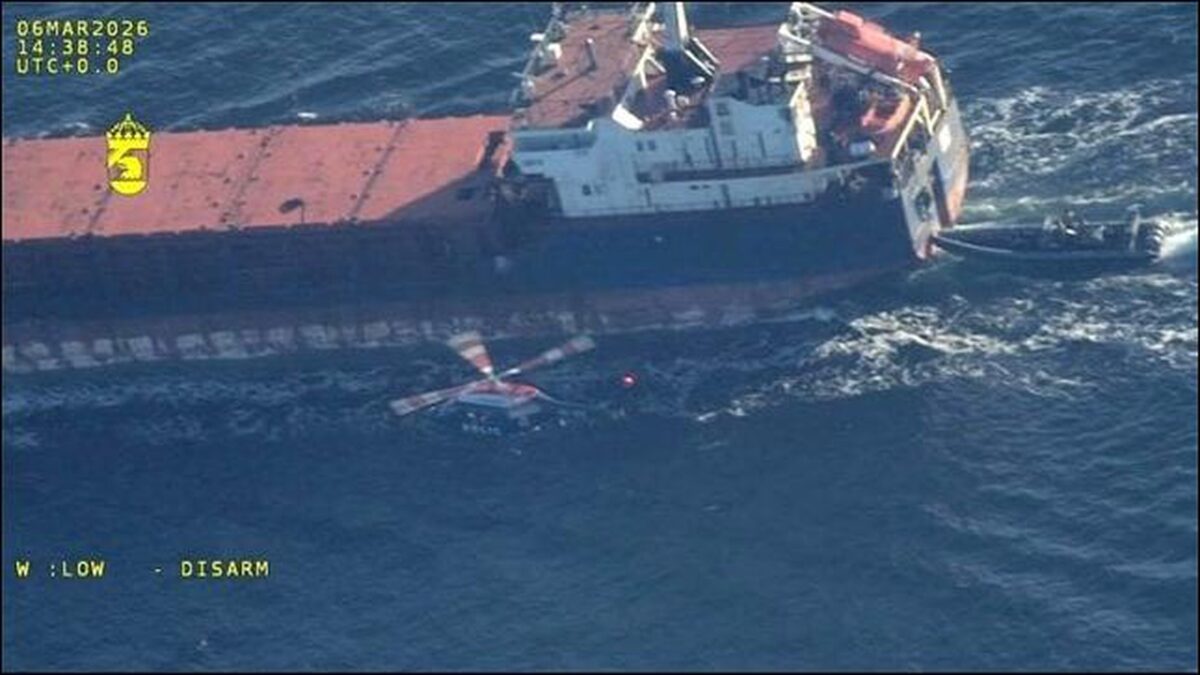
The operation unfolded on Friday afternoon, March 6, when Swedish police and the Coast Guard swooped down on the small cargo ship Caffa, weighing 4,337 dwt, as it navigated through Swedish territorial waters. Authorities suspected the vessel was operating without a proper registry, raising serious concerns about its compliance with safety and environmental standards. This was not a sudden decision; the Coast Guard reported having tracked the ship for “some time” under suspicion of its stateless status, indicating a well-planned and coordinated response to a perceived threat to maritime order.
The boarding itself was a high-stakes affair, executed with precision and strategic deployment of resources. The Police Special Intervention Unit and members of the Coast Guard landed a helicopter directly on the deck of the small cargo ship while it was underway offshore near Trelleborg on the Baltic Coast. Simultaneously, other officers ascended the stern from a high-speed speedboat, securing the vessel around 15:50 on March 6. This dual-pronged approach, part of an operation aptly named “Black Coffee,” ensured rapid control of the vessel and its crew.
The Caffa had reportedly been traveling from Casablanca to St. Petersburg, a routine route that turned extraordinary when Swedish authorities decided to act upon its entry into their territorial waters. The successful execution of this maritime intervention showcases the advanced capabilities and operational readiness of the Swedish Coast Guard, demonstrating their unwavering commitment to upholding national and international maritime law. This proactive measure prevents potential risks associated with unverified vessels, thereby safeguarding both marine environments and legitimate shipping interests in the busy Baltic Sea.
Unraveling the Stateless Vessel Mystery
At the core of this dramatic event is the perplexing issue of a suspected stateless cargo ship. A vessel without a legitimate flag state is a serious concern in the maritime world, as it fundamentally undermines the established system of international maritime governance. Every vessel is typically registered with a particular country, known as its flag state, which is then responsible for enforcing international conventions regarding safety, environmental protection, and labor conditions onboard. Without this registration, accountability becomes elusive, creating a vacuum that can be exploited for illicit activities or simply by operating substandard vessels.
Swedish authorities initially reported that the ship was being investigated for violations of maritime law, specifically highlighting that without a legitimate flag, its passage through Swedish territorial waters could not be considered “innocent passage.” The concept of innocent passage allows foreign ships to transit through territorial waters of a coastal state, provided their passage is not prejudicial to the peace, good order, or security of the coastal state. A key aspect of innocent passage relies on the flag state vouching for the vessel’s safety and seaworthiness, ensuring it complies with international norms. In the absence of such a guarantee, the nature of the passage changes dramatically.
Therefore, the lack of a verifiable flag state immediately triggered a heightened level of scrutiny from the Swedish Coast Guard. The implications extend beyond mere paperwork; it suggests a potential disregard for fundamental safety regulations, crew welfare, and environmental protection. Such vessels often operate in the shadows, making it difficult for international bodies to monitor their activities or hold them accountable for any transgressions. This incident serves as a stark reminder of the complexities involved in policing global maritime activities and the persistent threat posed by non-compliant actors to the integrity of the marine transport system.
Deep Dive into the Maritime Investigation
Following the detention, a comprehensive maritime investigation was promptly launched by Swedish authorities, focusing on several critical aspects of the Caffa’s operations and condition. A Coast Guard spokesperson confirmed that their teams were meticulously checking the condition of the ship, assessing whether the crew possessed the necessary skills and certifications, and verifying the existence of valid insurance coverage. These elements are foundational to safe and legal shipping, ensuring that vessels are fit for purpose, operated by competent personnel, and financially covered against potential incidents.
Specifically, the investigation was reported to be concentrating on the seaworthiness of the vessel. A ship’s seaworthiness encompasses its structural integrity, proper functioning of propulsion and steering systems, adequacy of safety equipment, and general readiness to withstand the perils of the sea. A vessel found to be unseaworthy poses a significant risk not only to its crew and cargo but also to other maritime traffic and the marine environment, particularly in busy shipping lanes like the Baltic Sea. The absence of a flag state often correlates with lax maintenance and inadequate safety provisions.
Furthermore, the crew’s qualifications and certifications are paramount to maritime safety. Inadequate training or illegal manning practices can lead to operational errors, accidents, and even environmental disasters. The Coast Guard’s scrutiny of these aspects is crucial for identifying any shortcuts taken by the operators. Similarly, valid marine insurance is a legal requirement for most vessels globally, providing financial protection against liabilities arising from accidents, pollution, or damage. A lack of insurance could indicate a broader pattern of non-compliance and financial irresponsibility.
The findings of this investigation will determine the legal fate of the Caffa and its operators. It’s a painstaking process, often involving detailed inspections, document verification, and interviews with the crew. The Swedish authorities are leveraging their expertise in port state control and maritime forensics to uncover any violations of national and international maritime conventions. The outcome will not only impact the vessel directly but also potentially set precedents for dealing with similar cases of unregistered or non-compliant ships in the region, reinforcing the rule of law at sea.
Ramifications of Operating Without a Flag
The practice of operating a ship without a flag, or under a dubious or revoked registration, has profound and far-reaching ramifications for the entire maritime industry and global security. Such vessels often fall outside the purview of effective regulatory oversight, creating fertile ground for illegal maritime activities. These can range from illicit trafficking of goods, arms, or narcotics to human smuggling, illegal, unreported, and unregulated (IUU) fishing, and environmental crimes such as illegal dumping of waste or oil discharge. The anonymity offered by statelessness makes it incredibly difficult for international agencies to track and prosecute such offenses.
Beyond criminal enterprises, unregistered ships present grave safety concerns. Without a flag state to enforce international conventions like SOLAS (Safety of Life at Sea) or MARPOL (International Convention for the Prevention of Pollution from Ships), these vessels may operate with substandard equipment, inadequate maintenance, and poorly trained or exploited crews. This negligence significantly increases the risk of accidents, groundings, collisions, and pollution incidents, posing a direct threat to the lives of those onboard and the fragile marine ecosystems they traverse. The potential for a major environmental disaster from an unseaworthy, uninsured, and unregulated vessel is a constant worry for coastal states.
Economically, the operation of stateless or illicitly flagged vessels creates an unfair competitive advantage, undercutting legitimate shipping companies that adhere to rigorous safety, environmental, and labor standards. This creates a race to the bottom, where unscrupulous operators can avoid the costs associated with proper compliance, distorting market dynamics and harming reputable businesses. Furthermore, such activities can undermine global efforts to combat terrorism financing and other forms of transnational organized crime, making the vigilance of authorities like the Swedish Coast Guard even more crucial.
Strengthening Maritime Law Enforcement in the Baltic
The intervention by the Swedish Coast Guard is not an isolated incident but rather a testament to the ongoing efforts to bolster maritime law enforcement and enhance maritime security in the Baltic Sea region. This strategic waterway, bordered by numerous European nations, is a critical artery for trade but also a potential hotspot for various illicit activities. Coastal states in the Baltic are increasingly investing in sophisticated surveillance technologies, advanced patrol vessels, and specialized intervention units to counter emerging threats and enforce a wide array of maritime regulations.
International cooperation plays a pivotal role in these efforts. The sharing of intelligence, joint exercises, and coordinated operations between countries like Sweden and its neighbors are essential for creating a robust security net. Organizations such as the European Border and Coast Guard Agency (Frontex) and various regional maritime safety and security forums facilitate this collaboration, enabling a collective response to cross-border maritime challenges. The detention of the Caffa exemplifies how localized intelligence, combined with rapid response capabilities, contributes to a broader regional strategy aimed at maintaining stability and legality at sea.
Moreover, the incident reinforces the importance of port state control (PSC) inspections, which are a cornerstone of international maritime safety. PSC allows national authorities to inspect foreign ships visiting their ports to ensure they comply with international rules, regardless of their flag. This acts as a vital secondary layer of enforcement when flag states fail in their primary duty. While the Caffa was apprehended underway, the underlying principles of verification and enforcement mirror those of PSC, showcasing a proactive approach to identifying and neutralizing threats before they can impact port operations or coastal environments.
Future Outlook and Legal Precedents
The detention of the Caffa will undoubtedly lead to significant legal proceedings and potential repercussions for the vessel’s owners and operators. The immediate future involves a thorough legal process to determine the extent of any maritime law violations, including issues related to registration, seaworthiness, crew certifications, and insurance. Depending on the findings, penalties could range from substantial fines and rectification orders to the confiscation of the vessel and criminal charges against those responsible. This complex legal journey often involves navigating international maritime law, national legislation, and potentially, diplomatic channels.
This incident also serves as a critical legal precedent for future cases involving suspected stateless or non-compliant vessels. Each such intervention reinforces the authority of coastal states to protect their territorial waters and uphold international maritime conventions. It sends a powerful message across the shipping industry that evasion of responsibilities will not be tolerated, particularly in well-regulated and closely monitored areas like the Baltic Sea. The transparent reporting by the Swedish Coast Guard further enhances awareness within the maritime community about the strict enforcement measures in place.
Looking ahead, the commitment to vigilance against vessels operating outside the framework of international maritime law is expected to intensify. As global supply chains grow more complex and geopolitical dynamics shift, the potential for exploitation of maritime loopholes may increase. Incidents like the Caffa detention underscore the continuous need for investment in surveillance technology, training for maritime law enforcement personnel, and robust international agreements. Such proactive measures ensure the safety, security, and environmental integrity of the world’s oceans, affirming that all vessels must operate within the established legal and ethical boundaries. Stay informed about crucial maritime news by following Mariner News for the latest updates on global shipping and port activities.