

Royal Navy Launches First Strike Drones from HMS Queen Elizabeth
Royal Navy trials on HMS Queen Elizabeth demonstrate a shift toward hybrid carrier air wings using one-way strike drones and autonomous logistics.
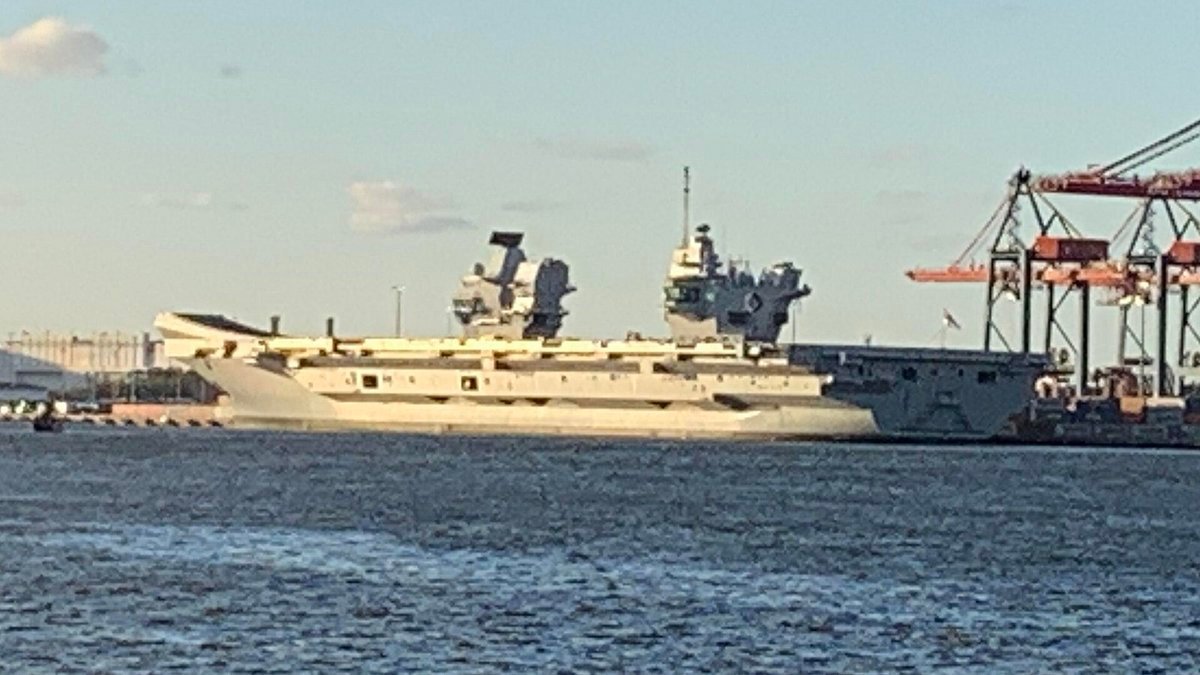
The Royal Navy has successfully conducted the first launches of one-way strike drones from the flight deck of HMS Queen Elizabeth, marking a fundamental shift in how the United Kingdom intends to project power from the sea. The mid-October trials in the North Atlantic demonstrate the operational viability of a “hybrid carrier air wing,” where low-cost autonomous systems work in tandem with high-value F-35B stealth jets.
The trials utilized British-made Nyan Maritime one-way drones, manufactured by Callen-Lenz, alongside the Tekever AR5, a fixed-wing uncrewed aircraft with a seven-meter wingspan. While the Nyan systems focus on strike capabilities, the AR5 demonstrated the ability to handle logistics and intelligence, surveillance, target acquisition, and reconnaissance (ISTAR) missions. This dual-track testing confirms that the Royal Navy is moving beyond simple experimentation toward a tiered force structure that prioritizes both mass and operational endurance.
The Shift Toward Attritable Mass
The most significant implication for maritime warfare is the move toward “attritable” mass. By integrating one-way strike drones, the Royal Navy can now deliver offensive effects without risking a crewed aircraft or its pilot. This capability allows the carrier strike group to engage in high-threat environments where the risk to multi-million-pound crewed platforms might otherwise be considered prohibitive, effectively extending the lethal reach of the carrier while maintaining a safer standoff distance for the primary vessel.
Furthermore, the successful operation of the Tekever AR5 suggests a solution to the persistent logistical “last-mile” challenge at sea. Using a fixed-wing drone with an 80kg capacity for logistics and ISTAR frees up crewed rotary-wing assets for more complex missions, optimizing the carrier’s limited deck space and maintenance bandwidth. This transition to autonomous logistics is a critical requirement for sustaining long-range operations in contested waters where traditional supply chains may be disrupted.
Funding the Hybrid Fleet
These trials are supported by a substantial financial commitment within the UK’s Defence Investment Plan, which allocates over £5 billion for autonomous systems by 2030. This includes £250 million specifically for Project Pantheon, aimed at developing the hybrid air wing, and £210 million for low-cost, long-range one-way attack drones across the armed forces.
The Ministry of Defence also plans to invest £1.3 billion in a hybrid fleet of crewed and uncrewed ships, with the first large autonomous vessels expected to enter service by 2030. The data gathered from the HMS Queen Elizabeth trials, following earlier tests on the experimentation ship XV Patrick Blackett, will provide the technical foundation for how these future autonomous surface vessels will integrate with the carrier strike group’s existing command and control infrastructure.
Source: The Maritime Executive