Port Everglades Achieves First Shore-to-Ship LNG Bunkering | Mariner News
The maritime industry is undergoing a profound transformation, driven by the urgent need for environmental sustainability. At the forefront of this shift, Florida’s Port Everglades has achieved a monumental milestone, successfully completing its inaugural shore-to-ship LNG bunkering operation. This pioneering event not only marks a significant advancement for alternative marine fuels in South Florida but also sets a new benchmark for clean energy adoption within the shipping sector. The historic fueling involved Sawgrass LNG & Power, a Miami-based supplier, delivering liquefied natural gas (LNG) to The Ritz-Carlton Yacht Collection’s luxurious vessel, Ilma. This collaboration underscores a strong commitment to decarbonization and greener maritime logistics, positioning Port Everglades as a vital hub for environmentally conscious shipping and actively contributing to the industry’s broader efforts to reduce its carbon footprint.
Pioneering Sustainable Fueling at Port Everglades
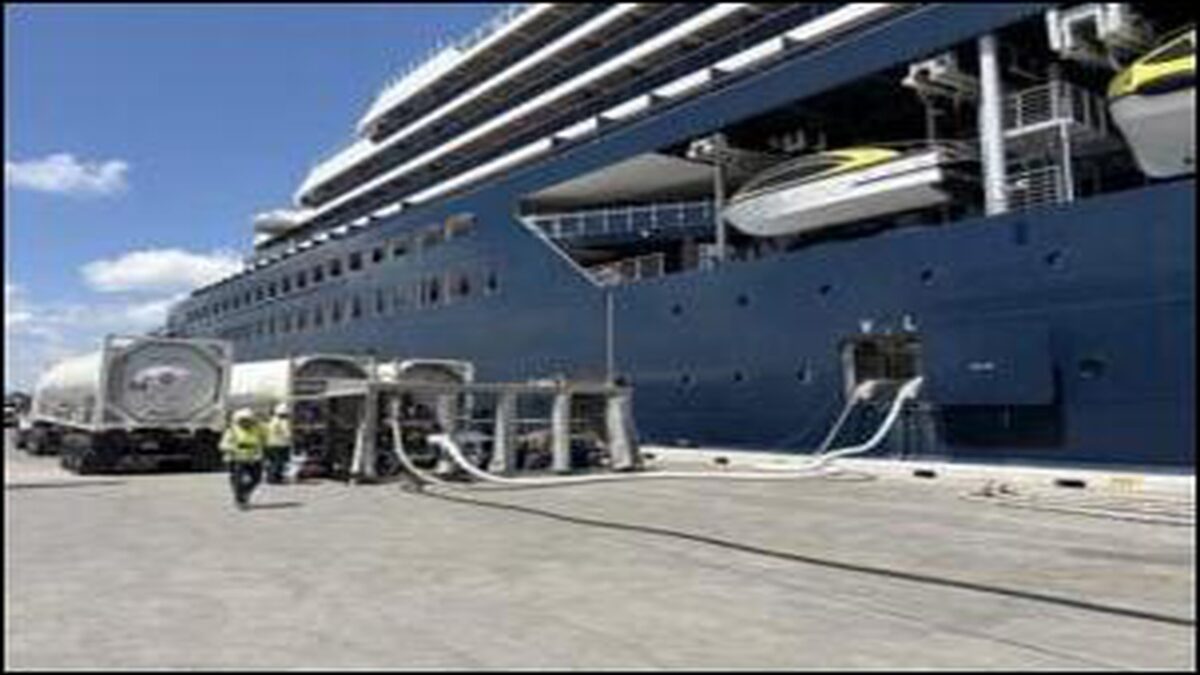
On March 26, the quiet hum of innovation resonated through Port Everglades as Sawgrass LNG & Power expertly executed the region’s first shore-to-ship LNG bunkering. Utilizing a fleet of specialized trucks, Sawgrass efficiently delivered the liquefied natural gas directly to the Ilma, a vessel designed with an eye towards luxurious voyages and environmental responsibility. This meticulous operation was a testament to meticulous planning and seamless coordination, involving critical partners such as the US Coast Guard Sector Miami, the Broward Sheriff’s Office, and REV, ensuring the highest standards of safety and operational integrity. The successful completion of this complex procedure highlights the sophisticated capabilities now available at Port Everglades to support advanced marine fuel transitions.
Neil J. Kutchera, Assistant Director of Energy and Innovation at Port Everglades, aptly described the moment as “a defining moment” for the port and its collaborative partners. He further emphasized, “We are excited to have this lower-carbon fuel available for both landside and waterside delivery and applaud Ritz-Carlton and Sawgrass LNG for their commitment to safety and sustainability.” This statement encapsulates the forward-thinking vision driving the port’s strategic initiatives. The ability to provide LNG, a significantly cleaner alternative to traditional heavy fuel oil, solidifies Port Everglades’ reputation as an innovative leader in maritime infrastructure, ready to meet the evolving demands of the global shipping fleet. This pivotal step signals a robust future for sustainable marine fuel supply in the crucial Southeast United States corridor.
The logistics of shore-to-ship bunkering via trucks present a flexible and scalable solution for ports lacking permanent pipeline infrastructure for LNG. This method allows for efficient delivery, adapting to the varying schedules and locations of vessels. For cruise lines like The Ritz-Carlton Yacht Collection, integrating LNG-powered ships into their fleet represents a clear commitment to environmental stewardship, enhancing their brand image while reducing ecological impact. The Ilma, as one of the pioneering luxury yachts to adopt LNG, perfectly embodies the blend of opulence and environmental consciousness that modern travelers increasingly seek. This synergy between innovative suppliers, progressive ports, and responsible shipping lines is crucial for accelerating the transition to a low-carbon maritime economy.
The Transformative Power of LNG in Marine Transport
Liquefied Natural Gas (LNG) has rapidly emerged as a leading alternative marine fuel, lauded for its compelling environmental advantages. Compared to conventional marine fuels, LNG combustion produces virtually no sulfur oxides (SOx) and particulate matter, drastically reducing air pollution in port areas and along shipping lanes. Furthermore, it cuts nitrogen oxide (NOx) emissions by up to 85% and significantly lowers carbon dioxide (CO2) emissions by 20-25%. These substantial reductions are critical for helping shipping companies comply with increasingly stringent international environmental regulations, such as the International Maritime Organization’s (IMO) 2020 sulfur cap and its greenhouse gas reduction targets.
The adoption of LNG as a bunker fuel is not merely a compliance measure; it is a strategic step towards the long-term decarbonization of the global fleet. By reducing greenhouse gas emissions, LNG serves as an essential bridge fuel on the pathway to zero-emission shipping. Its proven technology and established supply chains make it a readily available solution for shipowners looking to invest in cleaner vessels today. Moreover, advancements in engine technology continue to improve LNG’s efficiency, making it an economically viable option for many vessel types, from cruise ships and ferries to cargo vessels and tankers. The operational benefits, coupled with enhanced environmental performance, provide a strong case for its continued growth in the maritime sector.
Beyond its immediate environmental benefits, LNG offers operational advantages, including smoother engine performance and reduced maintenance costs due to cleaner combustion. The global infrastructure for LNG production and distribution is expanding, albeit with regional variations, paving the way for wider adoption. While LNG is a fossil fuel, its cleaner combustion properties make it a significantly better choice than heavy fuel oil, and it can be blended with or transitioned to bio-LNG or synthetic LNG (e-LNG) in the future, offering a clear path towards even lower or potentially net-zero carbon operations. This flexibility positions LNG as a vital component of the energy transition strategy for shipping.
Florida’s Strategic Position in the Green Maritime Revolution
Florida, with its extensive coastline, numerous ports, and pivotal role in global trade and tourism, is uniquely positioned to lead the green maritime revolution in the Americas. Port Everglades, as a deepwater port handling diverse cargo, cruise, and petroleum operations, is a critical economic engine for the state. By embracing shore-to-ship LNG bunkering, the port solidifies its commitment to environmental stewardship and sets a precedent for other coastal communities. This initiative demonstrates proactive engagement with sustainability challenges, positioning Florida as a forward-thinking player in global maritime logistics.
The availability of LNG bunkering services at Port Everglades is a powerful magnet for shipping lines that prioritize environmental responsibility. As more vessels are built or retrofitted to run on LNG, ports that can provide this fuel will gain a significant competitive advantage. This translates into increased vessel traffic, creating economic opportunities through job creation, enhanced trade volumes, and attracting further investment in port infrastructure and associated services. The economic ripple effect of such innovation extends far beyond the port gates, benefiting the wider regional economy and fostering a robust ecosystem for green technology and services.
Furthermore, Florida’s strategic location along major shipping routes connecting North America, Latin America, and the Caribbean makes its ports ideal candidates for pioneering alternative fuel solutions. The success at Port Everglades can serve as a blueprint and an inspiration for other ports across the state and the Gulf Coast to develop their own LNG bunkering capabilities. This regional synergy could collectively establish a network of green shipping corridors, facilitating cleaner maritime transportation throughout the hemisphere. Such a network would not only accelerate decarbonization but also enhance the resilience and modernity of the entire maritime supply chain, ensuring Florida remains at the forefront of global maritime innovation.
Navigating the Future of Maritime Decarbonization
The successful shore-to-ship LNG bunkering at Port Everglades is more than just a local achievement; it’s a beacon for the global maritime industry’s journey towards decarbonization. The International Maritime Organization (IMO) has set ambitious targets to reduce shipping’s total annual greenhouse gas emissions by at least 50% by 2050 compared to 2008 levels, with an ultimate goal of phasing them out entirely. Achieving these targets necessitates a multi-faceted approach, with alternative fuels and innovative bunkering solutions playing a central role. LNG, while not a zero-emission fuel, offers a practical and immediate step towards these long-term goals.
The development of robust and widespread infrastructure for alternative marine fuels is paramount. This includes expanding the network of bunkering facilities capable of handling not only LNG but also future fuels like ammonia, methanol, and hydrogen. The experience gained from operations like the one at Port Everglades provides invaluable insights into the safety protocols, operational best practices, and logistical challenges associated with handling new energy carriers. These lessons will be crucial as the industry explores and adopts even more complex and potentially volatile fuels in the pursuit of net-zero emissions.
Looking ahead, the collaboration between ports, fuel suppliers, shipping companies, and regulatory bodies will be instrumental in accelerating the transition. Government incentives, regulatory clarity, and sustained investment in research and development for propulsion technologies and fuel production are also vital. The maritime sector is a complex web of interconnected players, and a coordinated effort is essential to overcome the inherent challenges of transitioning away from fossil fuels. The Port Everglades example beautifully illustrates how local initiatives, supported by strong partnerships, can contribute significantly to global environmental objectives. This single event encourages confidence that a sustainable shipping future is not only possible but actively being built, one responsible bunkering operation at a time.
The historic LNG bunkering operation at Florida’s Port Everglades represents a pivotal moment in the maritime industry’s ongoing journey towards sustainability. By successfully enabling the first shore-to-ship delivery of liquefied natural gas to The Ritz-Carlton Yacht Collection’s Ilma, Sawgrass LNG & Power, in collaboration with the port and regulatory agencies, has demonstrated both the feasibility and the growing imperative for cleaner marine fuels. This milestone not only enhances Port Everglades’ standing as an innovative environmental leader but also serves as a powerful testament to the industry’s collective commitment to reducing its ecological footprint. As the demand for sustainable shipping solutions continues to grow, such pioneering efforts in Florida will undoubtedly inspire further advancements, propelling the global maritime sector into a greener, more responsible future. The successful integration of alternative fuels is crucial, and this event provides a tangible roadmap for other ports and shipping lines worldwide to follow in their pursuit of a truly sustainable maritime ecosystem.